
 Search Articles


(CN) — European Union foreign ministers delivered a clear ultimatum to Moscow on Saturday: Russia’s 210 billion euros ($230 billion) in frozen assets won’t be returned until the Kremlin pays reparations to Ukraine, as European leaders scramble to ramp up pressure before a Trump-imposed deadline for peace talks.
But the threat faces significant legal and practical hurdles that could limit its effectiveness.
EU foreign policy chief Kaja Kallas told reporters Saturday that Russia won’t see its frozen money again without paying for war damages. “It is unthinkable that Russia will ever see this money again unless it fully compensates Ukraine,” she said after a two-day gathering in Copenhagen.
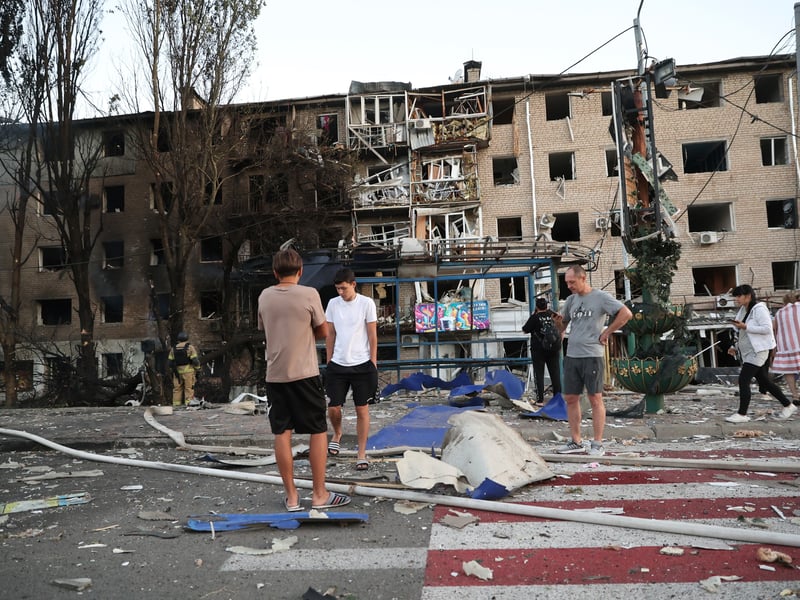
The meeting, known as a “Gymnich meeting,” allows the EU’s 27 foreign ministers to hold frank discussions without staff present. Twenty-six countries backed a statement condemning Russia’s attack on Kyiv that killed 23 people, including four children, and damaged EU offices in the Ukrainian capital. The UK also supported the statement.
During her weekend tour of Eastern European countries, European Commission President Ursula von der Leyen characterized Russian President Vladimir Putin as “a predator” who “has and will not change.” “In the last 25 years, he started four wars: Chechnya, Georgia, Crimea and the full-blown invasion in Ukraine,” she said Sunday from Warsaw, Poland’s capital.
But European leaders are deeply split on how far to go. Ukraine and Eastern European countries want to seize the money outright for reconstruction, while Germany, France and Italy worry about legal fallout and market reactions.
President Donald Trump gave Putin a two-week deadline in mid-August to agree to direct talks with Ukrainian President Volodymyr Zelenskyy, following his Alaska summit with the Russian leader. That clock is ticking, and EU leaders aren’t optimistic.
French Foreign Minister Jean-Noël Barrot warned Saturday that if Putin keeps refusing talks, “We will need to force by hardening sanctions — sanctions from the United States, but also European sanctions.”
Ministers discussed a potential 19th round of sanctions but made no formal decisions. Kallas said options include secondary sanctions on those backing Russia’s war, plus import bans and tariffs. She asked member states for specific proposals on Russia’s “shadow fleet” — oil tankers that help Moscow dodge export restrictions — by next week.
European officials admit they’re running low on major sanctions options after already phasing out Russian oil and gas imports. The upcoming package will likely focus on these elusive vessels rather than new energy sanctions.
Big powers pump the brakes
Still, the meeting highlighted sharp divisions within the EU over asset seizure. With traditional sanctions proving limited, ministers are now looking to Russia’s frozen assets as a more reliable pressure tool. Right now, Russian assets must be parked with Belgium’s central bank at rock-bottom rates, but a new setup could allow riskier bets with higher potential payoffs for Ukraine’s defense and reconstruction. The downside: taxpayers might eat losses from bad investments.
Poland indicated willingness to support an insurance scheme for full confiscation, while Italy’s Foreign Minister António Tajani warned Saturday that the bloc must “play by the rules.” Germany expressed reservations during the talks, arguing the focus should remain on immediate military aid rather than complex financial arrangements.
Belgium, where most Russian assets sit in a clearing house called Euroclear, won’t shoulder the risks alone but has warmed to the commission’s proposals if other countries share the liability. Hungary, which sued the EU over using windfall profits for Ukraine military aid, will fight any new moves.
A new structure could block any single country from vetoing moves or handing assets back to Moscow. Current rules let any member state kill sanctions renewals that come up for votes every six months.
The commission has held informal discussions with France, Germany, Italy and Estonia about legal ways to keep assets frozen if Hungary blocks sanctions renewals, though no clear workaround has emerged. Critics warn that EU taxpayers could ultimately bear costs from any failed investments in riskier portfolios.
Kallas noted Saturday that financial markets remained stable when assets were initially frozen and have stayed calm despite ongoing discussions about their use.
Security guarantees for Ukraine also featured prominently in discussions, with Kallas announcing Friday that a majority of EU countries were open to training Ukrainian soldiers inside Ukraine following any future ceasefire. Estonian Foreign Minister Margus Tsahkna emphasized Saturday the urgency of establishing such guarantees, saying “security guarantees must be formed as soon as possible.”
European leaders have outlined a three-tier defense framework for Ukraine: a strong Ukrainian army as the first line of defense, followed by an international military coalition with U.S. backing, and finally Europe’s own enhanced defense posture as the ultimate safeguard.
Searching for new leverage
Denmark’s presidency of the EU Council has been consulting member countries about potential new measures against Russia’s economy, according to some reports. Options under consideration reportedly include expanded tariffs beyond existing fertilizer duties, targeting Russia’s oil and gas revenues, and accelerated efforts to identify and sanction more vessels in Russia’s shadow fleet network.
But EU sanctions have a big loophole problem, and the data proves it. While EU-Russia trade has plummeted 89% since early 2022, Russia’s share of EU imports fell from 9.3% to just 1.1%. But the bloc still imports billions in Russian goods.
In the first quarter of 2025 alone, the EU imported 550 million euros ($640 million) worth of Russian fertilizer, 730 million euros ($850 million) in iron and steel, and 260 million euros ($300 million) in nickel, according to Eurostat data. Brussels deliberately left fertilizers off the sanctions list to avoid global food shortages, but that created a loophole that businesses are now gaming.
Russian fertilizer imports surged dramatically in June 2025, reaching 331.7 million euros and representing 47% of all EU fertilizer imports that month — the highest level since early 2021. The surge occurred just before new EU tariffs took effect in July, suggesting importers rushed to stock up before duties kicked in.
Other measures being discussed include restricting the free movement of Russian diplomats within the EU’s Schengen travel area, with Czech Foreign Minister Jan Lipavský arguing such freedom makes it harder to track potential intelligence officers.
France announced it would propose new sanctions initiatives aimed at depleting Russia’s resources for its war effort, targeting energy, financial and potentially civilian sectors. Barrot noted Saturday that military leaders from what he called an international military coalition, including the United States, had begun detailed discussions on how security guarantees for Ukraine might work in practice.
The discussions come as officials estimate a 59 billion euros ($65 billion) funding gap for Ukraine’s long-term support needs, with Ukraine facing a 7.9-billion-euro ($8.7 billion) budget shortfall in 2026 alone. The urgency has grown as Europe faces pressure to step up amid concerns about U.S. disengagement from Ukraine, and with much of the EU’s existing €49 billion ($54 billion) aid package to Ukraine already committed through 2027.
Finland’s Foreign Minister Elina Valtonen stressed Saturday the importance of transatlantic coordination, saying joint action with the United States would be crucial for any new sanctions package. European officials increasingly recognize that Washington holds more powerful tools, particularly secondary sanctions that could target countries and companies doing business with Russia.
The backdrop includes Ukraine’s ongoing attacks on Russian energy infrastructure, with weekend drone strikes hitting a pumping station on the Druzhba pipeline and halting oil deliveries to Hungary and Slovakia. Both countries have demanded EU intervention to prevent future attacks, but Brussels has shown little appetite to act.
The Copenhagen meeting concluded as Putin prepared for a four-day trip to China, where he’s set to attend a Shanghai Cooperation Organization summit alongside leaders from several Western-sanctioned countries, including North Korea, Iran and Belarus. Zelenskyy characterized recent Russian attacks as “clear signals” to world leaders meeting with Putin in China.
Named after the first such meeting held at Gymnich Castle in Germany in 1974, these informal gatherings occur twice yearly under the EU’s rotating presidency. Ministers meet without assistants, creating an environment for frank exchanges of views. No binding decisions are made during Gymnich meetings, but they create opportunities for strategic discussions on EU foreign and security policy.
Courthouse News correspondent Yuval Molina Obedman is based in Brussels.
Subscribe to our free newsletters
Our weekly newsletter Closing Arguments offers the latest about ongoing trials, major litigation and rulings in courthouses around the U.S. and the world, while the monthly Under the Lights dishes the legal dirt from Hollywood, sports, Big Tech and the arts.