
 Search Articles


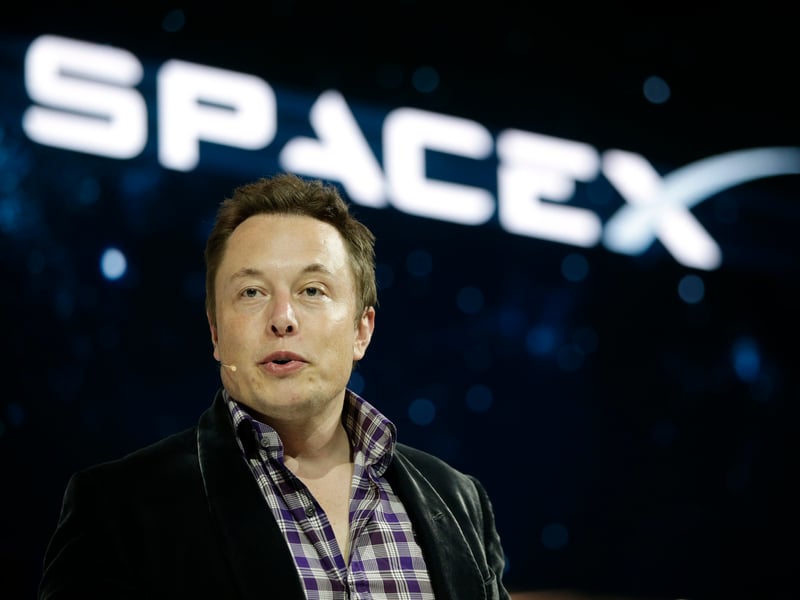
BRUSSELS (CN) — Starting in 2030, every SpaceX Starlink satellite serving European customers will need to meet cybersecurity standards that could require fundamental hardware redesigns. It’s a regulatory gambit that would have been unthinkable just five years ago, but it reflects Europe’s stark choice: regulate its way to relevance in space or watch U.S. and Chinese companies cement permanent dominance.
The European Commission’s new EU Space Act, proposed in June 2025, goes far beyond typical regulations by applying beyond its borders to any company providing space services in Europe. For the first time, Brussels can essentially force foreign space operators to rebuild their technology to European specifications or lose access to the world’s second-largest economy. The approach reflects a fundamental philosophical divide between Europe and America on space governance — while Europe pursues security and safety through expanding regulations, the United States is embracing deregulation and market-driven solutions.
The contrast became stark last week, when President Donald Trump signed an executive order directing federal agencies to “eliminate or expedite environmental reviews” for space launches and cut “outdated, redundant or overly restrictive” rules. Just as Europe was finalizing its most restrictive space framework ever, America was moving in the opposite direction.
Catching up to a moving target
The challenge Europe faces is daunting, rooted in numbers that tell the story of SpaceX’s overwhelming market position. According to industry data, the company accounted for 87% of U.S. orbital launches in 2024, while its Starlink satellite internet constellation serves over 4 million global subscribers across more than 100 countries.
Behind this dominance lies a massive funding disparity that has shaped the entire industry. Europe spends approximately 0.07% of GDP on space while the United States spends 0.24%, according to estimates from the European Space Policy Institute (ESPI), based in Vienna. European public spending totals around 15 billion euros ($16.4 billion) compared to U.S. spending of 60-70 billion euros ($65-77 billion). This funding advantage has allowed American companies to undercut European competitors so severely that traditional satellite operators have lost significant market share, while European competitors now require government subsidies to remain viable against SpaceX’s Falcon 9 rockets, which offer significantly lower launch costs than competitors.
European space companies also face a fundamental financing disadvantage, raising 50% less capital than their Silicon Valley counterparts by the time they reach 10 years in operation, according to a 2024 European Investment Bank report.
The stakes couldn’t be higher. With the global space economy projected to reach $8 trillion by 2040, Europe aims to capture 25% of this market “proportionate to its economic performance,” according to ESPI. But achieving that goal through regulation rather than investment represents a fundamentally different approach than the capital-intensive strategies that built American and Chinese space power.
Europe’s regulatory gambit
Against this backdrop of systematic disadvantage, Europe is betting that strict regulations can level the playing field where funding cannot. The regulatory requirements go well beyond paperwork, demanding that satellite operators install automated safety systems that can avoid collisions and design satellites for “controlled disposal” — safely bringing satellites back to Earth— with built-in propulsion systems. The cybersecurity mandates are equally stringent, requiring operators to implement secure communications between ground and satellites, conduct regular penetration testing and maintain 24/7 monitoring for cyber threats.
For a constellation like Starlink with over 5,000 active satellites, retrofitting these requirements could cost hundreds of millions of dollars — precisely the kind of expense Europe hopes will neutralize SpaceX’s cost advantages. Industry analysis suggests the financial burden will hit European companies hardest, with ESPI estimating that compliance costs could increase manufacturing costs by approximately 10% and raise launch service costs by as much as 20%.
But European companies express confidence about their positioning.
“[Our new satellites] have been designed from the outset to meet Europe’s highest standards. Compliance is not an add-on — it is built into the mission,” Afke Schaart, executive vice president for International Affairs at Eutelsat, told Courthouse News.
The timing, however, reveals the limitations of Europe’s approach. Full compliance isn’t required until Jan. 1, 2030 — by which time thousands of existing satellites — including billionaire Elon Musk’s Starlink, Amazon’s Kuiper and Chinese alternatives — will be grandfathered in under current rules.
Moreover, it remains unclear how sanctions will be applied and whether the EU can effectively enforce compliance across member states and non-European companies operating in the region.
The contradictions of European strategy
The irony runs deeper than policy timing: Europe has become dependent on the very companies it now seeks to regulate — delays in Europe’s Ariane rocket program forced critical European satellites, including military ones, to be launched through SpaceX “because there were no other available European launch options,” said Tomas Hrozensky, senior researcher at ESPI, in an interview.
The contradictions multiply throughout Europe’s space strategy. Amazon’s Project Kuiper — Starlink’s main competitor — has become the largest commercial customer of Europe’s Ariane 6 rocket, while the EU simultaneously bets $11.2 billion on IRIS², a secure communications satellite network designed as a direct Starlink competitor. Expected to comprise around 280 satellites operational in the 2030s, IRIS² reflects lessons learned from Ukraine’s heavy reliance on SpaceX for military telecommunications during the war with Russia, which created what Defense and Space Commissioner Andrius Kubilius described as “general disquiet about the level of dominance the Starlink constellation has.”
These contradictions extend to Europe’s funding reality. Despite industry requests for 42-63 billion euros ($46-69 billion) in dedicated EU space funding for 2028-2034, the European Commission merged space fundinginto a broader budget without sector-specific guarantees, forcing European space companies providing satellites for EU programs to compete against defense contractors and semiconductor manufacturers.
Yet, Europe’s challenges go beyond funding to fundamental coordination problems that undermine its regulatory ambitions.
“We have such a complex system — there are European Space Agency, there are EU, there are national programs,” Hrozensky said, resulting in European countries that “tend to do 10 different national Earth observation constellations without maybe thinking if we maybe need more of a European one.”
Moreover, the relationship between EU standards under the new act and the European Space Agency’s established technical frameworks remains unclear, potentially creating additional layers of bureaucracy for companies already struggling with compliance costs.
This fragmentation stands in stark contrast to the streamlined, well-funded approach of Europe’s competitors. The combined U.S. government space budget provides what the European space industry association calls “guaranteed captive demand that is six times higher than the European equivalent,” while China’s space program has grown significantly, with the country deploying even more satellites than the U.S. government in recent years.
“Europe has not yet developed the political will, which would be at the scale of its economic power, and talent, to become a full-fledged space power,” Hrozensky said.
Two visions of the future
The fundamental question is whether Europe’s safety-first regulatory approach can coexist with global competitiveness. As Hrozensky noted, when Europe introduces expensive new rules while other parts of the world stay more hands-off, it puts European companies at a real disadvantage when they’re trying to compete against international rivals who don’t have to deal with the same regulatory burden.
Still, some, like Eutelsat’s Schaart, see the act as “Europe taking leadership once again in creating a level playing field in Europe while raising the bar globally on security and sustainability of space activities.” The goal will be “to ensure fair and equal competition for all companies, whether European or not.”
The EU Space Act represents a test of whether Europe can succeed against better-funded U.S. and Chinese competitors. Whether this approach can offset SpaceX’s capital, technology and market advantages remains an open question. For now, European space companies will be watching to see if the regulatory framework can help them compete in a market projected to reach $1.8 trillion by 2035. The answer may determine whether Europe can establish a meaningful presence in the space economy or remain dependent on foreign providers for critical space services.
Courthouse News correspondent Yuval Molina Obedman is based in Brussels.
Subscribe to our free newsletters
Our weekly newsletter Closing Arguments offers the latest about ongoing trials, major litigation and rulings in courthouses around the U.S. and the world, while the monthly Under the Lights dishes the legal dirt from Hollywood, sports, Big Tech and the arts.