
 Search Articles


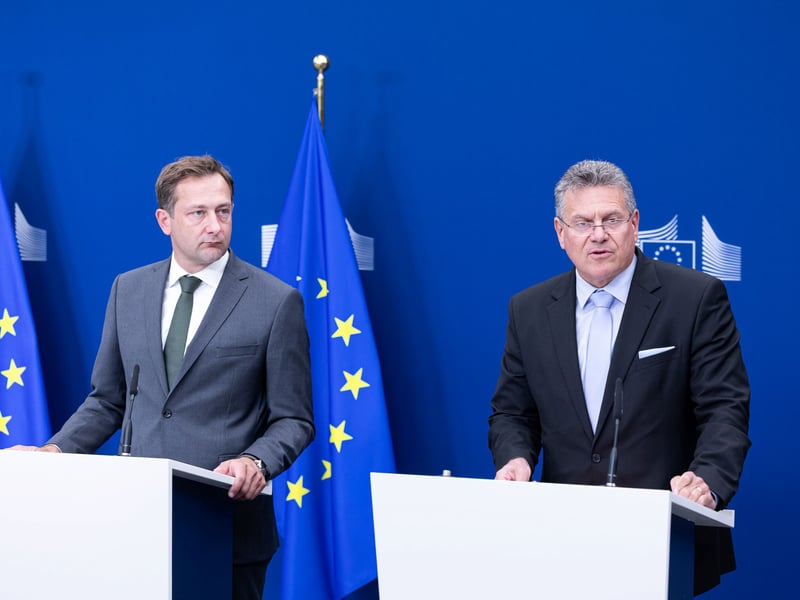
BRUSSELS (CNS) — The European Union and Ukraine struck a breakthrough trade agreement Monday, ending months of political deadlock that threatened to cost Ukraine billions in lost exports during its war with Russia.
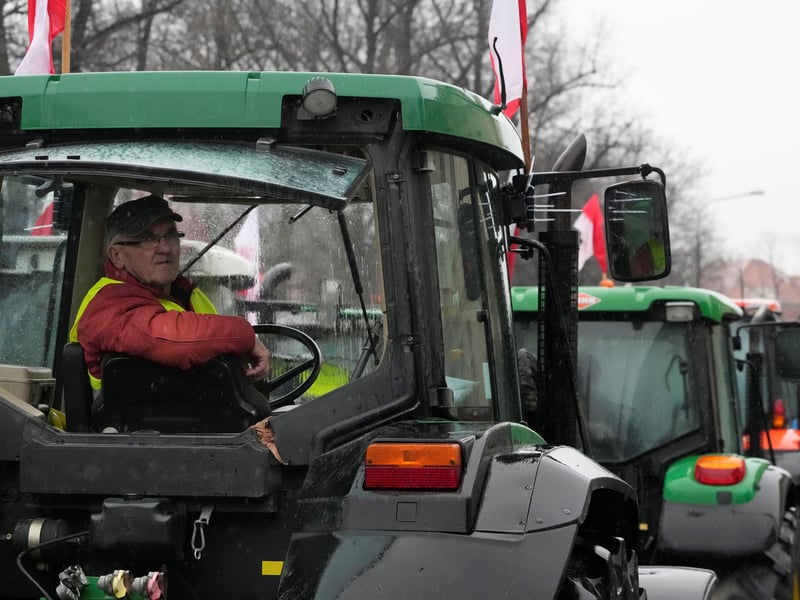
The European Commission said Monday it has concluded negotiations on the review of the EU-Ukraine Deep and Comprehensive Free Trade Area, known as DCFTA. The deal modernizes the trade framework governing over half of Ukraine’s exports and establishes new safeguards for EU farmers who had pushed back since 2023 with extensive protests against unrestricted Ukrainian agricultural imports, according to the EU’s executive branch.
Trade Commissioner Maroš Šefčovič called the deal “balanced, fair and realistic” and said it “represents the best possible outcome under difficult geopolitical conditions.” The agreement comes after the commission faced mounting criticism for its handling of the negotiations.
A Ukrainian parliamentary committee had estimated that losing preferential EU market access could cost the country $3.5 billion annually. The EU accounts for over 50% of Ukraine’s trade in goods, making the trade relationship critical for funding the country’s defense against Russia, according to the commission.
The breakthrough follows months of uncertainty after temporary trade measures that kept Ukrainian goods flowing duty-free expired June 5. During a closed-door session in May of EU agriculture ministers in Brussels, member state representatives vented frustration with the commission’s inability to cement a deal with Ukraine despite having ample time, they told reporters.
The new agreement balances Ukrainian market access with EU protections through three mechanisms, the commission said. Ukraine must meet EU requirements for agricultural production standards by 2028, Šefčovič said, matching the timeline for potential EU membership.
“I want to be very clear on this point: the additional market access granted is conditional to Ukraine’s alignment to our production standards,” Agriculture Commissioner Hansen emphasized, saying this promotes “a level playing field for EU farmers.”
Both sides can trigger emergency measures if imports threaten domestic markets, with the EU able to assess disruptions at individual country levels, officials said. Šefčovič described this as “a robust safeguard mechanism to shield EU markets, especially where imports could cause serious difficulties.”
Hansen said the commission’s aim “has always been to find the right balance between supporting Ukraine’s trade with the union and at the same time addressing the sensitivities of a number of EU agriculture sectors.” He added that “both EU and Ukrainian producers deserve a stable and predictable basis for the future development of bilateral trade.”
When pressed on how officials determined product sensitivity levels, Hansen said they analyzed “what the market absorption capacity is” based on experience with “market disturbances” that prompted certain member states to impose bans. The result, he said, balances concerns of EU producers with Ukraine’s export possibilities.
The commission’s justification comes amid questions about whether the deal truly resolves underlying tensions or merely postpones them.
Market access will vary by product sensitivity, with different tiers of liberalization. For “the most sensitive products such as sugar, poultry and eggs, wheat, maize or honey,” quota increases “fully reflect the sensitivity of these products,” Hansen said. The increases improve access compared to the 2016 agreement but moderate imports compared to peak levels under emergency measures.
Other products like butter, skim milk powder, malt, gluten, oats and barley will see quota volumes increase “up to the highest level of trade in recent years,” according to Hansen. Some goods including whole milk powder, fermented milk, mushrooms and grapefruit juice will be free from quotas.
Ukraine also agreed to grant significant quota increases for EU exports of pork, poultry and sugar, which will “enhance the export possibilities for European farmers notably in the member states neighboring Ukraine,” Hansen added.
Political tensions
The agreement addresses ongoing tensions with three EU countries that imposed unilateral import bans on certain Ukrainian agricultural products. Poland, Slovakia and Hungary announced restrictions on Sept. 15, 2023, after the European Commission decided not to extend its own temporary ban on Ukrainian grain imports. The moves prompted Ukraine to seek World Trade Organization dispute consultations.
The trade breakthrough contrasts sharply with continued EU divisions over Russia policy. Slovakia is currently holding up the bloc’s 18th sanctions package against Russia, with Prime Minister Robert Fico demanding billions in compensation for lost gas transit revenues. Recent plans to phase out Russian gas imports have also sparked backlash over clauses that could allow future import resumptions despite a planned 2027 ban.
Šefčovič expressed confidence that the new agreement would lead to positive reactions to “lift these embargoes” from EU member states, citing the deal’s sensitivity to different product categories and new export opportunities for EU farmers to Ukraine.
Officials said they wrapped up negotiations over the weekend and announced the deal Monday to avoid further delays.
“Sooner this agreement enters into force, sooner the farmers on both sides can benefit,” Šefčovič said, noting high expectations from Ukraine to complete negotiations quickly.
The EU is Ukraine’s largest trading partner, with bilateral trade reaching 67 billion euros ($73 billion) in 2024 — up from 26 billion euros in 2016 when the original agreement first removed most tariffs, according to the European Commission. The partnership has generated an 18 billion euro ($19.5 billion) trade surplus for the EU, the commission said.
Ukraine is the EU’s 16th biggest trading partner, accounting for 1.3% of the bloc’s total trade in goods, according to the EU. Ukraine also remained the EU’s third-biggest source of agrifood imports by value in 2023, underscoring why agricultural issues became so contentious.
Eurostat data shows the EU exported 42.8 billion euros to Ukraine in 2024 while importing 24.5 billion euros, representing 9.4% and 7.0% increases respectively from 2023. Ukraine now accounts for 1.7% of all EU extra-bloc exports in the first quarter of 2025, up from 1.2% in early 2021 before the war.
Ukraine’s top exports to the EU include cereals (4.4 billion euros), animal and vegetable oils (3.1 billion euros), and oil seeds (2.5 billion euros), according to Eurostat. The EU’s main exports to Ukraine are mineral fuels (6.8 billion euros), electrical machinery (4.3 billion euros) and machinery (4.2 billion euros).
Emergency trade measures enacted after Russia’s February 2022 invasion had eliminated tariffs and quotas on Ukrainian exports to help stabilize the country’s wartime economy. Those measures expired June 5.
A study of the original 2016 trade agreement found it served as “a strong engine for trade-related reforms” in Ukraine from 2014 to 2019, helping counter technical barriers to trade and improve public procurement and competition policies. However, researchers noted reform progress slowed in recent years and cited ongoing concerns about corruption and weak rule of law that affected implementation.
The agreement supports Ukraine’s EU membership negotiations, which formally began a year ago in June 2024. Officials have designed the modernized trade framework to work alongside Ukraine’s membership bid, with plans through 2026 that coordinate trade liberalization with accession requirements.
The trade deal follows strong EU backing for Ukraine at last week’s summit, where 26 of 27 leaders endorsed a comprehensive support statement after President Volodymyr Zelenskyy addressed them via video call. Leaders committed 30.6 billion euros to Ukraine in 2025 and welcomed progress on formal EU membership negotiations, with the commission saying basic democratic requirements are “ready to be opened.”
The broader goal is extending key aspects of EU single market access to Ukraine, including the eventual free movement of goods, services, capital and people — principles that go far beyond traditional trade agreements, according to EU officials.
Technical details still need finalization before formal approval, according to commission officials. EU member states and the European Parliament will receive briefings this week on the agreement’s specifics, allowing the institutions to review what negotiators agreed to before formal approval votes.
After legal review, both sides will pursue internal approval processes. The commission will submit a proposal to the EU Council for endorsement, with final adoption by the EU-Ukraine Association Committee.
Subscribe to our free newsletters
Our weekly newsletter Closing Arguments offers the latest about ongoing trials, major litigation and rulings in courthouses around the U.S. and the world, while the monthly Under the Lights dishes the legal dirt from Hollywood, sports, Big Tech and the arts.