
 Search Articles


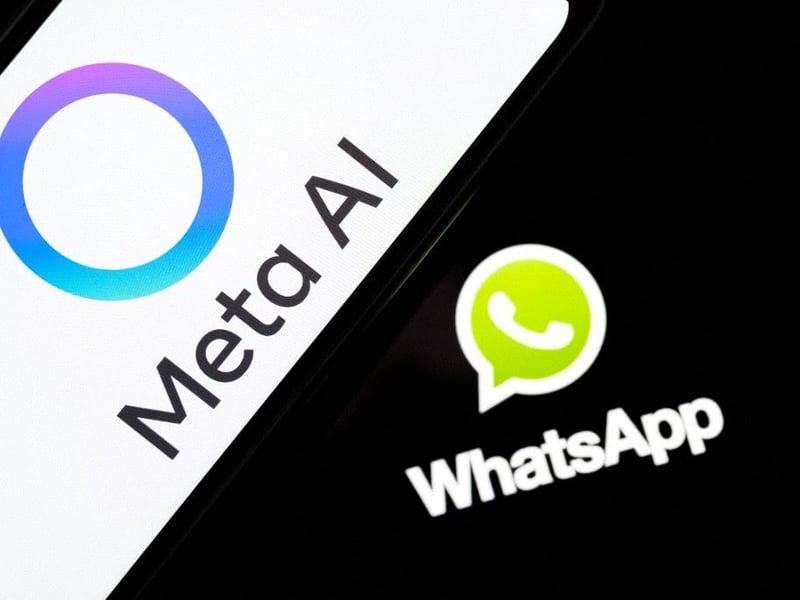
BRUSSELS (CN) — European regulators told Meta on Monday it must reopen WhatsApp to rival AI assistants, threatening to impose rare emergency orders that would force the company to reverse a policy locking out competitors like ChatGPT and Google’s Gemini.
The European Commission — the EU’s executive arm — sent Meta formal antitrust charges on Monday, warning the company risks causing “irreparable harm” to competition in the rapidly growing AI market. Meta locked out third-party AI tools in January, leaving only its own Meta AI assistant available to WhatsApp users.
Meta pushed back hard against the move. “The facts are that there is no reason for the EU to intervene in the WhatsApp Business API,” a company spokesperson said. “There are many AI options and people can use them from app stores, operating systems, devices, websites and industry partnerships. The commission’s logic incorrectly assumes the WhatsApp Business API is a key distribution channel for these chatbots.”
At stake is whether Brussels can force open messaging platforms to help European AI startups compete against U.S. giants. But moving to emergency action before finishing the investigation risks inflaming tensions with Washington, where the Trump administration has accused Europe of unfairly targeting U.S. tech companies.
Teresa Ribera, the EU’s top antitrust official, defended the action in an interview Monday, insisting the case isn’t political. “My sense is that this is not connected to politics, but connected to well-functioning markets and the protection of consumers,” she said. “Companies abusing their market power is bad news in every geography.”
Ribera framed the case as part of broader efforts to keep AI markets open to new entrants. “It’s good to be successful, and it is also important to ensure that those looking into the future are not prevented to develop their services because of those that have succeeded in the past,” she said.
The commission says Meta’s move is urgent enough to warrant emergency powers that have been used only once in the past two decades — in a 2019 case against chipmaker Broadcom. Before that, the commission last attempted interim measures in 2001 but had to withdraw them after a legal challenge.
Monday’s action escalates an investigation the commission opened last December after Meta changed WhatsApp’s business terms last October to ban third-party AI assistants. Now, just two months later, they’re moving to impose temporary orders before concluding that investigation — a sign of how seriously they view the threat to AI markets.
Officials argue that Meta is leveraging WhatsApp’s billions of users to muscle into the AI assistant market at a critical moment when the sector is still taking shape. By the time a normal investigation concluded, they fear, smaller AI companies could be permanently shut out.
The move also reflects broader anxiety in Brussels. Europe is pouring 200 billion euros (about $238 billion) intobuilding homegrown AI champions while just 13.5% of European businesses actually use AI — far behind U.S. adoption rates. Officials worry that letting Meta lock down WhatsApp makes it even harder for European startups to compete against Silicon Valley.
The formal charges give Meta a chance to respond before officials make a final decision. But regulators won’t wait for that process — which could take years — before imposing emergency orders requiring Meta to restore third-party AI assistants’ access under the pre-October terms, according to commission spokesperson. Any interim measures would take effect immediately.
Emergency measures in EU competition cases are exceptionally rare because they require regulators to prove both a likely legal violation and that delay would cause permanent market damage. Brussels is betting it can show Meta’s early advantage in corralling WhatsApp users could cement a dominant position that later remedies couldn’t undo.
The case doesn’t include Italy, which already hit Meta with its own emergency orders in December. Italian regulators moved first after Meta embedded its AI assistant into WhatsApp in March 2025, expanding their case in November to cover the business API ban. They warned that locking out rivals while AI is still emerging will hook users on Meta AI permanently. Italian authorities estimate the EU’s generative AI market at $7.3 billion in 2025, growing to $11.7 billion by 2026.
Meta has racked up major EU fines: 797 million euros in November 2024 for tying Facebook Marketplace to its social network, 1.2 billion euros in 2023 for data privacy violations, 200 million euros in April 2025 for breaking digital competition rules and 110 million euros in 2017 for misleading regulators during the WhatsApp acquisition.
The WhatsApp case follows another aggressive move just days earlier — Brussels told TikTok to redesign features that regulators say hook children on the app. European officials said Facebook and Instagram are next in line for similar investigations, showing Brussels is willing to force tech giants to rebuild core features regardless of complaints from Washington.
Courthouse News correspondent Yuval Molina is based in Brussels, Belgium.
Subscribe to our free newsletters
Our weekly newsletter Closing Arguments offers the latest about ongoing trials, major litigation and rulings in courthouses around the U.S. and the world, while the monthly Under the Lights dishes the legal dirt from Hollywood, sports, Big Tech and the arts.