
 Search Articles


BRUSSELS (CN) — The EU unveiled a sweeping new sanctions proposal Tuesday aimed at crippling the Kremlin’s war economy as part of Europe’s quest to eliminate dependence on Russian energy by 2027.
The European Commission, the 27-nation bloc’s executive arm, doubled down on pressure with a proposed 18th package of sanctions that would include lowering the G7 oil price cap from $60 to $45 per barrel. Since the price cap was first introduced in 2023, oil prices have dropped and now hover near the cap level.
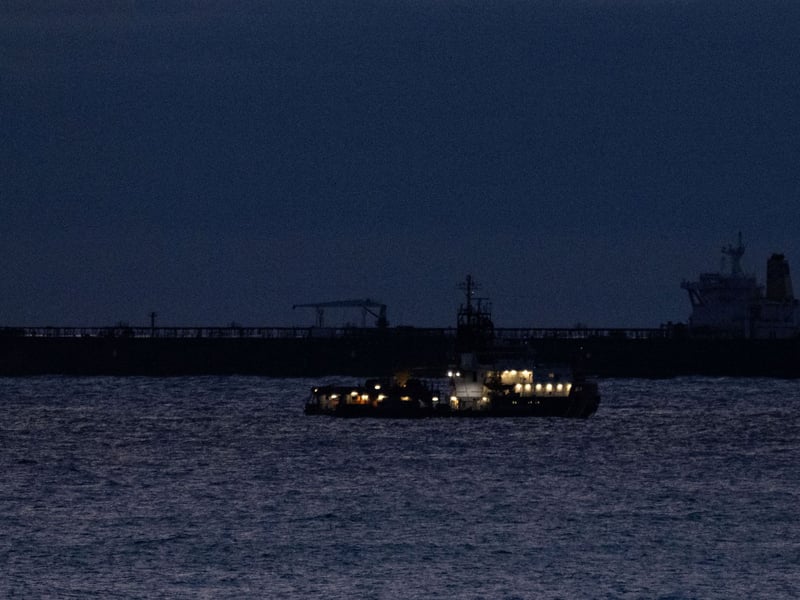
The updated cap, alongside a ban on refined products based on Russian crude, aims to close loopholes and limit Russia’s so-called shadow fleet of tankers sailing under other flags. An additional 77 vessels have now been listed, bringing the total to 419.
“Strength is the only language that Russia will understand,” said President of the Commission Ursula von der Leyen, citing the lack of answer to Ukraine’s offer of an unconditional ceasefire. “Russia’s goal is not peace — it is to impose the rule of might.”
The EU also proposes a transaction ban on the two Nord Stream pipelines between Russia and Germany, effectively closing off any return to Russian pipeline gas imports in the future.
The proposed measures will be part of the debate at the G7 summit in Canada Sunday through Tuesday, where leaders will aim to coordinate tighter enforcement of the oil price cap and broader sanctions strategy to limit Russia’s profits from energy sales. The United States has been hesitant under President Donald Trump to add further sanctions to Russia.
Independence from Russian energy
Officials highlighted key areas to work on independence from Russian energy sources as they kicked off EU Energy Week Tuesday.
“No more will we let you weaponize energy against us,” EU Energy Commissioner Dan Jørgensen declared during the opening ceremony, as ministers prepare for next week’s Luxembourg meeting to assess whether their ambitious timeline can hold.
Jørgensen said European coal imports from Russia have dropped from 51% before the 2023 invasion of Ukraine to 0 today. Oil imports fell from 27% to just 3%, with only two holdout countries remaining dependent. But natural gas presents the steepest challenge, declining from 45% to 30% while representing billions in ongoing revenue to Moscow.
Implementation reality
Behind the road towards Europe’s independence from Russian energy lies a complex web of national commitments, regulatory deadlines and untested market mechanisms that will determine whether Europe can achieve true independence.
By the end of the year, member states face three critical deadlines. Nations must submit binding gas phase-out plans with clear timelines and terminate all new Russian gas contracts and spot purchases. Three oil-dependent countries also have to come up with replacement strategies.
Hungary, Slovakia and the Czech Republic got exemptions to keep pumping Russian pipeline oil when the EU agreed to an embargo in May 2022. Their Russian oil purchases have barely changed; import volumes for both Hungary and Slovakia were 2% higher in 2024 compared to pre-invasion levels, according to a report by the Centre for Research on Energy and Clean Air.
The Luxembourg meeting will reveal which nations are meeting commitments and which risk becoming Europe’s energy security weak links, with the oil exemption issue expected to resurface at the June 26-27 European Council summit.
Europe’s remaining 30% gas dependence represents perhaps the biggest challenge. The EU strategy banks on demand aggregation mechanisms, essentially coordinated bulk purchasing to replace Russian supplies. But this approach faces untested market dynamics as existing long-term contracts worth billions face termination by 2027.
The plan requires mandatory disclosure of Russian gas contract details, creating new transparency about where Europe gets its energy.
Nuclear fuel emerges as strategic front
Perhaps the most significant development involves Europe’s targeting of Russian nuclear fuel, a sector that received minimal attention until recently.
The EU now implements trade measures on enriched uranium imports to level the playing field while requiring Euratom Supply Agency — which is tasked with overseeing member states’ supply of ores and nuclear fuel — oversight of all new Russian nuclear contracts.
The proposed European Radioisotopes Valley Initiative aims to build domestic nuclear capacity, but uranium supply chains are concentrated and it has been harder to find alternatives than for oil or gas. This nuclear dimension adds complexity to energy independence calculations that policymakers are only beginning to address.
High-Stakes Timeline Faces Multiple Pressure Points
If Europe can achieve complete energy independence by 2027, the bloc will eliminate Russia’s primary economic tool, while also increasing renewable energy through its Fit for 55 climate package, which targets 55% greenhouse gas reductions by 2030.
Failure carries strategic consequences, including the potential for continued Russian leverage — leaving EU members open to potential infighting on sanctions and foreign policy during the largest European conflict since World War II.
Multiple scenarios could derail the timeline. Russia might preemptively cut supplies, forcing emergency measures across the bloc. Global energy price shocks could undermine countries’ commitments to phase out Russian products. Alternative suppliers might fail to quickly meet increased European demand.
Energy Security Meets Climate Transformation
The REPowerEU roadmap represents more than energy security policy. It reshapes Europe’s entire energy architecture while working on climate goals with expanded emissions trading systems and new carbon markets for buildings and transport sectors.
This dual goal creates dual pressures: eliminating Russian dependence while transitioning toward carbon neutrality by 2050. The combination tests whether Europe can stay economically competitive while executing an ambitious energy transition during wartime conditions.
“Yes, we are facing difficult terrain. Yes, there are competing concerns … . But this problem, the problem of climate, of independence and competitiveness, will not go off the table,” said EU Commissioner for Climate Wopke Hoekstra after Jørgensen’s speech. “Better address it hands-on.”
The initiative originated at a March 2022 European Council meeting shortly after Russia invaded Ukraine, with the commission formally presenting the plan months later on May 18. What began as crisis response has evolved into comprehensive energy strategy reform with implications extending decades beyond the current conflict.
Subscribe to our free newsletters
Our weekly newsletter Closing Arguments offers the latest about ongoing trials, major litigation and rulings in courthouses around the U.S. and the world, while the monthly Under the Lights dishes the legal dirt from Hollywood, sports, Big Tech and the arts.