
 Search Articles


BRUSSELS (CNS) — European Union leaders approved a plan Wednesday to slash carbon emissions 90% by 2040 but undermined the ambitious target by allowing countries to buy international credits instead of making all the cuts at home.
The European Commission, the EU’s executive branch, formally proposed amending the EU Climate Law to enshrine a 90% reduction compared to 1990 levels. The target serves as a stepping stone toward the bloc’s goal of carbon neutrality by 2050 and would require cutting emissions to roughly one-sixth of current levels within 15 years.
But the proposal includes a controversial provision allowing countries to use international climate credits starting in 2036 to meet up to 3% of their targets, rather than cutting all emissions domestically. The compromise drew immediate criticism that wealthy EU nations could essentially buy their way out of the most difficult transformations.
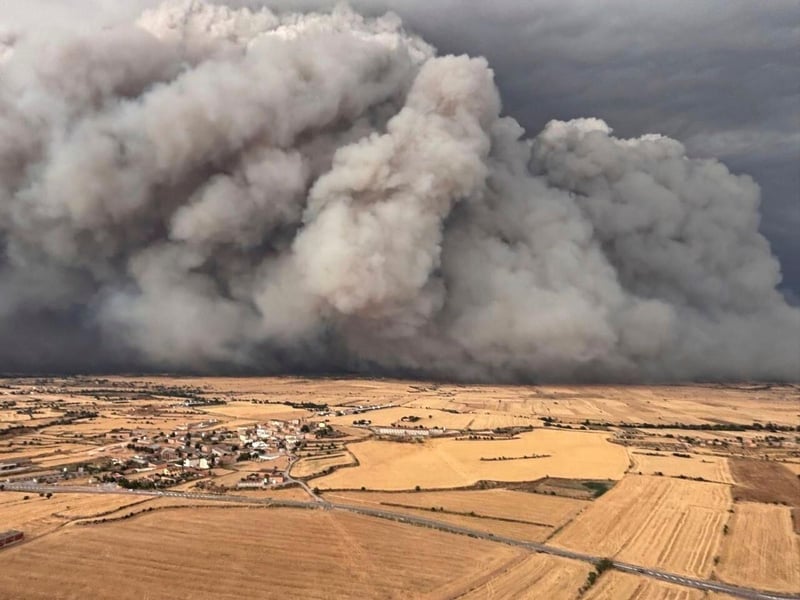
The 27-member bloc’s top officials pushed through the aggressive timeline as record temperatures bake Europe this week. Brussels was expected to hit 35C (95F) on Wednesday, according to the Royal Meteorological Institute of Belgium.
Critics blast ’loopholes'
The EU’s own scientific advisers have raised red flags about the credits system. In a letter obtained by Courthouse News, the European Scientific Advisory Board on Climate Change warned after the announcement about “the risks they pose to carbon markets and environmental integrity.”
Professor Ottmar Edenhofer, the board’s chair, said flexibility measures “must not weaken ambition” while acknowledging the 90% target as “a vital milestone.”
Environmental groups also slammed the credits provision as fundamentally unfair.
“The decision to now include international carbon credits creates a major loophole and undermines the EU’s target for reducing domestic emissions by 90%,” Sven Harmeling, head of climate at Climate Action Network Europe, a coalition of NGOs fighting climate change, told Courthouse News on Wednesday.
Harmeling argued the approach worsens equality: “The EU has been among the biggest emitters of greenhouse gas emissions over the last hundreds of years and exporting its climate responsibility onto the global south and historically lower-emitting countries further exacerbates global inequality.”
Mark Preston from environmental group Bellona Europe told Courthouse News the credits “aren’t necessarily as reliable as cutting emissions within the union domestically.”
He warned that including them “effectively waters down that target and allows the EU’s internal domestic emissions to actually go down slower,” expressing worry about how this could affect future climate legislation.
Critics worry the credits provision could repeat past carbon offset schemes that didn’t deliver promised emissions reductions. Environmental advocates question whether enough “verified” projects exist globally to meet potential EU demand, despite the commission’s promise to only allow “high-quality” projects in third countries.
The details remain murky. Preston noted it’s “quite unclear” how international credits would interact with existing EU climate policies, and warned the commission “gives itself the freedom to change” the 3% limit “if it deems necessary.”
The proposal includes multiple escape routes that critics say undermine its ambition. Beyond international credits, countries can shift efforts between sectors, potentially allowing delays in challenging areas like agriculture or transport. The 90% target is also expressed only as a “net” figure, bundling actual emissions cuts with carbon removals that critics argue are not equivalent.
Environmental groups warn this creates dangerous opacity around what constitutes real climate action. The European Environmental Bureau argues the combination of overseas credits and flexible accounting “threatens to derail the EU’s commitment to reach net-zero emissions domestically by 2050.”
Politics behind the compromise
Internal opposition to the plan surfaced during a Monday meeting where commissioners’ senior staff debated the proposal longer than scheduled. Roughly half of the commissioners’ teams voiced concerns about both timing and the target itself.
“We deliberately took a lot of time to think about this strategically,” Climate Commissioner Wopke Hoekstra acknowledged during a news conference on Wednesday with EU’s chief of ecological transition, Teresa Ribera, citing the political sensitivity.
French President Emmanuel Macron last week called for slowing down the process, arguing the proposal needs broader democratic input from national governments before moving forward.
Climate policy experts say the credits compromise reflects political calculations rather than scientific necessity. Preston argued “the pushback on the target has tended to come from right and far-right political groups” and suggested some governments are trying to pander to those forces.
The political dynamics have shifted dramatically since European elections last year strengthened right-wing parties. The center-right European People’s Party now holds significant leverage and has increasingly opposed green legislation, creating pressure for compromises like the credits system.
“The planet doesn’t discriminate where emissions are being put into the air,” Hoekstra told reporters when asked about the scientific advisers’ opposition to the credits system.
“What we need to do is make sure that we expose European industry to the potential to be one of the winners in the future,” Hoekstra said.
He defended the credits provision as necessary for “hard-to-abate sectors.”
Hoekstra also framed the credits as building bridges with developing countries, saying “our friends in the global south are actually actively reaching out to us, because they see the value in this.”
“We’re clearly ambitious, and yet — and that is of the essence — we are pragmatic and flexible on the how,” Hoekstra said. He described the approach as “non-dogmatic about how to reach success” given the scale of transformation required.
Ribera acknowledged the plan includes “safety nets of flexibilities in case they are required,” referring to the controversial credits provision, while emphasizing the need to “build hope” and create “a competitive and modern economy in Europe.”
Among EU member states, France, Italy and Poland have pressed for more business-friendly approaches, while Denmark — which will lead negotiations — supports aggressive climate action and could resist efforts to weaken the target.
A Eurobarometer survey released Monday found that 85% of Europeans consider climate change a serious problem, with more than eight in 10 backing the EU’s carbon neutrality goal by 2050. However, two-thirds pointed to national governments as best positioned to drive change, rather than individual action.
The decision comes as record temperatures force dramatic responses across Europe. Spain recorded its highest-ever June temperature of 46°C (115°F), while over 1,800 French schools closed due to dangerous heat.
The proposal must now navigate approval by both the European Parliament and the Council of EU member states. The proposal faces uncertain prospects in Parliament, where the European People’s Party has yet to announce its position on the 2040 target, creating doubt about the measure’s future.
Subscribe to our free newsletters
Our weekly newsletter Closing Arguments offers the latest about ongoing trials, major litigation and rulings in courthouses around the U.S. and the world, while the monthly Under the Lights dishes the legal dirt from Hollywood, sports, Big Tech and the arts.