
 Search Articles


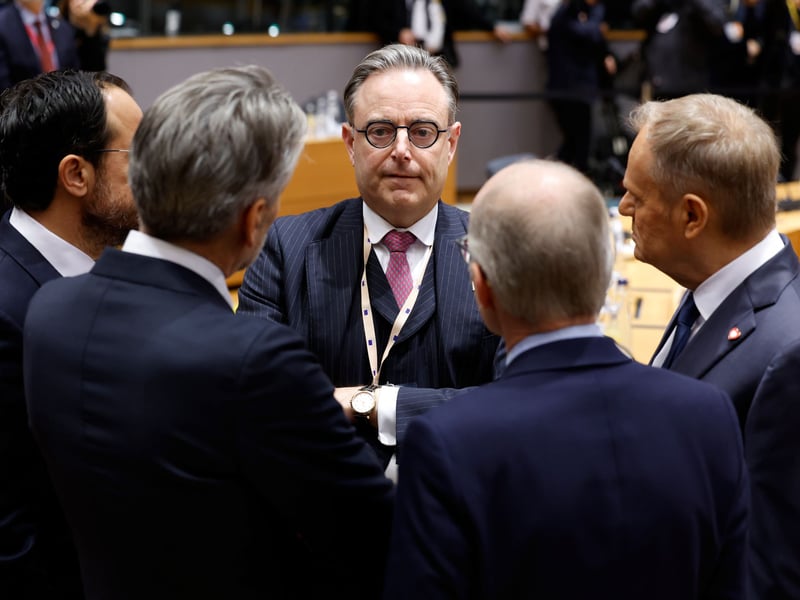
BRUSSELS (CN) — European Union leaders remained locked in negotiations very early Friday morning, struggling to overcome Belgian resistance to a 210 billion-euro ($220 billion) plan to finance Ukraine with frozen Russian assets as divisions over Europe’s post-American security architecture threatened to derail the bloc’s most consequential decision in years.
As the talks wore on, leaders increasingly turned toward Plan B: joint EU borrowing. The Russian assets question would be shelved for now.
The emerging solution would carve out Hungary, Czechia and Slovakia — the three countries opposing further Ukraine aid — from the joint debt scheme. The remaining 24 countries would borrow together, sidestepping the need for all 27 to agree.
The original plan would tap into Russian Central Bank assets that Western countries froze after Moscow’s 2022 invasion of Ukraine. Most of that money — about 185 billion euros — sits in Euroclear, a Brussels-based securities depository that holds and settles international financial transactions. Europe wants to use those funds to finance Ukraine’s defense without adding to government debt.
But the Trump administration has been actively pushing European countries to abandon the frozen assets plan, with Trump’s peace proposal suggesting Washington and Moscow would jointly decide the funds’ fate — effectively cutting Europe out of the decision.
That pressure has exposed a deeper divide within Europe over how to pay for Ukraine’s defense. The all-night summit revealed a split between wealthier northern countries like Germany and the Netherlands, who want to use Russian assets, and more indebted southern countries like Italy and France who would prefer the EU to borrow money jointly.
It’s a familiar argument in Europe — the same fight that nearly tore the bloc apart during its debt crisis a decade ago, when northern countries resisted bailing out struggling southern economies.
Belgium’s objection is simple: Because most of that Russian money sits on its territory, the country would take the biggest hit if Russia successfully sues to reclaim its assets or retaliates economically. Belgian Prime Minister Bart De Wever told lawmakers Thursday morning he still hadn’t seen proposals meeting his demands for liquidity guarantees, protection against retaliation, and guarantees from other EU countries.
De Wever used a farming metaphor to describe his concerns: the windfall profits from immobilized Russian assets are like golden eggs from a goose, but “today, the plan is to serve that goose, to eat it.”
Still, he acknowledged failure would be catastrophic: “The alternative — no solution, no financing for Ukraine, the country collapses — is the ultimate geopolitical failure of Europe, which we will feel for decades to come,” De Wever said.
EU countries tried to sweeten the deal Wednesday with a financial cushion: Of the 210 billion euros total, only 90 billion euros would actually go to Ukraine over the next two years. The remaining 120 billion euros would sit as a buffer.
If Russia somehow gets its money back, that buffer gets tapped first — only then would Belgium and other EU countries need to cover any remaining losses.
Ukrainian President Volodymyr Zelenskyy addressed EU leaders in person Thursday before meeting privately with De Wever. He said afterward they had “a good conversation” and that the Belgian leader understood a deal must be reached.
But Zelenskyy made clear the fight over frozen assets goes beyond Ukraine’s immediate budget needs. He doesn’t want Russia using the money as leverage in peace talks. “Why should we talk about funds that are in Europe with the Russians?” he asked reporters, pushing back against Trump’s suggestion that Washington and Moscow would jointly decide what happens to the assets.
The U.S. position has been messier than it first appeared. While Trump negotiator Steve Witkoff’s leaked peace plan called for returning frozen assets to Russia, Ukrainian officials say that’s not Washington’s official stance and newer drafts dropped the idea. Treasury Secretary Scott Bessent told Ukraine in early December the U.S. “will neither encourage nor obstruct” the loan, according to a Ukrainian readout. Seven U.S. senators also wrote to Belgium’s ambassador this week urging support.
For Zelenskyy, the money question is tangled up with territorial disputes. “Donbass is the issue that has not been solved. We have different views,” he said Thursday, also pointing to the Russian-occupied Zaporizhzhia nuclear plant. “Without financing, there will be questions about Donbass” — in other words, no money means less leverage in negotiations over occupied territory.
He needs a decision by year’s end, not January. Without it, Ukraine faces a deficit of at least 45 billion to 50 billion euros next year, possibly more. The consequences: drone production would drop significantly, and long-range strike capabilities would “disappear,” Zelenskyy warned.
The financing takes on added urgency because NATO membership remains blocked for Ukraine. NATO Secretary General Mark Rutte said Thursday that several allies — including Hungary, the United States and Slovakia — will not give consent for Ukraine to join the alliance.
Without NATO’s Article 5 collective defense guarantee, the 210 billion euros become critical not just for Ukraine’s immediate survival but for making those alternative security arrangements credible enough to deter future Russian aggression.
European Commission President Ursula von der Leyen and Costa both vowed the summit would not end without a decision. “We will not leave the European Council without a solution for the funding for Ukraine for the next two years,” von der Leyen said.
Swedish Prime Minister Ulf Kristersson called it “the most important summit since the war started,” adding: “I will sit here all night if that is needed. We need to have a decision.”
French President Emmanuel Macron urged leaders to avoid getting bogged down in Belgium’s concerns, saying: “We must not be divided over technical details. With our Belgian colleague and all our colleagues, I am confident we can find the right path.”
The reparations loan would put 115 billion euros toward integrating Ukraine’s defense industry into Europe’s manufacturing capacity, 50 billion euros in direct budget assistance and 45 billion euros to repay a G7 loan to Ukraine. It would function as a zero-interest loan repayable only if Russia pays war reparations to Ukraine.
European Central Bank President Christine Lagarde said Thursday she was confident leaders would find a solution but ruled out the ECB providing any financial backstop, saying that would breach the treaty’s prohibition on monetary financing.
Lithuanian President Gitanas Nausėda said flatly there was no alternative to the frozen assets plan. “Simply put, we will not find consensus” on other options, he said.
Russia’s central bank escalated pressure Thursday, announcing plans to sue European banks holding sanctioned Russian cash in addition to its existing lawsuit against Euroclear in Moscow arbitration court. The central bank said it would seek damages “amounting to the illegally held assets and lost profits,” according to state news agency Interfax.
European Parliament President Roberta Metsola pledged the assembly would fast-track approval of any deal reached by leaders, with a plenary vote potentially scheduled as early as January. “From the Parliament you will absolutely have no obstacles placed” to approve the loan, Metsola said Thursday.
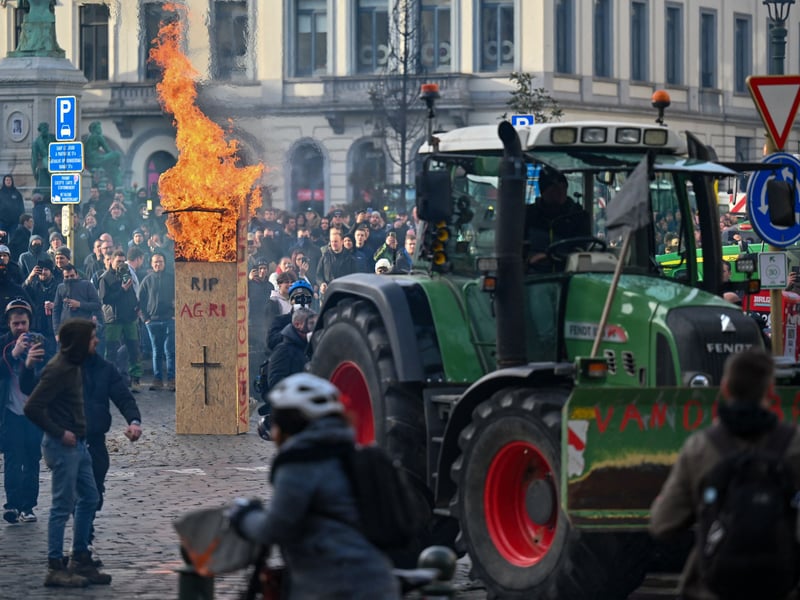
The summit tensions weren’t confined to the negotiating rooms. Outside, 10,000 farmers from across Europe blocked roads, set off firecrackers and hurled potatoes to protest EU farm policies and a proposed trade deal with South America.
The fight over the Mercosur trade agreement piled on another north-south split, with von der Leyen telling leaders the signing would slip from Saturday to January after Italian Prime Minister Giorgia Meloni asked for more time to calm Italian farmers worried about cheap beef and poultry flooding in from Latin America.
Talks dragged past 2 a.m. Friday with no deal in sight. Costa and von der Leyen vowed not to leave without a Ukraine financing decision — meaning talks could stretch deep into Friday or even the weekend. But momentum appeared to be shifting away from using Russian assets and toward borrowing the money jointly instead.
Courthouse News correspondent Yuval Molina is based in Brussels, Belgium.
Subscribe to our free newsletters
Our weekly newsletter Closing Arguments offers the latest about ongoing trials, major litigation and rulings in courthouses around the U.S. and the world, while the monthly Under the Lights dishes the legal dirt from Hollywood, sports, Big Tech and the arts.