
 Search Articles


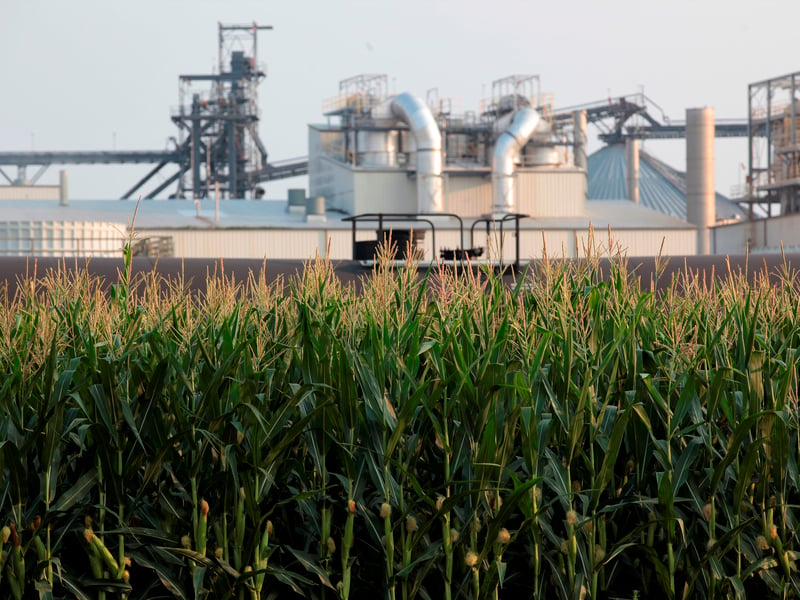
(CN) — Ethanol keeps a low profile, but its pricing doesn’t. On Wednesday, EU judges upheld a cartel fine and signaled support for a tougher, step-by-step approach to cracking complex competition cases.
The General Court of the European Union made clear it sees nothing wrong with the European Commission cutting an early settlement with one cartel participant while pressing ahead against others, so long as companies still under investigation are not treated as guilty before their cases are decided.
That reasoning left intact a penalty of 47.7 million euros (about $55.9 million) against Swedish agricultural cooperative Lantmännen and its biofuels subsidiary for taking part in a cartel that distorted European ethanol price benchmarks.
Ethanol, a common biofuel and industrial alcohol, is priced across Europe by numbers most consumers never see. Those figures come from daily benchmarks published by S&P Global Platts, a price-reporting agency whose assessments are built into fuel, energy and industrial supply contracts across the continent.
Because so many long-term deals are pegged to those benchmarks, even small movements can have outsized effects. According to the commission, several ethanol producers exploited that sensitivity by coordinating how and when they traded — targeting Platts’ narrow “market-on-close” window, the brief period each day when final price data is locked in.
Regulators said the companies did not fix prices in the traditional sense. Instead, they sought to shape the benchmark itself by influencing the inputs used to calculate it.
The goal, the commission concluded, was to push prices up, keep them from falling or hold them steady, effects that then carried through the wider European ethanol market.
What ultimately sent the case to court was not only what the companies were accused of doing, but how the investigation itself was handled.
The commission chose a “staggered hybrid” approach. One company, Abengoa, opted to settle early and accepted a fine. Others, including Lantmännen, declined to settle and remained under investigation through the ordinary procedure.
Lantmännen argued that this sequencing stacked the deck, claiming the early settlement effectively signaled guilt and compromised its right to a fair hearing.
The judges were unconvinced. EU law, they said, allows competition enforcers to deal with complex cartel cases step by step, as long as companies still under investigation are not portrayed as guilty before their cases are finished.
“The EU Courts have held that the commission is entitled to adopt, as a first step, a settlement decision with regard to the parties which have decided to enter into a settlement and, as a second step, a decision taken at the end of the ordinary procedure with regard to the parties which have decided not to enter into a settlement,” the court wrote.
Lantmännen also leaned on the presumption of innocence, arguing that references to the cartel in the early settlement decision had already cast a shadow over the rest of the case.
The judges were unpersuaded, saying there was no declaration of guilt and pointing out that the commission had been careful in how it framed the settlement, something Lantmännen itself did not contest.
They also looked at what happened next. After cutting a settlement deal with Abengoa, the commission went on to drop proceedings against another company, Alcogroup, without imposing any fine, reinforcing the view that the fate of the remaining firms was never locked in.
“The adoption of the settlement decision did not determine the outcome of the ordinary procedure,” the court wrote.
The European Commission welcomed the ruling as a clear endorsement of its approach to handling complex cartel cases.
Lantmännen Biorefineries, meanwhile, said it is reviewing the judgment and weighing whether to appeal.
Any appeal would be narrowly focused on points of law before the Court of Justice of the European Union, with a deadline of two months and 10 days from notification. Until then, the commission’s ethanol cartel decision stays firmly in place.
Courthouse News reporter Eunseo Hong is based in the Netherlands.
Subscribe to our free newsletters
Our weekly newsletter Closing Arguments offers the latest about ongoing trials, major litigation and rulings in courthouses around the U.S. and the world, while the monthly Under the Lights dishes the legal dirt from Hollywood, sports, Big Tech and the arts.