
 Search Articles


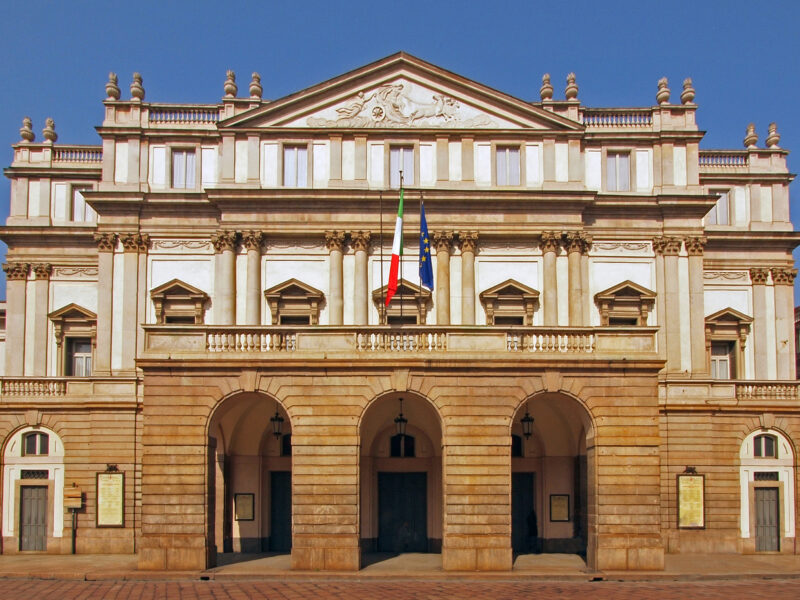
(CN) — Short-term contracts can stay at iconic institutions like Milan’s La Scala opera house, Europe’s top judges said Thursday, but only if the system does not leave workers exposed when it is abused.
In its ruling, the Court of Justice of the European Union declined to force Italy to grant permanent contracts to performers who cycle through short-term deals for years. EU law allows member states to adopt sector-specific rules, the judges said, including in the performing arts, where flexibility is often cited as essential to how institutions operate.
That flexibility, however, is not unlimited. The court stressed that national rules must include remedies strong enough to make abuse genuinely costly. Where protections exist only on paper, national courts are required to step in.
Eliz Erkut Duygu, the applicant in the case, worked as a ballet dancer at Milan’s La Scala opera house, one of Europe’s most renowned state-backed institutions for opera, ballet and classical music. She spent years performing in its productions under a string of short-term contracts, many labeled as self-employment, even though her work followed the structure and demands of a stable role.
Her case pushed EU judges to confront a familiar tension in the arts world: how much flexibility cultural institutions can claim before basic labor protections start to erode. Even where permanent contracts are off the table, the court said, EU rules designed to prevent the abuse of successive fixed-term contracts still apply.
National law must offer protection that works in practice, the judges said, ensuring that “a measure offering effective and equivalent guarantees for the protection of workers must be capable of being applied in order to properly penalize that abuse and remedy the consequences of the breach of EU law.”
In Italy’s system for lyric and symphonic foundations — a category that covers opera houses, orchestras and ballet companies — lawmakers have long blocked automatic conversion to permanent contracts. Instead, workers who prove their short-term contracts were misused are typically limited to compensation, with personal liability for managers reserved for cases of intentional abuse.
The 27-member bloc’s top court said that approach can comply with EU law, but only if it functions as a real deterrent. National judges must assess whether compensation is realistically available, meaningful in amount and capable of preventing repeat abuse. If it isn’t, courts cannot simply accept the system as it stands and must interpret national law in line with EU requirements, even without ordering reinstatement.
Italian courts have already acknowledged that hiring practices in the performing arts can amount to fictitious self-employment. But more recent rulings by Italy’s Supreme Court narrowed remedies to compensation alone, even where abuse is clearly established. It was against that backdrop that a Milan court asked Europe’s top judges whether Italy’s framework still satisfies EU law.
The ruling lands in a corner of the labor market where the lines have long been blurry.
Italy’s opera houses and orchestras sit at the crossroads of culture, politics and public money. Heavily subsidized and wrapped in national prestige, they have long defended strict hiring rules as a way to control costs and plan ambitious seasons years ahead. Unions tell a different story, arguing that the same system has left performers stuck in years of instability, doing work that is permanent in practice but temporary on paper.
The timing adds another layer. Italy’s opera world is already under strain after a recent revolt at Venice’s Teatro La Fenice, where musicians protested a conductor appointment they saw as politically driven, sparking a broader fight over who controls publicly funded culture. Against that backdrop, the court’s ruling sharpens the spotlight on an industry already grappling with questions of power, precarity and accountability.
Lisa Rodgers, an associate professor of law at the University of Leicester, said the ruling lays bare a fault line in EU labor policy, where growing concern about precarious work sits uneasily alongside continued carve-outs for certain sectors.
“The judgment shows that there is a long way to go in the EU towards recognizing the particular challenges of precarious work and the needs of precarious workers,” Rodgers said, adding that the decision clashes with wider EU initiatives, including the Platform Work Directive, that emphasize universal worker protections.
She also questioned the court’s reliance on compensation as an adequate safeguard. “It also does not consider the importance of job security, which in the performing arts sector particularly, is central to worker success,” she said.
Lawyers for the ballet dancer were sharply critical of the ruling, arguing it underplays how weak Italy’s safeguards are. In a statement to Courthouse News, attorney Francesco Andretta said compensation alone cannot meaningfully deter abuse where repeated short-term contracts are used to deliver a public cultural service, and faulted the court for not going further.
“Perhaps the court should have had the courage to affirm all this; especially at a time when authoritarian winds are undermining the stability of the EU and the scope of fundamental human rights on which the experience of the member states is based,” he said.
La Scala and the Italian government did not immediately respond to requests for comment.
The EU judges did not settle the dispute themselves. Instead, they sent it back to Italy’s courts, leaving national judges to decide whether the safeguards on the books actually protect workers like her in real life, or whether Italy’s approach still falls short of EU law’s aim of curbing abuse of short-term work.
Courthouse News reporter Eunseo Hong is based in the Netherlands.
Subscribe to our free newsletters
Our weekly newsletter Closing Arguments offers the latest about ongoing trials, major litigation and rulings in courthouses around the U.S. and the world, while the monthly Under the Lights dishes the legal dirt from Hollywood, sports, Big Tech and the arts.