
 Search Articles


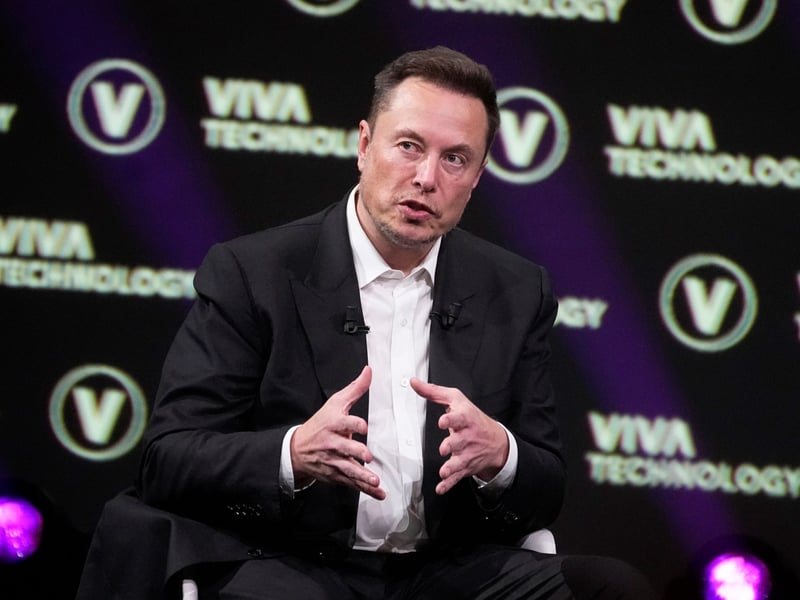
(CN) — American maverick billionaire Elon Musk faces getting hit with massive fines after he was accused by the European Union of allowing disinformation and hateful content to spread on his social media platform X following the outbreak of war in Israel.
The war has led to a torrent of graphic, violent and fake videos, hate-filled content, disinformation, propaganda and misinformation to flood the internet, and much of it has found its way onto X, the platform formerly known as Twitter.
But in August, the EU began enforcing a new landmark law meant to force Big Tech companies to quickly remove harmful content, such as disinformation and hate speech, or face massive fines as high as 6% of their global revenues. The law is meant to protect Europeans from the hurtful lawlessness of the internet and make Big Tech companies responsible for what takes place on their platforms.
Now, Musk’s stance to support an anything-goes approach to free speech is facing its first major test, which may lead the controversial billionaire into a legal showdown with EU regulators.
On Tuesday, Thierry Breton, a European commissioner in charge of enforcing the EU’s digital laws, sent Musk an urgent letter demanding X ensure “illegal content and disinformation” was not disseminated.
Breton gave Musk 24 hours to respond to the letter, which he posted on X, a platform that remains widely used in Europe.
“We have, from qualified sources, reports about potentially illegal content circulating on your service despite flags from relevant authorities,” Breton said.
Without providing details, Breton said news outlets and nongovernmental groups had flagged “fake and manipulated images and facts” on X.
The commissioner warned that X faced fines unless it took urgent action to comply with the new law, known as the Digital Services Act, or DSA. On Thursday, the commission opened an investigation to determine if X was complying with the law.
Breton is a well-known former French finance minister and past business executive who is becoming one of the EU’s most high-profile politicians.
What ensued was a spat on X between Breton and Musk.
“Our policy is that everything is open source and transparent, an approach that I know the EU supports,” Musk posted. “Please list the violations you allude to on X, so that that the public can see them. Merci beaucoup.” Musk inadvertently repeated “that” in his post.
Breton shot back.
“Vu, merci,” the commissioner said, using a French expression to show he had read Musk’s post.
“You are well aware of your users’ — and authorities’ — reports on fake content and glorification of violence,” Breton continued. “Up to you to demonstrate that you walk the talk. My team remains at your disposal to ensure DSA compliance, which the EU will continue to enforce rigorously.”
Musk replied: “We take our actions in the open. No back room deals. Please post your concerns explicitly on this platform.”
Meanwhile, Musk used X to post other apparent references to the spat with the EU.
In at least two posts, Musk seemed to suggest it was nearly impossible to referee opinions and facts in a conflict that ignites such passionate disagreement. In one post, he showed an old clip of the Daily Show’s Jon Stewart, a satirical comedian, drowned out by a gaggle of people shouting clashing views at each other and spewing invective whenever he tried to mention the Israeli-Palestinian conflict.
By Thursday, Linda Yaccarino, the CEO of X, responded to Breton’s ultimatum. She posted the company’s response on X.
She said the company was “deeply troubled by the large-scale and unprecedented terrorist attack on Israel and by the loss of innocent lives.”
In response, she said X had stepped up efforts to “safeguard the platform” for its users and that “there is no place on X for terrorist organizations or violent extremist groups.”
Watchdogs and news outlets have reported that Hamas-linked accounts posted numerous videos on X showing atrocities and attacks against Israelis.
Yaccarino said such accounts were being removed in “real-time” and that “tens of thousands of pieces of content” have been removed or flagged since the outbreak of violence in Israel.
Since Musk took over Twitter last October and changed its name to X, content on the platform has become much less filtered and critics say Musk has allowed X to turn into an ugly forum for lies, hate speech and disinformation.
The Digital Services Act requires 19 online giants — including X, Facebook, YouTube, Instagram, Snapchat, Google, Amazon and TikTok — to make it easier for users to flag harmful and illegal content, which will be assessed by teams of experts hired by the EU and its 27 member states.
When prompted to take action, tech platforms will have 24 hours to remove material deemed harmful. There is also a system for appealing such decisions.
Additionally, Big Tech firms must routinely submit assessments about the risks posed by their platforms and work to lessen those dangers. Outside auditors will examine the companies’ efforts to tackle harmful content.
The law is considered the first attempt in the democratic world to rein in the lucrative but deeply damaging practices by Big Tech to bombard users with personal ads and allow disinformation, hate speech, falsehoods and illegal content to mushroom across the internet.
Running afoul of the rules could be immensely costly. The law even allows platforms to be banned from the EU for failure to comply.
Since taking over Twitter, EU officials have scolded Musk for treating the internet as “the Wild West” and said X must comply with the law or face sanctions.
Musk and his supporters contend the law will lead to online censorship.
Courthouse News reporter Cain Burdeau is based in the European Union.
 Follow @cainburdeau
Subscribe to our free newsletters
Our weekly newsletter Closing Arguments offers the latest about ongoing trials, major litigation and rulings in courthouses around the U.S. and the world, while the monthly Under the Lights dishes the legal dirt from Hollywood, sports, Big Tech and the arts.