
 Search Articles


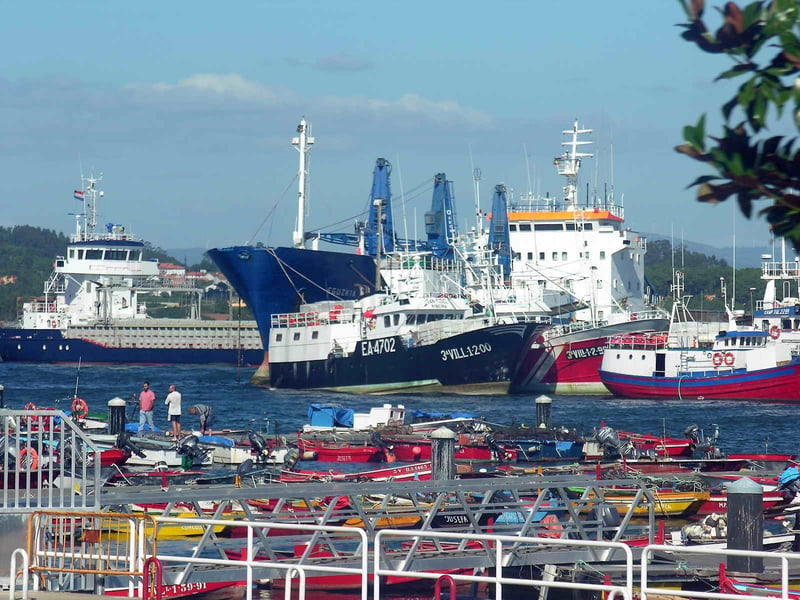
(CN) — In a blow to Europe’s fishing industry, a European Union court on Wednesday upheld a ban on deep-sea fishing in parts of the Atlantic Ocean rich with marine life, especially corals, sponges and other organisms living on the ocean floor.
The General Court’s ruling came in a case brought by the Spanish government and Spanish fishermen from Galicia and Asturias. They challenged a 2016 EU rule banning fishing with nets and longlines below 400 meters (1,312 feet) in 87 areas of the Atlantic off the coasts of Spain, Ireland, Portugal and France. Wednesday’s ruling, therefore, affects fishermen in those other countries too.
The ruling, which was not immediately available in English, can be appealed to the bloc’s high court, the European Court of Justice.
When the rules came into effect in 2022, Spain sued the European Commission, the bloc’s executive branch, and argued the regulations were improperly drawn up because they failed to take into consideration the economic damage fishermen would suffer. Spain also questioned the methods for deciding what fishing gear should be banned and what areas needed protection.
The EU adopted the rules to conserve deep-sea fish stocks and save marine life from being damaged by fishing gear dragged along the seafloor. Species found at depth in the oceans — such as alfonsinos, black scabbardfish, roundnose grenadier, red seabream and some shark species — collapse quickly because they reproduce slowly and are vulnerable to fishing, the EU said. EU data shows deep-sea fisheries account for less than 1% of all fish caught in the Atlantic by European fishermen.
The regulations outlawed the use of bottom trawls below 800 meters (2,624 feet) and banned most fishing gear below the 400-meter mark in 87 sensitive areas, totaling about 2,000 square miles. The rules also required vessels to report more data about their catches.
In its ruling, the court said the 87 areas closed to deep-sea fishing were chosen on the “proven or probable presence of protected species.”
In view of the fragility of these areas, the court said regulators were under no obligation to assess whether some gear might be less damaging or take into consideration the economic losses of fishermen.
The court also saw nothing wrong with the EU’s reliance on data from the International Council for the Exploration of the Sea, a Denmark-based science organization, in determining which areas needed to be protected.
A major Spanish fishing group that sued the commission called the ruling a loss and warned the commission’s rules are “very dangerous for the entire European fishing sector.”
“The ruling is neither expected nor understandable, due to its illogical and unfair nature, from our point of view,” the Fisheries Producers Organization of the Port of Burela said in a statement.
The group, better known as Burela OPP-7, argues a method of longline fishing — known as demersal longlining — should have been exempted from the rules because it has a “nonexistent impact on the seabed.”
Also, the court should have faulted the commission for not taking “into account the harmful socioeconomic impact of this legislation.” It noted that catches from the deep-sea sector immediately dropped by 30% after the rules went into effect.
“This will mean the possible disappearance of longlining, the most sustainable and selective fishing technique currently operating in the fishing grounds,” Burela OPP-7 said.
The European Bottom Fishing Alliance, a group representing deep-sea fishing boats, slammed the ruling because it upheld the EU’s “controversial” and “overly strict and far-reaching” approach to regulation. The group complained the commission did not work with the fishing sector to find solutions.
Iván López, the group’s chairman, called on EU policymakers and lawmakers to change the rules. “The time to act has come — and delay is no longer an option,” he said in a statement.
“The EU is a remarkable construct that has brought significant progress in fisheries management,” López added. “However, it is also a system that offers limited legal avenues to challenge rules which, although legitimate, are perceived as erroneous and disproportionate.”
In a statement to Courthouse News, the European Commission said it welcomed the General Court’s finding that it had drawn up the rules “in a proportionate manner.”
It added that it would work “closely with concerned member states” and rely “on the most up-to-date scientific expertise."
Courthouse News reporter Cain Burdeau is based in the European Union.
 Follow @cainburdeau
Subscribe to our free newsletters
Our weekly newsletter Closing Arguments offers the latest about ongoing trials, major litigation and rulings in courthouses around the U.S. and the world, while the monthly Under the Lights dishes the legal dirt from Hollywood, sports, Big Tech and the arts.