
 Search Articles


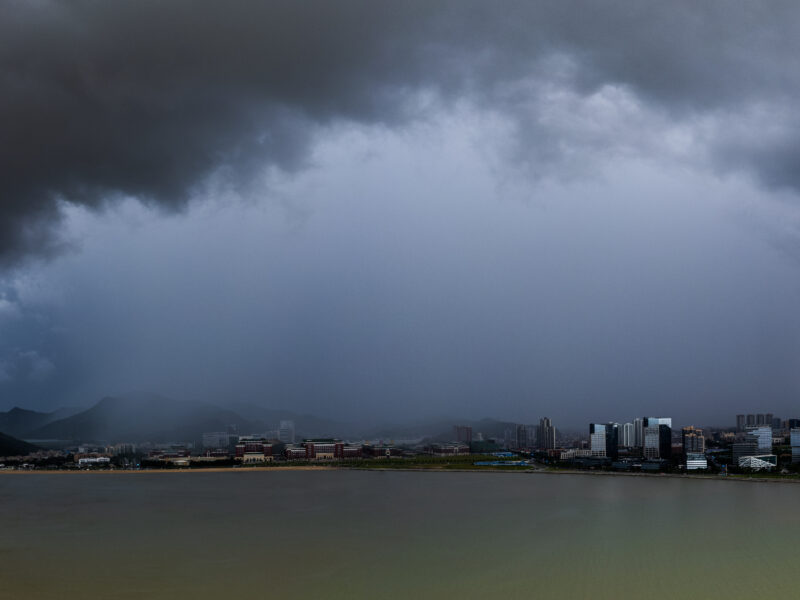
(CN) — When it rains, it pours — and scientists warn that pattern has become more volatile due to global warming.
Rainfall variability, the uneven distribution of rain over time, has been on the rise since the 1900s. A team of scientists attributed the change to human-induced climate change, namely through greenhouse gas emissions.
According to a study published Thursday in the journal Science, rainfall variability has increased across the globe, meaning greater fluctuations between wet and dry periods, or more intense downpours followed by long periods of dry conditions.
Researchers used multiple observational data sets to get a wider picture than previous studies and found approximately 75% of land area has shown an increase in precipitation variability since the 1900s, with variability particularly picking up since the 1950s. Europe, North America and Australia had the largest increases.
Wenxia Zhang, an associate professor at the Institute of Atmospheric Physics of the Chinese Academy of Sciences and lead author of the study, said greenhouse gas emissions were the main force behind the increase in rainfall variability because they have created a warmer and more humid atmosphere.
For each degree Celsius increase in temperature, there’s a 7% increase in the atmosphere’s capacity to hold moisture, according to the Clausius-Clapeyron relationship cited by the study. Changes in precipitation are driven by changes in atmospheric moisture, atmospheric circulation or a combination of the two.
“This means that even if the atmospheric circulation remains the same, the additional moisture in the air leads to more intense rain events and more drastic fluctuations between them," Zhang said in a statement accompanying the study.
Zhang worked on the study in collaboration with scientists from the University of Chinese Academy of Sciences and the UK Met Office. The observations in the study suggest impacts beyond just rainfall.
“Increased rainfall variability, if compounded with other climate change events, could potentially lead to more compound extreme events,” Zhang said in an email, giving the example of extreme precipitation compounded with extreme temperatures of high sea levels. “Compound extreme events have the potential to cause greater impacts to society than extreme events occurring in isolate.”
Zhang said the increase in precipitation variability also implies wider and more rapid swings between drought and flood conditions, as has been seen in China this summer.
The team observed an increase in rainfall variability both daily and across all four seasons. According to the study, daily global rainfall variability has increased by 1.2% each decade.
The findings were consistent with existing climate models that predicted precipitation variability with global warming. The observed volatility in rainfall patterns is cause for concern, according to the study’s authors.
“The future we are anxious about is already here,” Tianjun Zhou, corresponding author of the study and professor at the University of Chinese Academy of Sciences, said in a statement. “The increased variability in precipitation we observed adds crucial evidence of larger daily changes, making it more difficult to predict and prepare for environmental impacts.”
Variability in rainfall challenges existing weather and climate prediction systems and can have a profound impact on both ecosystems and human societies, according to the study.
“Rapid and extreme shifts in climate patterns also pose significant risks to the climate resilience of infrastructure, economic development, ecosystem functioning, and carbon sinks,” Peili Wu, a scientist at the UK Met Office and co-author of the study, said in a statement.
Erratic and unpredictable rainfall can impact the reliability of water supplies and affect agricultural yields. Changing ecosystem functionality can also affect the ability of terrestrial carbon sinks to absorb and store carbon, complicating efforts to mitigate emissions, according to the study.
“Immediate adaptation measures are essential to address these challenges,” Wu said.
Zhang said the team plans to continue their research.
“On the one hand, we will dig deeper into the physical processes affecting the drought-and-flood transitions, which is hopefully valuable for improving their predictions,” Zhang said. “On the other hand, we will investigate compound extreme climate events related to precipitation extremes. Compound extremes is an emerging feature of extreme events under climate warming.”
Subscribe to our free newsletters
Our weekly newsletter Closing Arguments offers the latest about ongoing trials, major litigation and rulings in courthouses around the U.S. and the world, while the monthly Under the Lights dishes the legal dirt from Hollywood, sports, Big Tech and the arts.