
 Search Articles


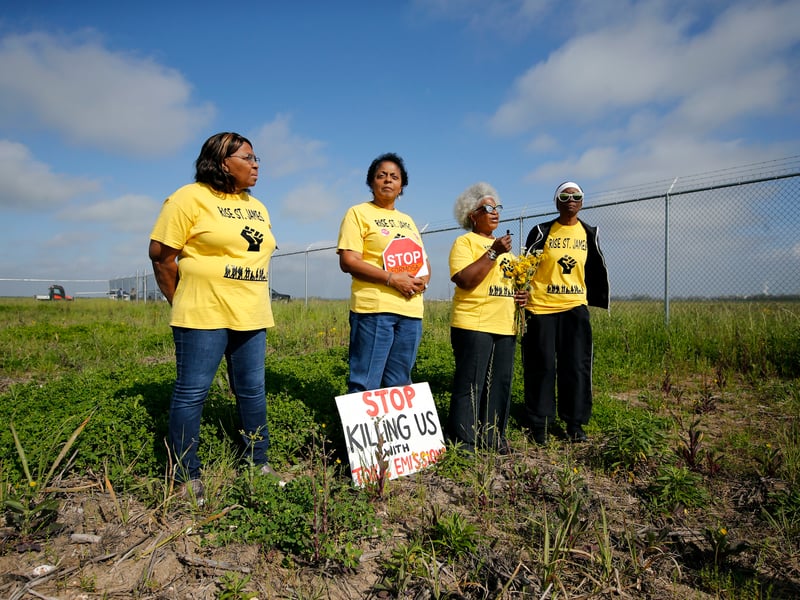
LAKE CHARLES, La. (CN) — The U.S. Justice Department and Environmental Protection Agency can no longer address disparate impact harms in Louisiana where communities have been impacted by environmental pollution after a Trump-era federal judge determined that those actions conflict with the Civil Rights Act.
U.S. District Judge James Cain Jr. of the Western District of Louisiana, an appointee of Donald Trump — following up his January temporary injunction — permanently blocked the federal government from enforcing disparate impact regulations under Title VI of the Civil Rights Act, “against any entity in the State of Louisiana, or requiring compliance with those requirements as a condition of past, existing, or future awards of financial assistance to any entity in the State of Louisiana,” he wrote in a brief two-page order.
Environmental organizations say the ruling could have potentially devastating impacts on environmental and civil rights justice in Louisiana.
“Louisiana has given industrial polluters open license to poison Black and brown communities for generations, only to now have one court give it a permanent free pass to abandon its responsibilities," Earthjustice Vice President for Healthy Communities Patrice Simms said in an emailed release Friday.
Enforcement of Title VI regulations would guard against, for instance, placing polluting industry primarily in lower income Black neighborhoods and would oversee federal regulation of basic services, such as drinking water.
The case stems from a dispute that gained momentum in the last few years and came to a decisive point a year ago after the Environmental Protection Agency abruptly pulled back from investigating claims of environmental discrimination in an area of Louisiana known as “Cancer Alley” because of the high volume of refinery pollution and large number of cancer cases there.
The Thursday ruling leaves Louisiana as the only state without protections under Title VI of the Civil Rights act under which community members in every other state who feel they have been impacted by disparate environmental discrimination can make a claim.
In May 2023, then-attorney general Jeff Landry — who is now governor of Louisiana — sued the Environmental Protection Agency to stop it from investigating environmental discrimination claims that accuse the state of environmental harms imposed on minority communities, after which investigations from the EPA quickly stopped.
In Cain’s memorandum ruling granting the temporary injunction, he determined that Title VI works to prevent intentional discrimination and the disparate harms the EPA was finding in the state’s actions did not fall under the statute.
“Defendants have constructed Title VI to allow it to regulate beyond the statute’s plain text and by doing so, invade the purview of the state’s domain,” he wrote.
The same day Cain handed down his ruling, the EPA released its new guidelines under Title VI which it says will oversee that state and federal entities receiving federal money won’t perpetuate discrimination in their programs and projects.
Under Cain’s ruling, the EPA guidelines will remain the same — federal grant recipients are barred from discrimination based on race, color or national origin — but the agency said the terms do not apply to disparate or cumulative impacts.
Louisiana is the first state to have taken such action, and Earthjustice said in an emailed statement Friday that other states are likely to follow suit.
Earthjustice attorney Debbie Chizewer said over the phone Friday that Louisiana being the only state barred from filing claiming disparate discrimination under the Title VI statute is alienating to community members there.
“Residents are left as a sacrifice community while communities in other states get the protection of disparate impact," Chizewer said.
Earthjustice filed a lawsuit in January 2022 on behalf of Black residents in Louisiana’s St. John the Baptist Parish who said controversial industrial projects continue to be planned for their neighborhoods. They asked the EPA to investigate.
In October 2022, the Environmental Protection Agency issued a letter saying it had concerns of potential race discrimination in the area. The agency thereafter opened an investigation into state regulators, scrutinizing the industrial permits issued by the Louisiana Department of Environmental Quality and information about health risks that were issued by the Louisiana Department of Health.
Among its findings, the Environmental Protection Agency said state officials had turned a blind eye as the Denka polymer plant exposed nearby residents, including elementary school students, to chloroprene, a known carcinogen. Also, the agencies had issued a permit for the controversial Formosa Plastics plant in a small mostly Black community and also right next to an elementary school.
As part of the investigation, the Environmental Protection Agency wanted to strike a deal with the state for an in-depth review of industrial air pollution from factories in the community, including how new sources of pollution would change the risk factor of living in communities that border industrial sites and would catalogue how residents of various races and incomes would be affected.
Landry then sued, claiming the EPA overstepped its authority.
“EPA officials have lost sight of the agency’s actual environmental mission, and instead decided to moonlight as a social justice warriors fixated on race,” he accused in the May 2023 complaint. “To that end, EPA officials declare compliance with environmental law and actual environmental standards is not enough: to avoid loss of federal funds, states must also satisfy EPA’s increasingly warped vision of ’environmental justice’ and ’equity.'”
Jennah Durant, a spokeswoman for the EPA said in an email Friday that “the Justice Department and EPA remain committed to enforcing civil rights law, consistent with the court’s order.”
Lester Duhé, press secretary for Louisiana Attorney General Elizabeth Murrill, sent an emailed statement from Murrill: “The EPA had no legal basis to threaten millions of dollars in funding, and we were forced to raise the issue because of their actions. Disparate impact does not exist in federal law. Environmental rules only cover intentional discrimination. The EPA can’t write the law, that’s Congress’ job.”
 Follow @SabrinaCanfiel2
Subscribe to our free newsletters
Our weekly newsletter Closing Arguments offers the latest about ongoing trials, major litigation and rulings in courthouses around the U.S. and the world, while the monthly Under the Lights dishes the legal dirt from Hollywood, sports, Big Tech and the arts.