
 Search Articles


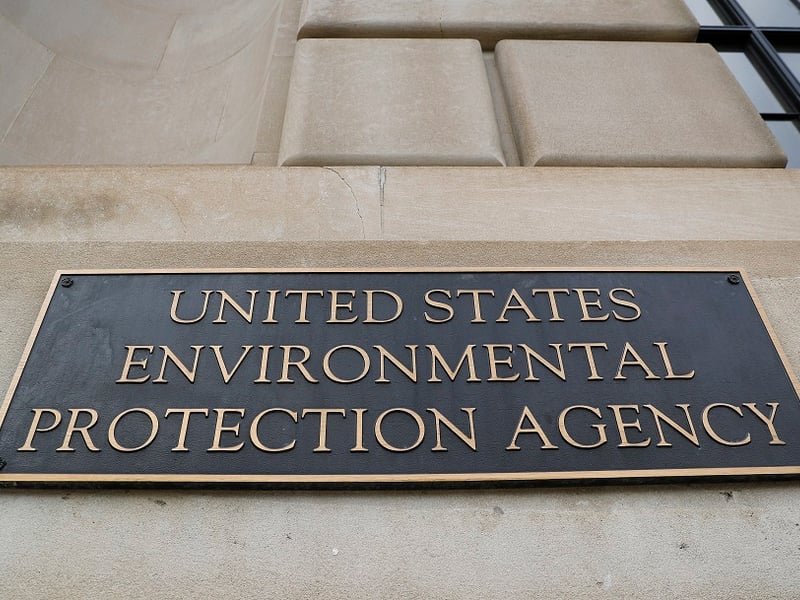
SAN FRANCISCO (CN) — An advocacy group focused on corporate and governmental accountability around food and water asked a skeptical Ninth Circuit panel on Thursday to order the Environmental Protection Agency to overhaul its rules on factory farms.
Specifically, the group Food & Water Watch and others are seeking to expand and strengthen water pollution rules for concentrated animal feeding operations, also known as CAFOs.
The EPA last year denied a 2017 petition formally asking the agency to do just that. Instead, the agency opted to form a study group. That could delay any new rules until at least 2025 — that is, if the EPA decides to act at all.
That denial prompted an appeal from some of the petitioners, filed with the Ninth Circuit on Sept. 8, 2023. Like the 2017 petition, the appeal asked that the EPA immediately reconsider key reforms that could expand and strengthen water pollution protections surrounding CAFOs.
“According to the agency’s own estimate, roughly 10,000 concentrated animal feeding operations, or CAFOs, are illegally discharging into waterways and have become a major source of unregulated point source pollution," Emily Miller, counsel for Food & Water Watch, said at Thursday’s hearing. “EPA has further admitted that its regulations have proven insufficient to compel Clean Water Act compliance and even stand in the way of effective enforcement.”
U.S. Circuit Judge Salvador Mendoza Jr., a Joe Biden appointee, and Senior U.S. Circuit Judge Jay Bybee, a George W. Bush appointee, asked Miller why she opposed giving the EPA time to study factory farm pollution and come up with a plan.
Because the issue is urgent, Miller said. She pointed to a 2022 EPA report, in which she said the agency acknowledged its current regulations are not only failing to address the problem but actually impeding enforcement of the Clean Water Act.
Besides, “they are not committing at any point to engaging in a rule in the future,” Miller said. “They are saying that they’re going to continue studying the process.”
Still, Bybee stressed that the EPA is indeed studying the issue.
“Now, if the evidence remains the same and EPA refuses to do anything further, then you might have a strong case for arguing they’ve behaved arbitrary and capriciously," Bybee said. But until that happened, he said, “It’s very difficult, I think, for our panel to come in and second guess the EPA and say, ‘This is the wrong use of your resources to study this further.'”
Miller argued that if they waited on the EPA’s study, her clients would lose any ability to challenge the EPA’s inaction, as they only have 120 days from the date of denial to challenge that decision.
Rounding out the panel was Senior U.S. Circuit Judge Carlos Bea, a George W. Bush appointee. He asked Miller what specific updates she wanted to EPA regulations.
Miller responded that she wanted no agricultural stormwater exemptions at all for CAFOs.
Currently, EPA exempts agricultural stormwater runoff from the National Pollutant Discharge Elimination System (NPDES) permit requirement. This means that farmers don’t need a permit to discharge water from their fields or around their concentrated animal facilities.
But Paul Cirino, counsel for EPA, told the panel the petitioners wanted to “drastically overhaul” the EPA’s Clean Water Act regulations regarding CAFOs. Now is not the time to do a time-consuming and resource-intensive rulemaking, he argued.
“EPA denied the rulemaking because it wanted current research and data from the CAFO detail study that was already underway and input from a subcommittee with a broad and diverse membership of stakeholders," Cirino said. “It understood that the information that those sources would provide would be very valuable determining how best to address the challenges presented by the CAFO permitting program.”
Cirino argued the EPA is already on top of the issue and would soon have information on how to address CAFOs. Still, the agency has not committed to any specific rulemaking, he said.
On rebuttal, Miller asked the panel to remand the case, forcing EPA to reconsider the petition in accordance with its obligations under the Clean Water Act and the Administrative Procedure Act.
Bybee described that request as “very odd,” noting that Miller had already asked the panel to force EPA to stop its review process and do something different.
“We’ve gotta stand back and give the agency the room to do what it’s supposed to do,” Bybee said before the panel took the matter under submission.
Subscribe to our free newsletters
Our weekly newsletter Closing Arguments offers the latest about ongoing trials, major litigation and rulings in courthouses around the U.S. and the world, while the monthly Under the Lights dishes the legal dirt from Hollywood, sports, Big Tech and the arts.