
 Search Articles


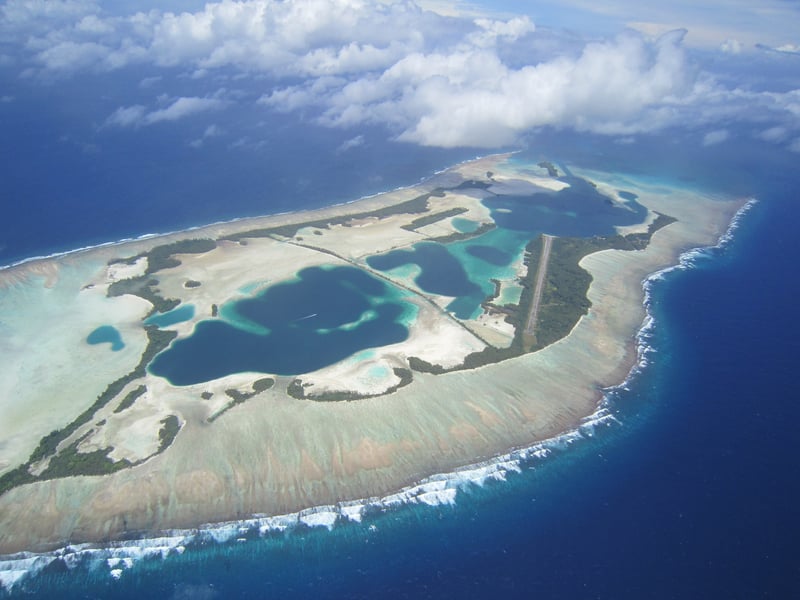
(CN) — Three conservation groups are suing the Trump administration for reopening parts of a federally protected marine monument to commercial fishing, accusing the president of exceeding his authority and endangering wildlife.
In a lawsuit filed Thursday in the U.S. District Court for the District of Hawaii, the conservation groups — Kāpa‘a, an unincorporated association of Native Hawaiian cultural practitioners, the Conservation Council for Hawaii and the Center for Biological Diversity — accuse President Donald Trump and his cabinet members of threatening precious ocean ecosystems.
“Allowing unsustainable commercial fishing practices in the monument expansion, particularly with respect to bycatch, will waste significant amounts of valuable resources, harm marine ecosystems, and upset the necessary balance of the ocean,” the conservation groups wrote.
Established by former President George W. Bush in 2009, the Pacific Remote Islands Marine National Monument — which comprises 400,000 square miles in the Pacific Ocean — had long banned commercial fishing within its boundary until Trump issued a proclamation in April, titled “Unleashing American Commercial Fishing in the Pacific.”
The proclamation lifts commercial fishing restrictions in the waters surrounding three islands that former President Barack Obama added to the monument in 2014.
“Commercial fishing would remove large numbers of fish, sharks, turtles, and other marine life as both intended catch and unintended by-catch,” Jonee Peters, of the Conservation Council for Hawaii, said in a statement. “This would completely disrupt the underwater ecosystem and wreak havoc on the food chain. Many of these creatures and areas are culturally important to the people of Oceania, for traditional and modern navigation and as a valuable food source.”
The conservation groups say Trump’s proclamation violates the Antiquities Act, which allows presidents to protect public lands — but doesn’t allow them to revoke protections, as the groups accuse.
Solomon Pili Kaho’ohalahala, founding member of Kāpaʻa, said the president’s proclamation threatens the ability of future generations to survive and thrive.
“The islands within the monument are part of Moananuiākea, a term used to describe the Pacific Ocean and its connection to Hawaiian culture, traditions, and values,” Kaho’ohalahala said in a statement. “The practice of commercial fishing and the unavoidable and significant waste of marine resources caused by bycatch is an affront to Native Hawaiian practices and beliefs.”
After Trump issued the proclamation allowing U.S.-flagged vessels to fish commercially in the formerly protected waters, the U.S. National Marine Fisheries Service greenlit fishing in the area despite earlier protections reflecting the fishing ban remaining on the books, which the conservation groups say violates several environmental laws.
Under the Magnuson-Stevens Act, for example, changes to fishing regulations must be published in the Federal Register — something the plaintiffs say the Fisheries Service neglected to do.
Nor did the agency conduct any environmental review to study the impact that commercial fishing would have on the ecosystem and endangered species in the area, which is required under both the Endangered Species Act and the National Environmental Policy Act, the conservation groups argue.
“Piling lawlessness on top of lawlessness, the National Marine Fisheries Service chose to carry out President Trump’s illegal proclamation by issuing its own illegal directive, with no public input,” Earthjustice attorney David Henkin, who is representing the plaintiffs, said in a statement. “We are counting on the courts to put a stop to the Trump administration’s disregard for the rule of law and to preserve the monument’s precious and vulnerable resources for future generations.”
The waters in question are home to 22 species of protected marine mammals, seven of which are listed as endangered under the Endangered Species Act.
The area is also habitat for the oceanic whitetip shark, Indo-West Pacific scalloped hammerhead shark and giant manta ray, which are all listed as threatened under the act.
“These waters are a climate refuge for a host of endangered species, some of which are found nowhere else on Earth,” Maxx Phillips, Hawai‘i Pacific Islands director and staff attorney at the Center for Biological Diversity, said in a statement.
The conservation groups are asking the federal court to block Trump’s proclamation and find that he exceeded the scope of his authority by issuing it.
Subscribe to our free newsletters
Our weekly newsletter Closing Arguments offers the latest about ongoing trials, major litigation and rulings in courthouses around the U.S. and the world, while the monthly Under the Lights dishes the legal dirt from Hollywood, sports, Big Tech and the arts.