
 Search Articles


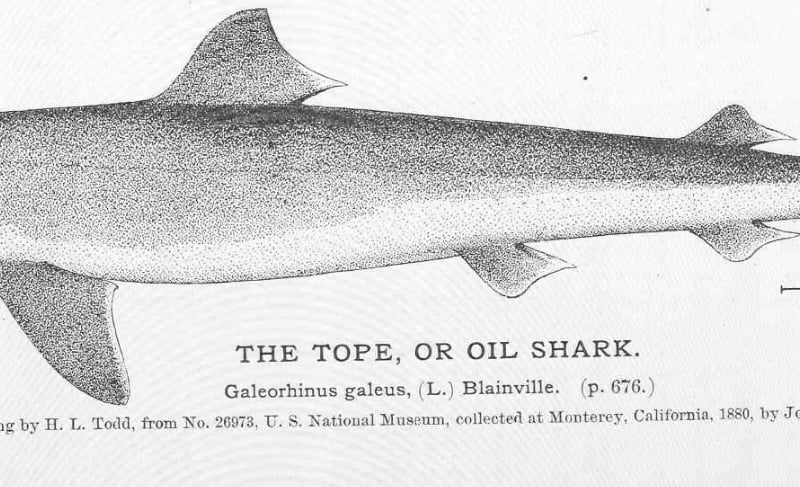
(CN) — Two environmental advocacy groups agreed to settle the lawsuit they brought earlier this year against the National Marine Fisheries Service for missing its deadline to determine if the tope shark, also known as the soupfin shark, warrants protection under the Endangered Species Act.
The federal agency, together with the Center for Biological Diversity and the Defend Them All Foundation, on Wednesday filed a stipulated settlement under which the service will make a decision on their petition to list the species as endangered by Aug. 1.
“Threats to the tope shark population didn’t let up while federal officials stayed quiet, so I’m pleased that this delay will finally come to an end,” David Derrick, an attorney at the Center for Biological Diversity, said in a statement. “Tope sharks are in great danger from fin-hunting and fishing gear entanglements, and they’ll need our help to recover.”
The conservation groups hope that listing the tope shark under the Endangered Species Act will trigger habitat protections and a review of fishing practices that could aid in the species’ recovery.
The service had initially announced in April 2022 that the tope shark might need protection, but the decision hadn’t yet been made by the time the environmental groups sued the service in June 2024, despite a legal obligation to decide by February 2023.
The tope shark, which inhabits the waters off California, Oregon and Washington, is facing a critical threat due to specific targeting by commercial fishing for its liver oil — which had been historically used for cosmetics production and is now used in the biofuel industry — its meat and its fins, which are considered a delicacy.
It also faces threats from bycatch and entanglement in Mexico’s gillnets, particularly off the coast of Southern California. These gillnets — fishing traps that are hung vertically, trapping fish by their gills — have contributed to the decline of the tope shark populations, which, according to the Center for Biological Diversity, has plummeted by nearly 90% over the past 80 years.
“We’re optimistic that long-overdue protections for the tope shark are finally on the horizon,” Lindsey Zehel, a Defend Them All attorney, said in a statement. “As compounding threats to the species continue to intensify, immediate action is necessary to halt the tope shark’s decline and preserve the integrity of our coastal ecosystems.”
The groups’ petition also asks the service to designate critical habitat essential to the survival and recovery of the tope shark, including its West Coast breeding sites.
The International Union for Conservation of Nature already categorizes the tope shark as critically endangered due to commercial overfishing, as well as bycatch and habitat degradation. Despite this, the United States has yet to develop a stock assessment or fishery management plan for the species, according to the center.
The tope shark can grow up to 6.5 feet long and nearly 100 pounds and has a lifespan of up to 60 years but matures late, around 12.5 years of age on average. The shark is found in temperate, shallow waters along coastlines worldwide, including North America, Australia and the Mediterranean.
The shark gathers in five zones along the West Coast stretching from along California, including San Francisco Bay, and up to Washington and Oregon.
 Follow @edpettersson
Subscribe to our free newsletters
Our weekly newsletter Closing Arguments offers the latest about ongoing trials, major litigation and rulings in courthouses around the U.S. and the world, while the monthly Under the Lights dishes the legal dirt from Hollywood, sports, Big Tech and the arts.