
 Search Articles


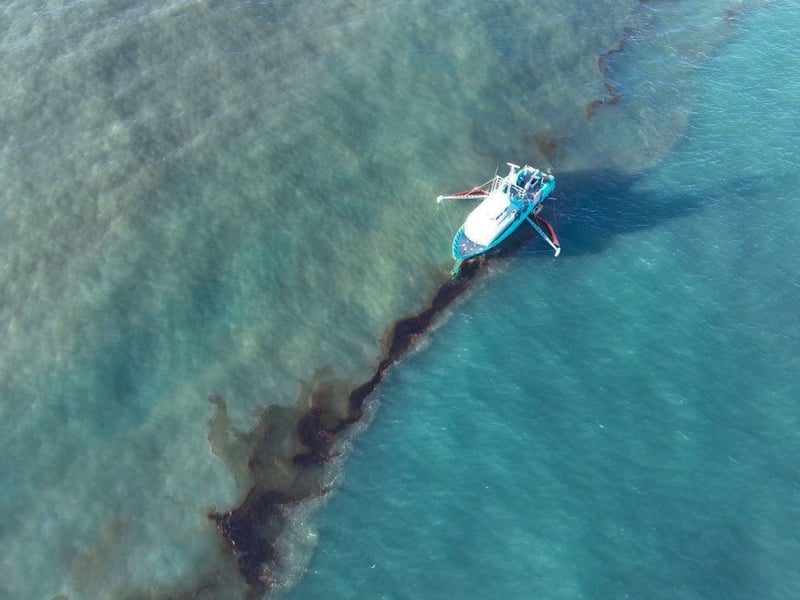
WASHINGTON (CN) — Environmental groups petitioned the federal government Monday, hoping to bar energy companies that neglect old well sites from obtaining new offshore drilling rights.
“The federal government has allowed the oil and gas industry to use the ocean as its junkyard,” the groups said in the petition.
According to the U.S. Government Accountability Office, there were more than 2,700 wells and 500 platforms overdue for decommissioning in the Gulf of Mexico and around 100 unused wells requiring permanent plugging in the Pacific in 2023.
“No one wants to see these wells rust and fall into the ocean like they do,” Scott Eustis, community science director for Healthy Gulf, said in a press release. “Fossil fuel companies walk away from their messes, and it’s our people who pay the price in lost income, polluted waters, and public health risks.”
The petitioners claim that the sometimes decades-old infrastructure topples into the water, exposing wildlife, including loggerhead sea turtles and whales, to oil, chemicals, methane and heavy metals. Meanwhile, unplugged wells lead to blowouts that spew oil.
“Allowing the oil and gas industry to create even more messes while decades worth of rusting, leaking infrastructure still sit in our waters is wildly irresponsible,” Eustis said. “Decommissioning isn’t just cleanup, it’s an opportunity to create good-paying, local jobs that restore our coast and protect the livelihoods that depend on it.”
In the petition, the Center for Biological Diversity, Bayou City Waterkeeper, Healthy Gulf, Louisiana Bucket Brigade and Turtle Island Restoration Network propose clarifying that timely decommissioning is a due diligence requirement essential to acceptable performance under the Outer Continental Shelf Lands Act.
“The basic principle is one that everyone learns in kindergarten, which is that if you make a mess, you should clean up after yourself, and if you don’t, you should get a timeout,” Rachel Mathews, senior attorney with the Center for Biological Diversity, said in an interview.
Companies are obligated to plug inactive wells and clean up end-of-life infrastructure, but enforcement has been lacking, according to Mathews. The groups stated that large companies often sell drill sites nearing the end of their useful life to smaller companies. When those smaller companies declare bankruptcy, the government is left with the task of decommissioning sites.
“It’s like a game of hot potato with these wells,” Mathews said. ‘It’s an existing obligation, but we are not seeing it properly enforced."
Mathews called it a waste of taxpayer money.
“Using taxpayer dollars to plug wells the oil and gas industry has abandoned is the definition of avoidable government waste,” Mathews said.
Plugging offshore wells is expensive. According to the Bureau of Safety and Environmental Enforcement, well-plugging in the Gulf of Mexico ranges between $660,000 in shallow waters and $24 million in deep waters. Platform removals can cost between $900,000 and $80 million, depending on the depth of the water.
Joanie Steinhaus, ocean program director at Turtle Island Restoration Network, criticized President Donald Trump’s push to increase oil production. Steinhaus also cautioned against rigs-to-reefs programs, which allow abandoned infrastructure to become wildlife habitats, asserting that such programs can introduce invasive species of coral and fish.
“Why should industry be allowed to leave their trash in the ocean?” Steinhaus said in an interview. “They make millions of dollars from these structures, and then when it’s done, and they no longer find it viable, they just leave it on the ocean floor.”
In April, an 82-year-old unplugged well in Louisiana’s marshes leaked over 170,000 gallons of oil into waters home to sea turtles and other protected species after a blowout. Some oil producers argue that they can reuse well sites in the future, but Mathews warns that unplugged wells are “ticking time bombs.”
“If we keep ignoring the risks of idle wells, it’s inevitable that we’re going to see more oiled birds and poisoned fish and ecological disasters like that,” Mathews said.
Subscribe to our free newsletters
Our weekly newsletter Closing Arguments offers the latest about ongoing trials, major litigation and rulings in courthouses around the U.S. and the world, while the monthly Under the Lights dishes the legal dirt from Hollywood, sports, Big Tech and the arts.