
 Search Articles


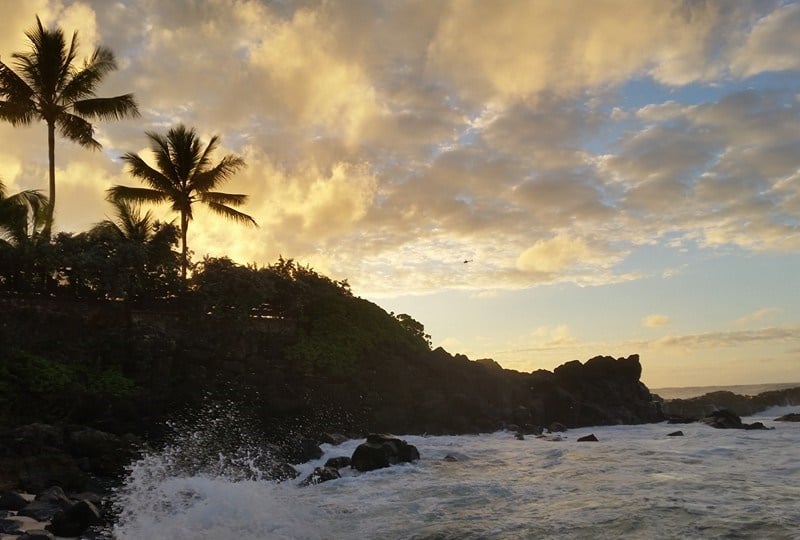
HONOLULU (CN) — The endangered Hawaiian yellow-faced bees documented at Kuilima on Oahu’s North Shore weren’t there when Honolulu approved an environmental review for a new Ritz-Carlton resort in 2013.
Neither was the breeding colony of Laysan albatross at nearby Kahuku Point, or the increasing numbers of Hawaiian monk seals using the beaches to birth and rear their pups.
But they’re there now, according to environmental and community groups challenging the county’s approval of the luxury hotel project.
In their Tuesday lawsuit, the groups say the county’s Department of Planning and Permitting violated Hawaii environmental law by relying on a 13-year-old impact statement that predates significant ecological changes in the area, including the federal listing of the native bees as endangered in 2016.
“It’s unacceptable for the county to greenlight this damaging development using an outdated environmental review that never considered endangered Nalo Meli Maoli, which are irreplaceable native Hawaiian yellow-faced bees,” Maxx Phillips, Hawaii and Pacific Islands director and a senior attorney at the Center for Biological Diversity, said in a statement. “When the science advances and new species are at risk, the law requires the county to take a hard look, not look the other way.”
Earthjustice filed the lawsuit on behalf of the Center for Biological Diversity, Conservation Council for Hawaii and community group Kūpa’a Kuilima. They’re asking the court to invalidate the approval and halt construction until a new environmental impact statement addresses current conditions.
The proposed Ritz-Carlton would be built on a previously undeveloped parcel adjacent to the existing Turtle Bay Resort. A third parcel closer to Kahuku and the James Campbell National Wildlife Refuge is also slated for future development, raising concerns about cumulative impacts the groups say were never properly analyzed.
Since the 2013 review, the area has seen documented changes in wildlife. The Mōlī, or Laysan albatross, established an active breeding colony at Kahuku Point starting in 2018.
Hawaiian monk seals — one of the most endangered marine mammals, with only about 1,400 remaining in the wild — have increased their use of beaches fronting the development area. And the yellow-faced bees, among the few bee species native to Hawaii, have been found at and near the project site since being listed as endangered.
“Hawaii’s environmental review laws are only as strong as the government’s willingness to enforce them,” said Dru Hara, an Earthjustice attorney. “When an agency ignores major new information and waves through a massive luxury development, the public is left without the meaningful review that the law requires.”
The dispute highlights ongoing tension over development in a rural, sparsely populated region, where community groups have worked for years to balance economic growth with environmental and cultural preservation.
“Hawaii’s environmental laws exist to protect our ʻāina and the native species that are inseparable from Native Hawaiian culture and identity,” Jonee Peters, executive director of Conservation Council for Hawaii, said in a statement.
“When agencies allow large-scale resort development to move forward without fully accounting for impacts to endangered species and culturally important ecosystems, they are failing both the law and their responsibility to future generations who depend on these places to survive and thrive,” she added.
Jessica dos Santos of Kūpa’a Kuilima emphasized the area’s cultural significance beyond its development potential.
“Kuilima is not just a development site. It is a place of cultural significance and ongoing community stewardship,” dos Santos said in a statement. “Approving another luxury hotel without fully understanding the impacts threatens a place our community has worked hard for many years to protect.”
Representatives for the Honolulu Department of Planning and Permitting and Host Hotels & Resorts did not immediately respond to requests for comment.
 Follow @JeremyYurow
Subscribe to our free newsletters
Our weekly newsletter Closing Arguments offers the latest about ongoing trials, major litigation and rulings in courthouses around the U.S. and the world, while the monthly Under the Lights dishes the legal dirt from Hollywood, sports, Big Tech and the arts.