
 Search Articles


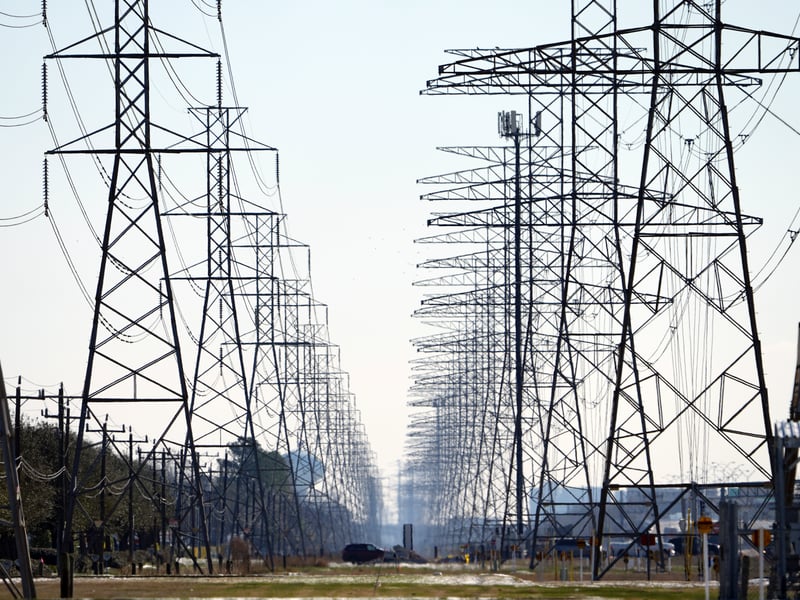
MADISON, Wis. (CN) — A Wisconsin federal judge sided with a utility company on Thursday on environmentalists’ challenge to a land exchange that allowed a 102-mile long power line to cut through a century-old wildlife refuge.
The National Wildlife Refuge Association, Driftless Area Land Conservancy and Wisconsin Wildlife Federation sued the Rural Utilities Service, U.S. Army Corps of Engineers and U.S. Fish and Wildlife Service in 2024 over the approval of a land exchange that allowed parts of the Cardinal Hickory-Creek transmission line to run through a wildlife refuge along the Mississippi River.
“While the court is sympathetic to plaintiffs’ arguments that the utilities and federal defendants have found a loophole in the Refuge Act that allowed completion of the CHC Project without FWS determining that the project was compatible with the Refuge and without more rigorous environmental review, plaintiffs have failed to show that the utilities or federal defendants violated any laws,” U.S. District Court Judge William Conley wrote Thursday.
Conley, a Barack Obama appointee, upheld the land exchange and the line’s placement, finding that none of the defendants were required to determine whether the project is compatible with Congress’ intent before authorizing the land exchange that allowed the power line project to be completed because the law is underdeveloped or intentionally vague.
The transmission line was ultimately constructed across a one mile gravel path called the Oak Road Property and placed into service in September 2024 following an initial denial of a preliminary injunction. Nonetheless, the environmental groups continued their crusade by seeking removal of that portion of the line.
The environmentalists argued in their final push that the federal wildlife service agency violated the Refuge Act by failing to make a compatibility assessment and by improperly making a suitability determination. They also argued that the land exchange violated the conservation plan established by Congress.
But Conley pointed directly to the land exchange section of the Refuge Act, which doesn’t mention the word “compatible” once. It does require that analysis for easements, which is why, the plaintiffs accused, the wildlife service agency steered away from that path.
The Cardinal-Hickory Creek Project at the center of this case involved the construction of a 102-mile long transmission line that caries electricity from Dubuque, Iowa across the Mississippi River and through Wisconsin to Dane County.
The project is estimated to have cost upwards of $500 million, and was constructed almost entirely on private and non-federal land, except for the 1.1 mile long segment cutting across the refuge.
Rather than agree to an easement that had already been discussed, the agency exchanged the Oak Road Property — a mile-long gravel stretch bordering the Mississippi River — for a small parcel just outside the refuge. This allowed the construction of the transmission line through the refuge without additional environmental review or compatibility with congressional intent, Conley said.
“In what is their most sympathetic argument, plaintiffs argue that defendants’ interpretation of the Refuge Act allows for a large and obvious loophole for those seeking to exploit refuge land,” Conley said, adding that he shared the environmental groups’ concerns.
The Refuge Act does require a finding that the public lands are “suitable for disposition,” though Conley concedes that the parties cannot agree on whether the wildlife services agency actually conducted this analysis.
The plaintiffs argued that the value of the Oak Road Property far outweighed the property that the refuge received in the land exchange, rendering the exchange unsuitable.
However, Conley said the environmentalists failed to show that the suitability determination was arbitrary or capricious — the final blow to their campaign against the power line, which has so far mostly focused on challenging permits and other minor details.
The tug-of-war over the Cardinal Hickory-Creek project has taken multiple trips to the Seventh Circuit in Chicago, including once over accusations of bias against Wisconsin utilities regulators that environmentalists claimed were too cozy with the transmission companies developing the project.
The parties also made stops in Dane County Circuit Court all the way up to the Wisconsin Supreme Court, all of which largely failed to reach their goal of shutting the power line down.
The Cardinal-Hickory Creek Transmission Line was completed and energized in September 2024, according to the utilities involved in this case. More than 95% of the line is in Wisconsin.
The Midwest Independent System Operation, empowered by the Federal Energy Regulatory Commission, proposed the power line project in 2011 to improve the power grid in the region and enable utilities to transmit energy generated by multiple renewable energy projects.
According to the invested utilities, construction work within the refuge was performed using wooden construction mats to reduce soil disturbance and to minimize the impact on the surrounding plants and animal habitats.
The parties could not be reached for comment by press time.
ITC Midwest and Dairyland Power Cooperative said in a joint statement that they “are pleased with the definitive order from the District Court that has brought the federal litigation to a conclusion. This favorable decision ends several years of serial litigation against the Cardinal-Hickory Creek project.”
 Follow @desdev5
Subscribe to our free newsletters
Our weekly newsletter Closing Arguments offers the latest about ongoing trials, major litigation and rulings in courthouses around the U.S. and the world, while the monthly Under the Lights dishes the legal dirt from Hollywood, sports, Big Tech and the arts.