
 Search Articles


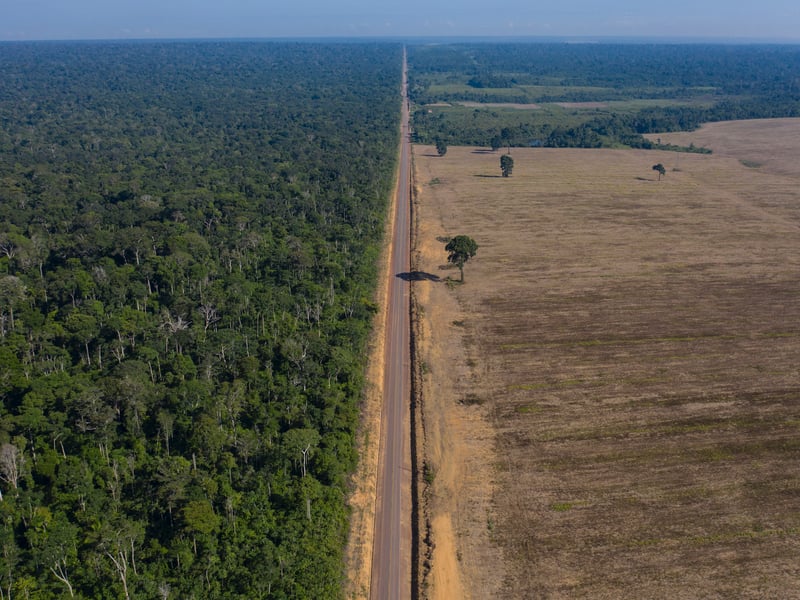
RIO DE JANEIRO (CN) — A bill that has been under discussion in Brazil’s Congress for 21 years and aims to establish general rules for environmental licensing has become the focus of heated debate following its approval by the Senate late last month.
The proposal is now moving through the lower house of Congress, with no date set for a vote. If approved, it will move to President Luiz Inácio Lula da Silva to sign into law or veto.
On Thursday, World Environment Day, seven former environment ministers released a joint letter describing Bill No. 2159/2021 as a dismantling of Brazil’s environmental protection framework, warning of risks to ecosystems, traditional communities and the country’s international reputation.
While legal scholars and environmental advocates argue the proposal — dubbed the “Devastation Bill” — weakens constitutional safeguards and expands grounds for legal challenges, the congressional agribusiness caucus is pushing for expedited approval, claiming the new framework would bring legal certainty and accelerate investment.
“This bill began as a response to environmentalists’ demands for a general environmental licensing law,” said Suely Araújo, former president of Brazil’s environmental agency, IBAMA, and now public policy coordinator at the Climate Observatory. “But it gradually turned into something else. The lawmakers who took over were more interested in a law of non-licensing and self-licensing. What we have now is the worst legislative rollback since Brazil began organizing its national environmental policy in 1981.”
Brazil currently lacks a federal law to regulate environmental licensing. Each state and municipality has its own rules, leading to a fragmented system and frequent clashes between local regulations and national guidelines.
At the federal level, licensing is governed by non-statutory regulations, including a 1997 resolution by the National Environmental Council. Cynthia de Souza Cardoso, an attorney specializing in environmental law who has worked in agencies including the National Environmental Council, said the lack of uniform rules creates legal uncertainty, fuels litigation and hampers coordination among different levels of government — especially in large-scale projects or those that affect more than one jurisdiction.
“This is a necessary, complex and highly contestable regulatory initiative,” Cardoso said. “The bill reflects the deep political and social polarization we live in. It incorporates much-needed updates to licensing procedures but also includes provisions that could undermine key regulatory protections.”
One of the most contentious elements is the proposed “License by Adhesion and Commitment,” which would allow automatic licenses to be issued based solely on a developer’s self-declaration, with no requirement for prior studies or technical review. The mechanism could even apply to mid-impact infrastructure projects, raising concerns about reduced oversight and heightened environmental risk.
Alice Dandara, an attorney with the Socioenvironmental Institute, warned that this could apply to up to 80% of licensing cases and potentially allow projects like the Brumadinho dam, which collapsed in 2019, killing 272 people, to operate under self-licensing.
A controversial provision would create a “Special Environmental License” for projects deemed strategic. The executive branch would define what qualifies by decree, a move critics say opens the door to politically motivated exemptions. The license would be subject to a simplified approval process, with fixed deadlines and reduced input from environmental agencies and oversight councils.
The bill also eliminates the obligation to evaluate indirect, cumulative or synergistic impacts. Environmental agencies would no longer need to assess, for example, whether a road might facilitate nearby deforestation or whether multiple projects in the same region could together strain water resources.
It would also allow developers to challenge environmental conditions in court by arguing there is no direct link between the requirement and the project’s impact. Legal experts say this could weaken mitigation measures aimed at long-term or off-site damage.
The bill further limits mandatory consultations with Indigenous peoples and quilombola communities — Afro-Brazilian descendants of enslaved people — to lands that have already been officially recognized. That would exclude areas still undergoing regularization. Dandara noted that 40% of Indigenous lands and 96% of quilombola territories in Brazil remain without formal recognition. Twenty-six other types of traditional communities are not mentioned in the bill.
A separate clause exempts agricultural activities listed in the federal Rural Environmental Registry or the Environmental Regularization Program from licensing. Environmental groups argue this would allow rural properties in sensitive areas to operate without technical assessments for water use, soil contamination or proximity to conservation zones.
The proposal also conflicts with the Atlantic Forest Law, a federal statute that protects one of Brazil’s most threatened biomes. Allowing more flexible rules to override that law’s specific requirements opens the door for deforestation and interventions in areas currently protected by native vegetation laws.
Supporters of the bill argue it modernizes and simplifies Brazil’s licensing process. Senator Tereza Cristina, a leader of the Senate’s agribusiness caucus and the bill’s rapporteur, said it would provide legal certainty for strategic infrastructure projects and unlock long-delayed investments. According to her, the current licensing system is slow, unpredictable and in need of clearer rules to balance development and environmental protection.
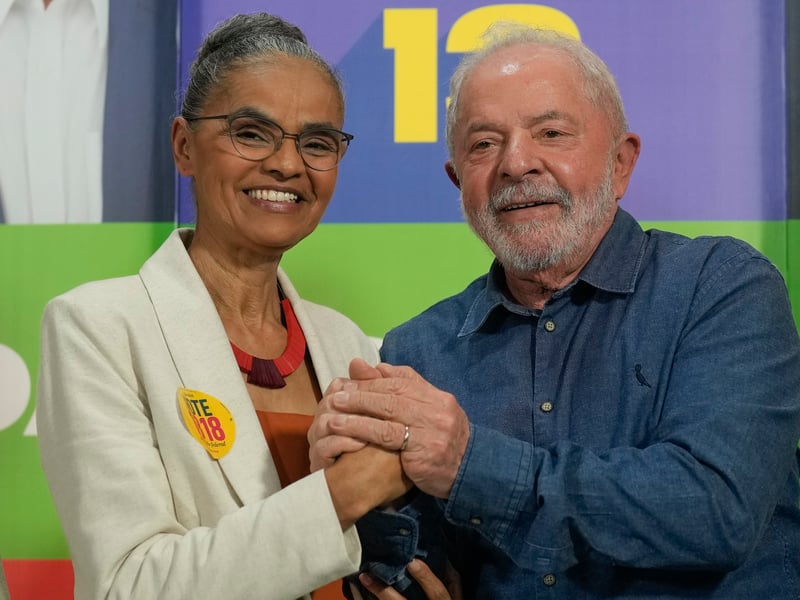
In a technical note to Congress, the Ministry of Environment and Climate Change warned the bill would dismantle current regulations, ignore the climate crisis and compromise legal certainty by removing oversight mechanisms built over decades. On May 27, Environment Minister Marina Silva advocated for changes to the bill during a Senate infrastructure committee hearing. After being targeted by ruralist senators, she left the session, prompting protests in support of the minister and against the bill in eight state capitals on June 1.
Araújo and Dandara argue that, beyond environmental risks, the bill’s legal fragility is one of its major flaws. “There are at least 20 provisions in the bill that are likely to be challenged in court,” Dandara said.
That includes claims that the bill violates Brazil’s Constitution, which guarantees a balanced environment and requires environmental impact studies for projects with significant effects. Brazil’s Supreme Court has previously ruled that automatic licensing for mid-impact projects is unconstitutional. The exclusion of Indigenous and quilombola communities from the consultation process also appears to contradict international agreements signed by Brazil.
At a Tuesday event hosted by Piauí magazine in Brasília, Supreme Court Justice Flávio Dino said the bill would inevitably be challenged in court. “The ‘Devastation Bill’ will be contested in the Supreme Court as surely as Botafogo won the Libertadores last year,” he said, referencing the soccer team he supports.
Araújo believes the current draft is beyond repair. “The only way forward is to sit on this ticking time bomb and draft a new proposal with government backing,” she said. According to her, Congressman Nilto Tatto, leader of the environmentalist caucus, is already working on an alternative text.
“The idea is to push the vote past the upcoming congressional recess [which runs from July 17 to 31]. Then, with COP30 approaching, we might buy some time.”
COP30, the United Nations climate summit, is scheduled to take place in Belém, in the Brazilian Amazon, in November 2025.
If the delay strategy fails, activists plan to lobby for a full presidential veto. If Congress overrides the veto, the focus will shift to a direct challenge before the Supreme Court. In a press conference on Tuesday, President Lula said he had not yet reviewed the proposed changes.
Dandara said the chances of the bill passing before the recess remain high. “The government is moving too slowly for the pace of Congress,” she said. According to her, the Socioenvironmental Institute and other organizations such as Greenpeace and the Climate Observatory are already preparing constitutional challenges.
Cardoso said that while the bill poses risks by weakening key regulations, it also reflects an effort to modernize a system that has proven slow and disjointed in practice. She said Brazil’s current environmental licensing model needs to be reviewed, as it has failed to keep up with the demands of a changing world. “Still, that cannot justify overriding constitutionally guaranteed rights, particularly the right to a balanced environment,” she said.
Subscribe to our free newsletters
Our weekly newsletter Closing Arguments offers the latest about ongoing trials, major litigation and rulings in courthouses around the U.S. and the world, while the monthly Under the Lights dishes the legal dirt from Hollywood, sports, Big Tech and the arts.