
 Search Articles


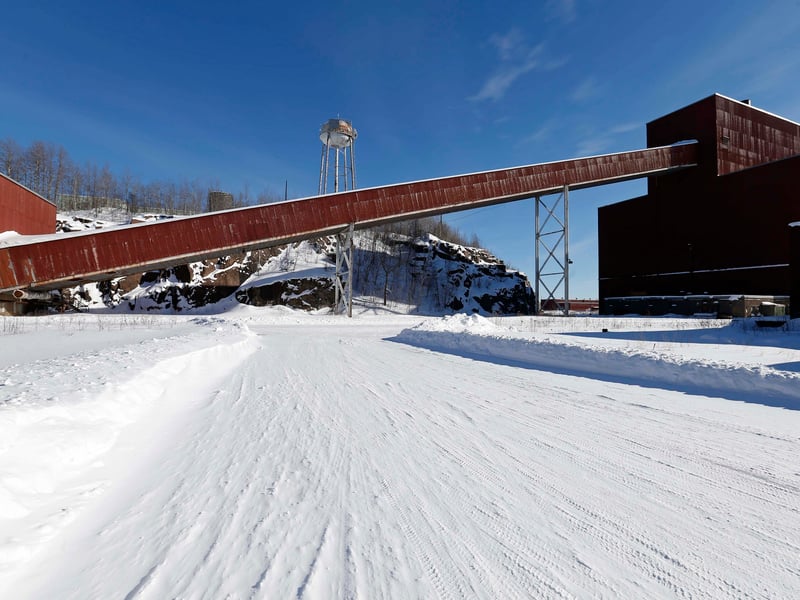
ST. PAUL, Minn. (CN) —The Minnesota Court of Appeals heard arguments Wednesday over an air emissions permit for the embattled NorthMet mining project in northern Minnesota. Opponents claim regulators didn’t look closely enough at the possibility of the mine being expanded beyond its permitted scope.
Under its existing permits, the proposed mine would extract some 32,000 tons of ore per day in an effort to supply copper, nickel and other rare earth metals. The project is already in dire straits: In June, the Army Corps of Engineers thanks to the revoked its Clean Water Act permit and state appellate courts have reversed other importantpermits in recent years.
At issue on Wednesday was the fate of a permit required under the federal Clean Air Act.
Environmental groups, represented by the Minnesota Center for Environmental Advocacy and including the Friends of the Boundary Waters Wilderness and the Sierra Club, argued the permit was pursued in bad faith and granted without enough attention to red flags.
Attorney Jay Eidsness said the Minnesota Pollution Control Agency ignored evidence furnished by environmental groups and put on blinders to the possibility that would-be miners PolyMet Mining had plans to expand their operations after permitting.
“What PCA did is they invented a presumption of transparency and fair dealing that they say is enough to justify this permit,” Eidsness said. “A presumption is a danger signal that the agency is acting in an arbitrary and capricious matter, and is unwilling to consider evidence that could challenge its conclusions.”
He pointed to a technical report provided by PolyMet which discussed the possibilities of expansion with existing mining equipment near the site.
Attorneys for the state pollution regulators and for PolyMet argued that Eidsness’ contentions were pure speculation.
“There was never any indication during the permit process that at some point in the future might try to expand,” said attorney Emily Schilling of the firm Holland & Hart, arguing on behalf of the state agency. “They haven’t come back to the agency, and in fact their renewal permit… indicates the same, which is the 32,000 tons-per-day permit.”
PolyMet attorney Jay Johnson concurred, taking a more accusatory tack.
“I’ll start with the bottom line: PolyMet does not intend to mine more than its permit allows,” Johnson said, arguing the environmental advocates had “taken two pages out of a 240-page technical report as evidence that there is some secret plan.”
That the company had done research on the existence of more minerals at and around the site than it was permitted to extract, he said, didn’t indicate an actual intent to extract those minerals.
“Everyone has always known that there is more ore under the ground at the NorthMet site…. That doesn’t mean that there’s an actual plan to extract those minerals.”
Judge Renee Worke presided over the arguments, flanked by Judges Keala Ede and Louise Bjorkman. The trio peppered Eidsness with questions about what standards he felt regulators hadn’t lived up to.
“We’re not arguing here that there is always a hard-and-fast duty to investigate this intent,” Eidsness said of the miner’s suspected planned expansions. “But here, there is a need for PCA to ask questions driving at this issue.”
“Until questions have been asked, you can’t be sure that the applicant has been truthful,” he continued.
Schilling faced queries about PolyMet’s trustworthiness and its relationship with the Pollution Control Agency in light of the revocation of its other permits, particularly those under the Clean Water Act. She argued that those were completely out of the scope of the air emissions case.
“The water case may involve PolyMet, and it may involve a decision from PCA with respect to a permit, but the similarities end there,” Schilling said. “This is a different case, with a different record, under state permitting rules.”
The air emissions permit case came before the Minnesota Supreme Court earlier this year thanks to a dispute over whether PolyMet, which now plans to operate the mine as part of a joint venture with nearby miner Teck Resources Limited dubbed NewRange Copper Nickel, had been properly served despite the Minnesota Center for Environmental Advocacy’s failure to deliver its petition to the company’s attorneys.
The high court decided that issue in favor of the environmentalists, finding service upon the company itself was sufficient to meet statutory requirements, and sent it back to the Court of Appeals for further evaluation of the groups’ central arguments against the permit.
PolyMet first announced plans to construct its planned mine in 2005. Its permit is back in the hands of the state regulators following a decision by the Minnesota Supreme Court requiring changes, and it is appealing the revocation of its Clean Water Act permits.
Subscribe to our free newsletters
Our weekly newsletter Closing Arguments offers the latest about ongoing trials, major litigation and rulings in courthouses around the U.S. and the world, while the monthly Under the Lights dishes the legal dirt from Hollywood, sports, Big Tech and the arts.