
 Search Articles


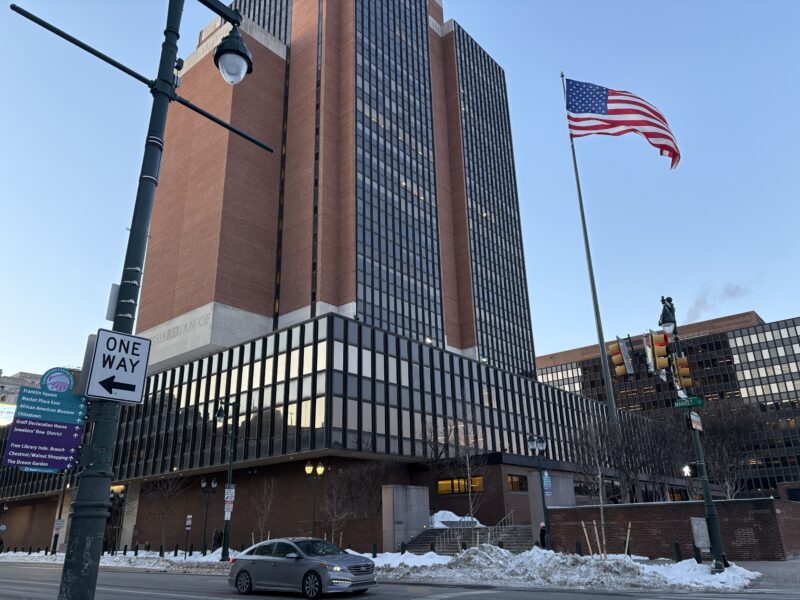
PHILADELPHIA (CN) — Two environmental organizations clashed with New Jersey regulators and a natural gas giant Wednesday in the Third Circuit, battling over whether a controversial interstate pipeline project was properly approved.
For years, the Transcontinental Gas Pipe Line Company — more commonly known as Transco — has sought to expand its approximately 10,000-mile network of pipelines through the creation of the Northeast Supply Enhancement.
If completed, the extension would begin in Lancaster County, Pennsylvania, running under the Lower New York Bay before reaching New York City and the Hudson Valley.
Transco first submitted an application for water quality certification to the New Jersey Department of Environmental Protection in 2019, but that application was denied over insufficient details regarding environmental protections. A second application was also denied in 2020 over a lack of public need.
However, despite few differences from the company’s 2019 request, the New Jersey agency granted Transco’s third application in 2025, requiring only that Transco submit plans for monitoring and adaptive management before construction begins.
Environmental organizations National Resources Defense Council and New York-New Jersey Baywatch promptly sued the agency in appeals court, arguing certification without proper public comment violated both the Administrative Procedure Act and Clean Water Act.
Representing the National Resources Defense Council, attorney Jackson P. Garrity vehemently opposed the project’s certification without assurance of legally required environmental safeguards.
“These errors show an agency struggling to get to ‘Yes,’ and running roughshod over clear statutory requirements and legal principles to get there,” Garrity told the appeals panel.
Questioning Garrity, U.S. Circuit Judge Cheryl Ann Krause asked why the agency’s decision to defer requirement of monitoring and management plans was improper, as precedent exists for doing so amid environmental concerns.
In response, Garrity noted agencies in those instances guaranteed “substantive, meaningful review” later in the approval process, as well as “meaningful public participation.”
“However,” Garrity continued, “in this circumstance, the agency only provided plain instructions for the applicant to come up with a plan at a later date that will be sufficient to assure compliance.”
Allowing the agency to accept Transco’s 2025 revisions without further public comment would “gut the public’s ability to participate,” effectively instituting a loophole allowing the agency to skirt public comment in all certification matters, Garrity added.
Representing New York-New Jersey Baywatch, attorney Kaitlin Morrison took aim at the agency’s handling of an August 2025 stormwater management plan — a 739-page document critical to the pipeline project’s certification — asserting that no notice was ever given as to the plan’s existence.
“They didn’t post it on the public comment website, where they specifically had posted all of the other materials,” Morrison told the appeals panel. “They didn’t provide notice in the bulletin that this new critical document was available for review. They didn’t mention it in the notice of public hearing, nor did they mention it at the public hearing.”
In fact, Morrison added, the environmental organizations didn’t even know the plan existed until they found it in the administrative record during litigation.
Representing the New Jersey Department of Environmental Protection, attorney Nathaniel F. Rubin did not mince his words to the appeals panel: “This is a case about an agency acting in exactly the way the law asks it to.”
But that didn’t stop the panel from questioning whether the agency practiced proper protocol when granting water quality certification.
“The department told Transco that it had to submit these plans, the monitoring and the adaptive management plans,” said U.S. Circuit Judge Arianna J. Freeman, a Joe Biden appointee. “When and how will those submitted plans be scrutinized?”
Rubin replied, noting that Transco would still need to provide sufficient plans for both monitoring and adaptive management in order for the agency to allow construction to begin.
Still, the panel appeared unconvinced that these conditions would be enough.
“There’s no requirement of approval of the adaptive management plan, and there’s no provision for adherence to the adaptive management plan,” said Krause, a Barack Obama appointee. “How is it not arbitrary and capricious, if not a violation of the statute, to give approval? To have assurance of adherence to the standards?”
“We think it’s not arbitrary and capricious as a matter of decisionmaking to issue the approval with these conditions, when there’s the factual understanding that additionally there will be a requirement that the regulated party will nonetheless receive approval from the agency before they are able to begin work,” Rubin replied.
Representing Transco as an intervenor, attorney Richard G. Scott defended the agency’s decision to not provide further public notice of the August 2025 stormwater management report, claiming no law required further action.
“Both [the agency] and Transco complied with their notice obligations under state laws,” Scott told the panel. “Transco provided notice of the application prior to submittal, [the agency] provided public notice that the application was administratively complete.”
“I think the question from the court earlier was, ‘Well, how would they have known that this report was updated?’” Scott continued. “Admittedly, there’s no rule that would have required this to go out to additional public notice.”
Senior U.S. Circuit Judge Jane R. Roth, a George H.W. Bush appointee, rounded out the appeals panel.
 Follow @JacksonHeals
Subscribe to our free newsletters
Our weekly newsletter Closing Arguments offers the latest about ongoing trials, major litigation and rulings in courthouses around the U.S. and the world, while the monthly Under the Lights dishes the legal dirt from Hollywood, sports, Big Tech and the arts.
Additional Reads



 Ocean acidification could be shrinking squid brains July 8, 2026