
 Search Articles


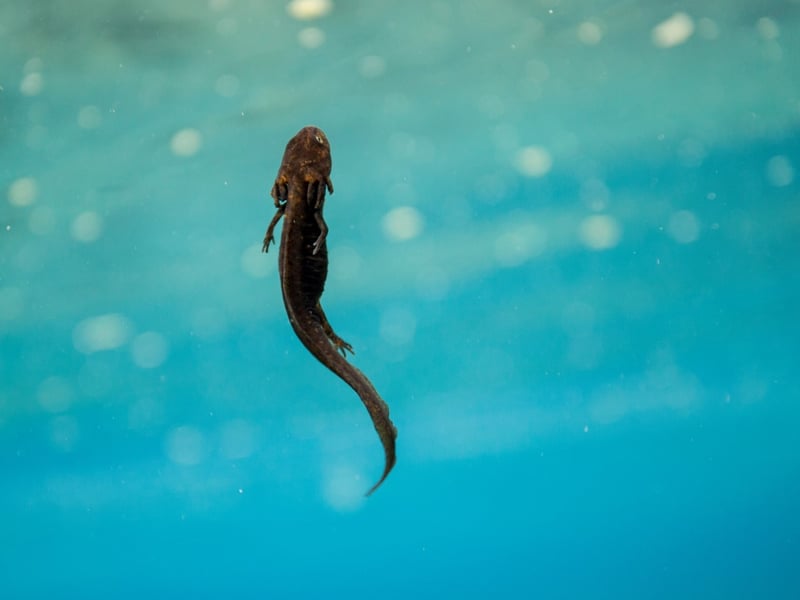
(CN) — The Center for Biological Diversity sued the Trump administration on Thursday for slow-walking Endangered Species Act protections for the Crater Lake newt.
Living only in Oregon’s Crater Lake, the deepest lake in the U.S. and part of a National Park, the newt’s population has been decimated in recent years, thanks largely to the introduction of the signal crayfish. A 2024 scientific survey found only 13 newts, indicating a rapid slide toward extinction.
“Crater Lake newts are on the brink of extinction and if the government waits any longer to protect them it’ll be really tough for these imperiled amphibians to recover,” said Chelsea Stewart-Fusek, an attorney at the Center for Biological Diversity, in a written statement. “These tiny newts are part of what makes Crater Lake so special to Oregonians and the hundreds of thousands of people who visit every year."
The center filed a petition in 2023 to have the Crater Lake newt classified as an endangered species, which would give it certain protections. The U.S. Fish and Wildlife Service, then still under President Joe Biden, announced that the newt may qualify for the endangered designation, triggering a 12-month study period. But the finding, due in November 2024, was never released.
“The service’s failure to meet the ESA deadline for the Crater Lake newt delays lifesaving protections for the newt, increasing its risk of extinction,” lawyers for the center wrote in their complaint, filed in federal court in Portland.
Like many agencies, the Fish and Wildlife Service experienced budget cuts and mass firings earlier this year, thanks to the effort by the Department of Government Efficiency, or DOGE, formerly run by Elon Musk. The loss of some 420 employees may have something to do with the petition’s delay.
Crater Lake newts, also known as Mazama newts, are a subspecies of the more common rough-skinned newt, a carnivore that eats insects, worms and slugs and produces a neurotoxin to ward off predators. But the Crater Lake newt, strangely, evolved at the top of the food chain and never developed the neurotoxin.
In the 1800s, fish were introduced into Crater Lake to attract visitors. In 1915, park managers brought in the signal crayfish as food for the fish. Both fish and crayfish eat the newts, but according to a press release by the Center for Biological Diversity, “it wasn’t until lake temperatures warmed because of climate change that the number of crayfish exploded, devastating newt populations.”
Should the Crater Lake newt gain endangered species status, it could also gain federal funding for a captive breeding program, which would preserve the newt’s numbers. The federal government could also pay for a program to remove some of the crayfish, which now dominate the lake, occupying more than 95% of its shoreline. When that number reaches 100%, scientists say the newt will be extinct. They also say that the crayfish are increasing algae growth in the lake, threatening to alter its famous color and clarity.
“We’re in a biodiversity crisis because of our government’s short-sighted actions,” said Stewart-Fusek in a written statement. “Nearly half of the world’s amphibians are at risk of extinction, and the situation is even worse for salamanders and newts, with three out of five species at risk. We must do what it takes to reverse course and remember that what harms wildlife harms us, too.”
 Follow @hillelaron
Subscribe to our free newsletters
Our weekly newsletter Closing Arguments offers the latest about ongoing trials, major litigation and rulings in courthouses around the U.S. and the world, while the monthly Under the Lights dishes the legal dirt from Hollywood, sports, Big Tech and the arts.