
 Search Articles


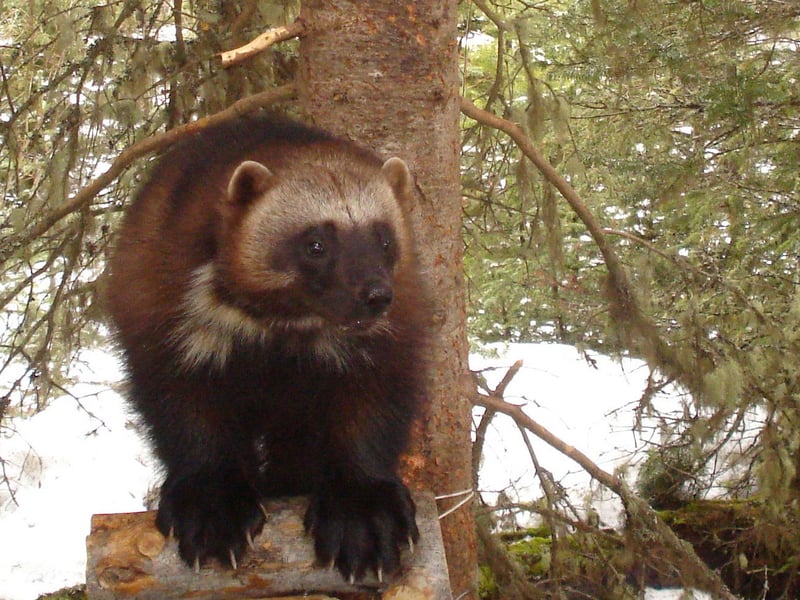
(CN) — An environmental nonprofit sued the U.S. Fish and Wildlife Service Thursday after it passed a deadline to designate critical habitat for threatened wolverines, an iconic forest species protected in the lower 48 states of the U.S.
The Center for Biological Diversity filed the lawsuit in Montana federal court, claiming the Fish and Wildlife Service has hindered North American wolverine recovery by not securing protections for wolverine habitat, particularly in Mountain states such as Idaho, Montana and Wyoming.
“In general, the Fish and Wildlife Service perpetually misses deadlines when it comes to listing species and designating critical habitat,” Andrea Zaccardi, the carnivore conservation program director at the Center for Biological Diversity said in an email to Courthouse News.
“The fact that the Trump administration has fired so many federal employees is probably not helping the agency in meeting deadlines,” she added.
Wolverines were listed as threatened under the Endangered Species Act in 2023. In November 2024, the U.S. Fish and Wildlife Service did not meet its deadline to designate critical habitat for the species.
The medium-sized mammal prefers dense forests with ample snowpack in the winter. The species, a carnivore that often eats carcasses, keeps to large, rugged territories in remote areas. Its habitat is especially susceptible to climate change, with higher temperatures melting essential spring snowpack at a faster rate.
“With so few wolverines in the lower 48 states — estimated at a little over 300 — critical habitat protections are crucial to help the species survive and recover,” said Zaccardi.
In its complaint, the environmental organization says its members “derive recreational, conservation and aesthetic benefits from the wolverine’s existence in the wild.”
Wolverines were subject to intense trapping in the 19th and early 20th centuries and were often poisoned. Regulation on trapping wolverines started in the 1960s, but a ban on intentional trapping wasn’t fully realized in the lower 48 states until its listing under the Endangered Species Act. Alaska is not included in the federal protections, and trapping up to 550 individuals is allowed in the state per year, according to regulations set by the Alaska Department of Fish and Game.
When the wolverine was listed as threatened in 2023, the service had an additional year to determine the animal’s critical habitat.
“Although agencies have to consult with the Fish and Wildlife Service when undertaking projects, such as timber sales, that may impact wolverines, it does not rise to the same level of protection as a critical habitat designation would,” said Zaccardi.
Brian Nesvik, director of the U.S. Fish and Wildlife Service and Doug Burgum, secretary of the U.S. Department of the Interior, are also named as defendants in the lawsuit.
The U.S. Fish and Wildlife Service did not immediately respond to a request for comment.
Subscribe to our free newsletters
Our weekly newsletter Closing Arguments offers the latest about ongoing trials, major litigation and rulings in courthouses around the U.S. and the world, while the monthly Under the Lights dishes the legal dirt from Hollywood, sports, Big Tech and the arts.