
 Search Articles


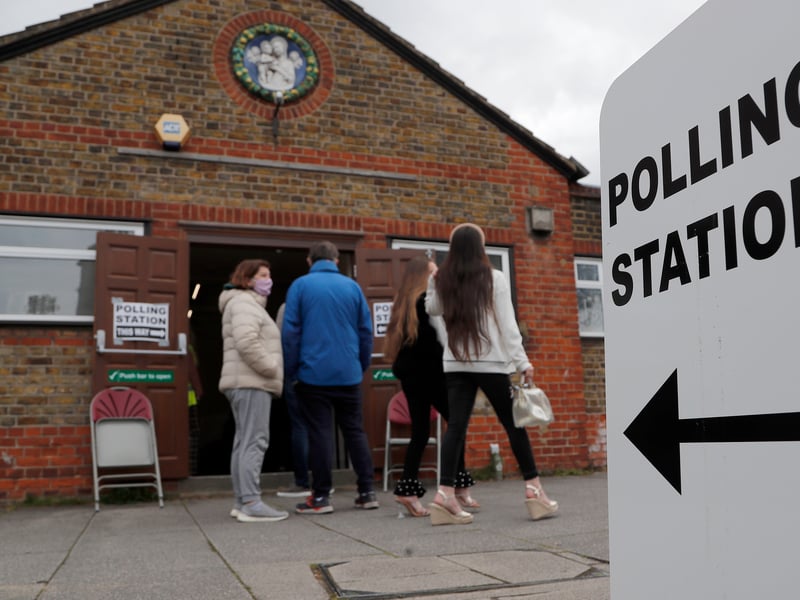
MANCHESTER, England (CN) — A structural shake-up by the British government that will postpone 30 local elections from May until 2027 is generating a backlash from voters and parties alike.
The national government is undertaking a major overhaul to abolish and merge parts of the local government system, creating single councils to handle everything from planning and housing to social care and waste. It will replace the existing two-tier system where services are split between county and district councils.
Local Government Secretary Steve Reed told the House of Commons the move was needed to smooth the transition and avoid spending money on elections for councils that may soon disappear. Ministers say having one level of local government will be simpler and more efficient.
But the postponements have triggered a political furor, led by Reform UK, a right-wing populist party that has surged in national polling and is targeting local councils to accumulate national power.
Elections were due to take place for 4,851 council seats across 134 of England’s 317 councils on Thursday, May 7 — affecting more than 4 million voters.
On Dec. 18, 2025, the government invited 63 councils in areas undergoing reorganization to request a delay. Thirty accepted. Of those, 21 are run by the center-left ruling Labour Party and five by the Conservatives. Two are controlled by the Liberal Democrats, one by the Green Party, and the other is independent.
In last year’s local elections in May, Reform made sweeping gains, picking up more than 600 seats and taking control of 10 councils.
Reform leader Nigel Farage says the move is designed to protect Labour from heavy losses. “Millions of people’s right to vote has been taken away. Reform UK are fighting this denial of democracy in the high court,” he said.
His party has launched a legal challenge, with a judicial review over the decision to delay the elections.
A hearing is scheduled for Feb. 19–20.
Politicians from across parties have attacked the delays, including among Labour’s own ranks.
Labour lawmaker Florence Eshalomi, who chairs a committee on local government, said “democracy is not an inefficiency that should be cut out” during the reorganization process.
She added: “Our councils should not have to face choosing between frontline services or elections.”
Alison Bennett of the Liberal Democrats described the delays as “absolutely shambolic” at a time when “people’s trust in politics and politicians is so low, the idea the government can unilaterally cancel elections only undermines that.”
Experts warn of constitutional risks
Colin Copus, a professor of local politics at De Montfort University, said there is some precedent for delaying local elections, but the current situation is different in scale and intent.
“There is some history of cancelling local elections, for example during the Covid pandemic; shifting the 2009 local elections by a month to coincide with the European Parliament elections; then delaying the nine sets of local elections in 2025,” Copus said.
He pointed to the last major reorganization in the 1970s, when Parliament passed specific legislation to suspend elections while new councils were created.
“But, the difference between 1972–1974 reorganization and today is that there was a specific power in a specific piece of legislation to deal with the cancellation of elections for a specific purpose, rather than as the government is currently doing — relying on a general power contained in the 2000 and the 2007 acts, not specific to a particular election or reorganization,” he said.
Copus said the danger is that election delays become a political tool rather than an administrative fix.
Because local elections often act as a referendum on the government of the day, he said ministers will always be tempted to look for excuses to avoid them when the outlook is bad.
“Losing too many councilors makes a government unpopular and weakens the party,” he said. “Whoever is in power will always be tempted to cancel if they can.”
Copus rejected the argument that councils lack the money or staff to run elections during reorganization. “The solution is simple: Delay the reorganization, not the elections,” he said.
For Copus, “There is no doubt the Labour government is attempting to avoid electoral Armageddon.”
The Electoral Reform Society has also warned that repeated postponements weaken accountability. Its chief executive Darren Hughes said: “Citizens have the right to expect a regular opportunity to express a view about who should exercise power in their name.”
He added: “As a matter of principle, we do not think that capacity constraints are a legitimate reason for delaying long-planned elections,” he said.
A government in trouble
The controversy comes as Prime Minister Keir Starmer’s Labour government faces collapsing public support.
The government’s approval rating stands at 14%. Even among Labour voters, approval has dropped to 30%, with Starmer’s personal ratings among the worst recorded for a modern prime minister.
Several high-profile policy proposals have been scaled back or abandoned, such as welfare reforms and winter fuel payments for pensioners.
The prime minister has also faced severe criticism and calls for his resignation over his judgment in appointing former Labour power broker Peter Mandelson as ambassador to Washington, despite knowing of his continued friendship with convicted child sex offender Jeffrey Epstein.
What voters think
Across local constituencies, much of the reaction has been anger.
Peter, a voter in Southampton where the council delayed elections, said on social media: “The government has no excuse to delay elections, delay reorganization if need be. Who do these elected officials think they are?”
Christopher is from East Sussex, another constituency delaying its vote. He echoed a common sentiment: “If enough of us stopped paying the council tax they wouldn’t be able to do anything,” he said.
Council tax is a levy on the value of a home — similar to property tax in the U.S.
Justin, from a Conservative-controlled area in Norfolk, said the real motive was political. “The reason it’s been canceled is because they know they are all in real risk of losing to Reform,” he posted. “But it’s totally undermining democracy.”
Courthouse News reporter James Francis Whitehead is based in England.
 Follow @jayfranklinlive
Subscribe to our free newsletters
Our weekly newsletter Closing Arguments offers the latest about ongoing trials, major litigation and rulings in courthouses around the U.S. and the world, while the monthly Under the Lights dishes the legal dirt from Hollywood, sports, Big Tech and the arts.