
 Search Articles


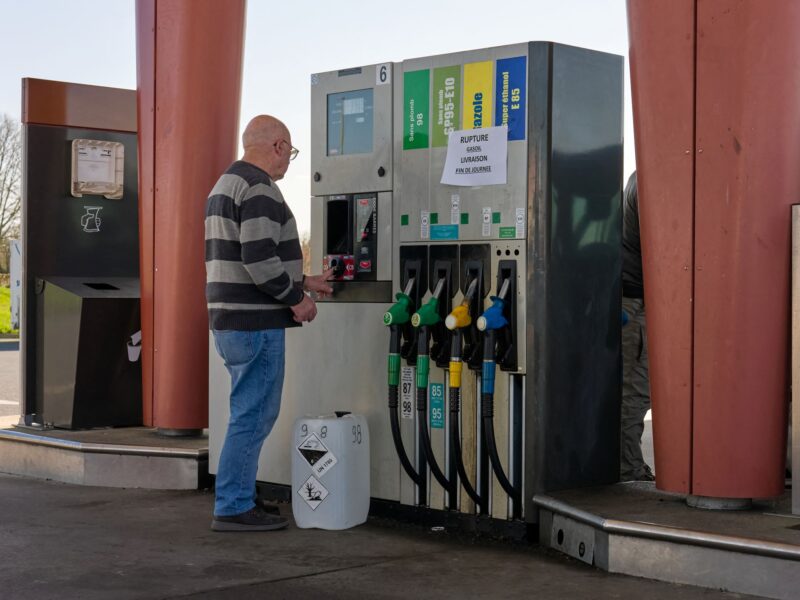
BRUSSELS (CN) — Europe is on track to enter next winter with dangerously low gas reserves, analysts warned Tuesday, as the shutdown of Qatar’s LNG plants and the effective closure of the Strait of Hormuz threatened to derail the continent’s summer storage refill.
European storage is now on track to fall below 20% by the end of the summer refueling season, London-based firm Oxford Economics said Tuesday — making it unlikely to hit the EU’s 80% target by December even if injection rates are relaxed.
Brent crude rose another 5% Tuesday to around $83 a barrel — extending Monday’s gains and touching an intraday high of $85.10, roughly 25% above Friday’s prestrike close — a move Oxford Economics’ Bridget Payne said reflects markets’ “pricing disruption, but not a prolonged closure.” European gas futures have surged more than 40% since the strikes.
In the U.S., the Dow Jones fell nearly 900 points at the open. Germany’s DAX shed 4%, France’s CAC-40 fell 2.9%, and the VIX volatility index surged more than 22% — signaling growing investor anxiety even as oil pulled back from session highs.
The warning came after coordinated U.S.-Israeli strikes on Iran Friday killed Supreme Leader Ayatollah Ali Khamenei and triggered retaliatory attacks across the Middle East. Tehran subsequently closed the Strait of Hormuz — the narrow passage at the mouth of the Persian Gulf through which roughly a fifth of global oil and LNG flows, according to the U.S. Energy Information Administration — to all shipping.
For now, analysts stress this is a price shock, not a supply crisis — though that distinction narrows the longer the strait stays closed.
Still, Qatar’s state energy company halted production Tuesday after what it called military attacks on its facilities. The company also suspended output of aluminum, methanol and urea.
Qatar supplies around 6% of Europe’s LNG imports directly — but its 4.2 trillion cubic feet of total annual exports, now blocked, are sending Asian buyers scrambling for the same spot cargoes that European utilities depend on, driving prices sharply higher across global markets.
Next winter will “almost certainly start from a structurally weaker position,” said Maria Pastukhova, Energy Transition Programme Lead at climate think tank E3G — “most likely at around 70-75% instead of the mandated 90%.”
The real issue, she told Courthouse News, “isn’t that Europe runs out of gas overnight — it’s that lower starting inventories mean every cold spell translates faster into price spikes and industrial demand curtailment.”
The EU is still recovering from the 2022 Russian gas crisis, which roiled European energy markets and triggered a scramble to replace roughly a quarter of the bloc’s gas supply. The disruption sent energy prices to record highs, hammered industrial output across Germany and Italy and pushed the eurozone to the brink of recession.
Counting the cost
Oxford Economics set its Q2 oil baseline at Brent averaging $79 a barrel, up from a precrisis forecast of $64, assuming an average supply disruption of around 4 million barrels per day over the next quarter. Scope Ratings put Tuesday the TTF rise at more than 60% to above 50 euros/MWh ($58/MWh), from 31 euros before the crisis.
The damage won’t stop at energy bills. The cost of hiring a supertanker to move oil from the Middle East to China hit an all-time high of $400,000 a day Monday, nearly double the rate from the previous week, according to the London Stock Exchange Group. Allianz Research warned Tuesday that freight rate increases of 15 to 20% could add between 0.3 and 0.5 percentage points to inflation across European supply chains.
Allianz puts three months of disruption as the threshold beyond which the global economy tips toward recession — with oil potentially hitting $100 a barrel, and $130 in a tail-risk scenario.
“The most reliable tool to shift that risk profile isn’t heroic LNG buying — it’s rapid demand response and structural demand reduction,” Pastukhova added.
Everything hinges on how long the strait stays closed.
Iran has threatened to fire on vessels attempting passage. More than 200 oil and LNG tankers are already anchored outside the chokepoint after insurers suspended coverage Monday for ships attempting the crossing.
Eurostat data published Tuesday showed eurozone inflation at 1.9% in February, just below the European Central Bank’s 2% target, with energy still acting as a drag at -3.2%. Oxford Economics economist Riccardo Marcelli Fabiani said any price increases would likely be driven by supply-chain costs rather than demand, putting runaway inflation “off the table.”
Any policy response would depend on “the breadth and duration of the conflict,” said the bank’s Executive Board member Philip Lane in an interview released Tuesday.
The Strait of Hormuz is “a systemic artery of the global economy, including of course LNG supply,” said European Commission Executive Vice President Teresa Ribera. “Any disruption sends shockwaves through oil markets, gas prices, inflation expectations.”
The European Commission’s Energy Task Force is expected to explore expanded imports through Azerbaijan’s Southern Gas Corridor — currently 388 billion cubic feet annually, with an EU target of 706 Bcf by 2027 and no Hormuz exposure. That remains a fraction of the Qatari volumes now blocked.
But the crisis exposes a deeper structural problem. “Going from one dependency to another can’t be Europe’s model for resilience and competitiveness,” Ribera said, noting that Europe had shifted reliance from Russian gas to Gulf and U.S. supplies — only to find Gulf supplies now disrupted and U.S. imports increasingly subject to political risk.
German Chancellor Friedrich Merz heads to the White House Tuesday to press U.S. President Donald Trump not to exceed the 15% tariff cap agreed last summer — a reminder that Europe is navigating an energy shock and a trade dispute with its most important ally simultaneously. A tariff escalation would reduce the fiscal headroom European governments have to cushion consumers and industry from rising energy costs.
Courthouse News correspondent Yuval Molina is based in Brussels, Belgium.
Subscribe to our free newsletters
Our weekly newsletter Closing Arguments offers the latest about ongoing trials, major litigation and rulings in courthouses around the U.S. and the world, while the monthly Under the Lights dishes the legal dirt from Hollywood, sports, Big Tech and the arts.