
 Search Articles


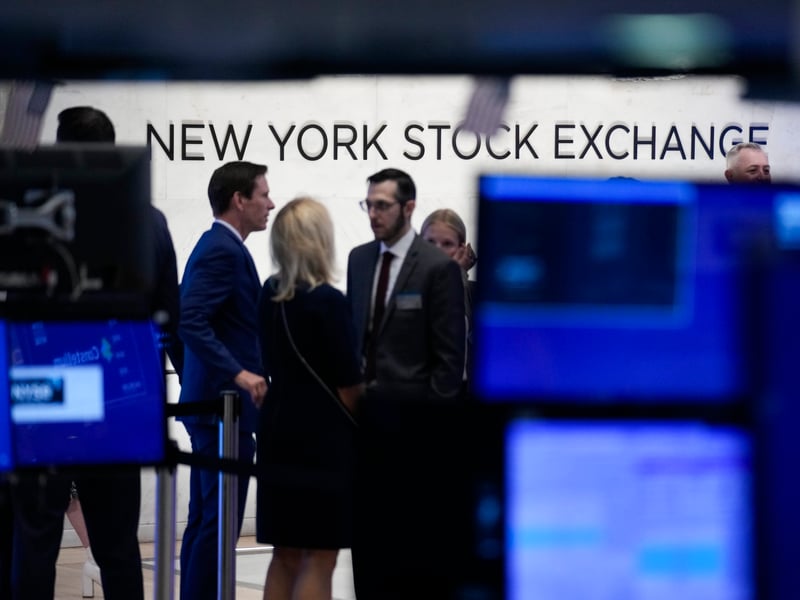
MANHATTAN (CN) — Investors put their foot back on the gas pedal this week as a number of reports show inflation continuing to cool, unemployment moving back down and consumer sentiment rising up.
Markets chugged along all week, with Wednesday seeing the biggest gains. All told, the Dow Jones Industrial Average gained 678 points for the week, while the Nasdaq picked up 295 points and the S&P 500 netted 102 points during that period.
The main news came on Friday, when the Bureau of Economic Analysis reported that personal consumption expenditures, one of the key measures of national inflation, showed a 0.1% increase last month and a 0.3% increase in core inflation. Inflation is now 3.8% higher than it was a year ago.
The report wasn’t entirely positive, as consumer spending was weaker than forecast and has continued to slow. The lower spending also helped nudge the savings rate higher, from 4.3% to 4.6%, though savings is still far below the pre-pandemic reading of at least 7%.
The data show the 2023 economy has been off to a better start than most experts originally thought it would and better than other industrialized nations.
“As consumer spending cools, we expect inflationary pressures to ease further throughout the balance of 2023,” said Jeffrey Roach, chief economist at LPL Financial. “From a global perspective, the domestic inflation environment is materially better in the U.S. than for our international counterparts.”
The data could provide justification for the Federal Reserve to again pause interest rates when it convenes in late July, but most experts are hedging against that scenario. In a speech this week, Fed Chair Jerome Powell hinted again that further rate hikes could be coming later this year, noting many voting members of the central bank think at least two more rate hikes could be necessary.
Another positive for Wall Street: Gross domestic product for the first quarter was revised up to 2% from an earlier estimate of 1.3%. While most had expected a slight upward revision to GDP, this was more than half a percentage point higher than the consensus forecast.
Main Street seems more upbeat now, too. On Friday, the University of Michigan reported a significant increase in consumer sentiment, from 59.2 last month to 64.4 this month, the highest level in four months. Consumer sentiment is far above the low point from a year ago, but it is still low on lingering concerns about a possible recession.
“Inflation continues to be the top economic factor influencing consumer attitudes, and the slowing in inflation is welcome news,” said Joanne Hsu, the survey’s chief economist. “The fight against inflation has far to go before consumers feel more settled about the economy.”
Earlier in the week, the Conference Board’s own index showed consumer confidence increased this month from 102.5 to 109.7, above the 104 consensus forecast. The board’s “present situation index also increased and the “expectations” index gained significantly from 71.5 to 79.3, while the number of consumer respondents saying a recession is somewhat or very likely over the next year dropped to 69%.
“Consumers were relieved the see the debt ceiling standoff resolved without a credit rating downgrade or a big shock to the financial system,” said Bill Adams, chief economist at Comerica Bank, adding that this recent bounce in consumer confidence echoes a similar rebound in late 2011 following the resolution of a similar debt ceiling crisis.
A U.S. Chamber of Commerce index did not reflect as big an upwards shift, but still showed the silver lining is starting to overtake recent dark clouds. While the overall index increased from 60 to 63.1, the percentage of small business owners expecting an increase in revenue and hiring this quarter are at record highs for the six-year-old index.
“The challenges of our current economy may have delayed some small business owners’ plans to expand or hire more staff, but now they see opportunity for growth on the horizon,” said Tom Sullivan, vice president of small business policy at the chamber. “There has been a strong majority reporting that their business is in good health over the last year and it’s clear many have high expectations for the future.”
Another bright point has been the labor pool. Initial unemployment claims had been rising steadily the past few weeks. Not in the latest batch, when they unexpected dropped by 26,000 claims to hit 239,000 during the week ending June 24, according to the Department of Labor.
“We expect that jobless claims will rise later in the year as the economy weakens and falls into a recession,” wrote Nancy Vanden Houten at Oxford Economics in an investor’s note. “Given our forecast for the recession to be mild, along with the difficulties employers have faced hiring workers following the pandemic, we expect job losses in this recession will be relatively small compared to prior recessions.”
Adams noted the previous uptick in unemployment may have been due to the Canadian wildfires preventing outdoor employees from working.
“On balance, the recent trend in jobless claims suggest a moderation in economic growth, but not a hard turn lower,” he said.
 Follow @NickRummell
Subscribe to our free newsletters
Our weekly newsletter Closing Arguments offers the latest about ongoing trials, major litigation and rulings in courthouses around the U.S. and the world, while the monthly Under the Lights dishes the legal dirt from Hollywood, sports, Big Tech and the arts.