
 Search Articles


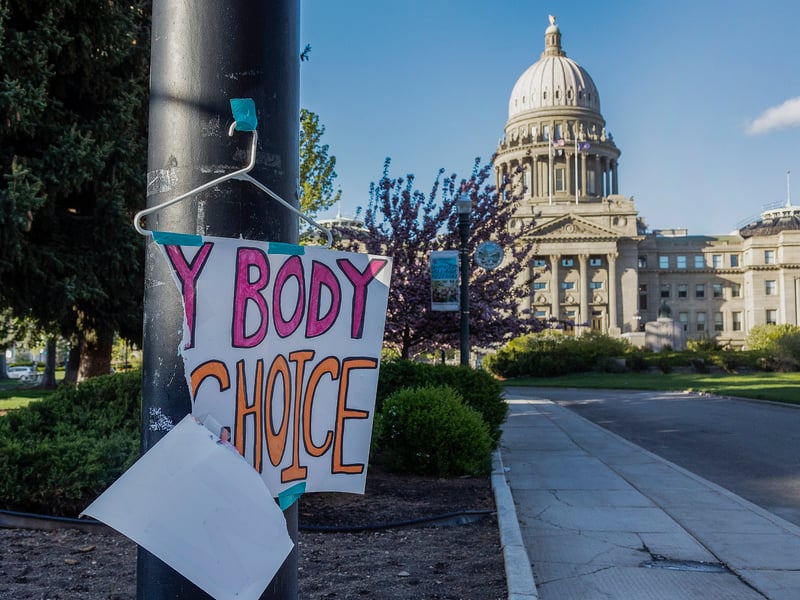
PASADENA, Calif. (CN) — An en banc panel of the Ninth Circuit Court of Appeals will need to decide after a hearing Tuesday whether a preliminary injunction blocking a Idaho law which criminalizes almost all abortions in the state should stay in place.
The hearing before a panel of 11 judges follows a 2023 decision by the customary panel of three appellate judges, all Donald Trump appointees, who allowed the Idaho to enforce its Defense of Life Act.
After the Ninth Circuit vacated that decision pending the en banc review, the U.S. Supreme Court temporarily stayed the lower court’s injunction at Idaho’s request.
However, in June, the Supreme Court ruled in an unsigned opinion that Idaho shouldn’t have been granted emergency relief allowing the state to ignore federal health care protections in favor of its abortion ban. That decision sent the case back to the Ninth Circuit, which after almost a year-long delay will now have to decide if the preliminary injunction should stand.
U.S. Circuit Judge Consuelo Callahan, a George W. Bush appointee, was quick to question whether — what with a new administration coming in, who presumably may not be interested in pursuing the lawsuit brought by the Biden administration, and with the various changes to the Idaho legislature has made to the law since it was passed in 2020 — it might not better to send the case back to a federal judge in Boise to address those changes on the ground.
“Is this an exercise in futility?” Callahan asked John Bursch, an attorney representing Idaho. “You’ve said the parade horribles, none of those have occurred. You have said every day Idaho can’t have its law in effect is a terrible day, but none of the things that anyone has talked about has happened.”
Bursch responded that they didn’t know if the new Trump administration would end the case. The current administration sued Idaho because the “total abortion ban,” it claims, conflicts with the U.S. Emergency Medical Treatment and Labor Act, or EMTALA, which guarantees access to abortion care when it is necessary to stabilize emergency medical conditions that put a pregnant person’s health in serious jeopardy.
Taylor Meehan, an attorney for the Idaho legislature, argued separately that there was no conflict between the act and the Idaho law. Specifically, she told the panel, the decision last year by the Idaho Supreme Court in a lawsuit brought by Planned Parenthood made it clear that prosecutors shouldn’t second guess doctors’ good faith decision to perform an abortion if they believe it’s necessary.
“The Idaho Supreme Court says of course you can question whether the judgment is in good faith if an abortion is provided for a paper cut,” Meehan said. “But if you look very closely at … the opinion, the Idaho Supreme Court is declining to put any more standards on that good faith, subjective requirement.”
The Idaho law, she stressed, is a prohibition on “criminal abortions,” not on medical treatment.
U.S. Circuit Judge Salvador Mendoza Jr., a Joe Biden appointee, expressed concern, though, that in the wake of the Idaho abortion ban, whole obstetrics departments have closed down in rural areas.
“There are no services available for women who, let’s say, have a situation where they are bleeding out,” Mendoza said. “Does she have to rely on a hopefully working vehicle to drive into Spokane, Washington to get services there?”
Mendoza pointed out the declarations submitted with the court that show that more people from Idaho have started to cross the border to obtain medical services in other states, including Washington.
“Which is the very thing that Congress was trying to avoid,” Mendoza said, referring to the Emergency Medical Treatment and Labor Act. “They were trying to set a baseline level of care for the country, and this happens to be one of the services that is necessary under certain medical situations.”
Catherine Carroll, an attorney with the U.S. Justice Department, told the panel that neither the modifications of the Idaho law or the Idaho Supreme Court’s decision had erased the conflict between the abortion ban and federal law.
The Emergency Medical Treatment and Labor Act guarantees that any patient who walks into the emergency room of a federally funded hospital will be given treatment. The 1986 law was enacted to prevent hospitals from turning away patients with health emergencies because of their health insurance or ability to pay.
In the months after the U.S. Supreme Court overturned Roe v. Wade , President Joe Biden said the law protected the right to emergency abortion access in states with bans on the procedure. Under that logic, the act would force states to provide abortion care when a patient’s health was at risk, even if the state’s ban only allowed abortions when death was a risk.
Idaho’s Defense of Life Act is one such ban. The law forced doctors to weigh whether a patient was close enough to death to qualify for an abortion. Hospitals had to either wait until the patient’s condition deteriorated further or send them out of state to receive care.
The Ninth Circuit panel included one Bill Clinton appointee, two George W. Bush appointees, two Barack Obama appointees, four Trump appointees, and two Biden appointees.
 Follow @edpettersson
Subscribe to our free newsletters
Our weekly newsletter Closing Arguments offers the latest about ongoing trials, major litigation and rulings in courthouses around the U.S. and the world, while the monthly Under the Lights dishes the legal dirt from Hollywood, sports, Big Tech and the arts.