
 Search Articles


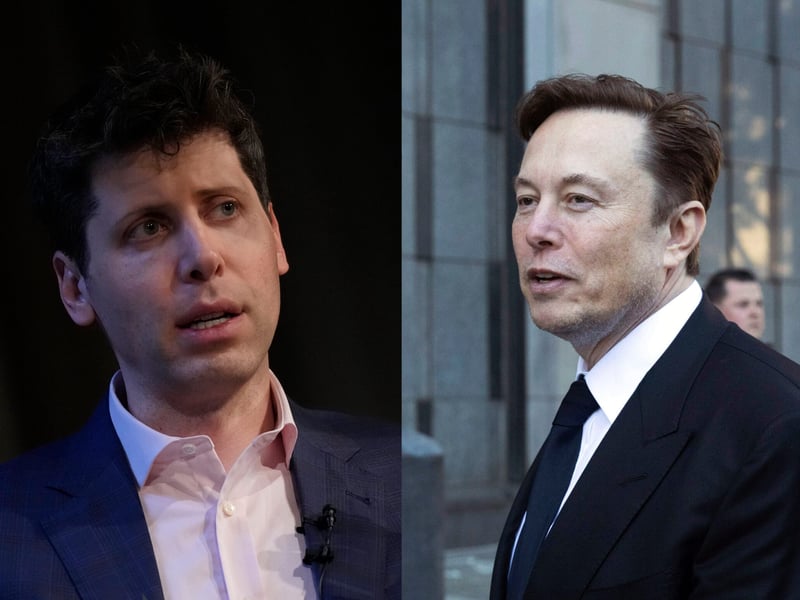
(CN) — In September 2017, Elon Musk sent an ultimatum to the leaders of OpenAI, the artificial intelligence nonprofit he co-founded and funded with tens of millions of dollars.
“Either go do something on your own or continue with OpenAI as a nonprofit. I will no longer fund OpenAI until you have made a firm commitment to stay or I’m just being a fool who is essentially providing free funding for you to create a startup,” the billionaire said then.
OpenAI CEO Sam Altman responded the next day, “I remain enthusiastic about the non-profit structure!” Greg Brockman, another co-founder, made similar assurances.
However, in personal notes, Brockman wrote that he could not honestly say the company was committed to remaining a nonprofit, warning that if it shifted to a for-profit structure just a few months later, any claim of commitment would be a lie.
Those contradictions were enough for U.S. District Court Judge Yvonne Gonzalez Rogers to deny OpenAI’s motion for summary judgment on Thursday, allowing Musk’s fraud claims against the company to proceed to trial.
The trial is scheduled to start April 27 and run through the end of May.
In a 32-page order, the Barack Obama appointee in the Northern District of California found enough evidence to create factual disputes about whether OpenAI’s founders deceived Musk about their intentions to maintain the organization’s nonprofit structure.
“Brockman’s electronic notes could be read to suggest that Brockman intended to deceive,” Rogers wrote.
Musk donated about $38 million to OpenAI between 2016 and 2020, saying the company’s founders agreed from the start that the technology would be owned by a foundation, used for the benefit of the public and not structured to generate private profit.
But by 2019, OpenAI had created a for-profit subsidiary and started taking billions in investment from Microsoft. The company also moved some of its intellectual property and employees from the nonprofit to commercial entities.
OpenAI attempted to dismiss the case on multiple grounds, arguing that Musk lacked legal standing to sue because he donated through intermediary charitable funds rather than directly to the organization. But Rogers rejected that argument.
“Holding otherwise would significantly reduce the enforcement of a large swath of charitable trusts, contrary to the modern trend,” she said.
The company also said that Musk’s claims were time-barred because he should have known about the reported fraud by 2019, when OpenAI publicly announced its for-profit subsidiary. But Rogers found genuine disputes about when Musk discovered or should have discovered the full extent of the structural changes, noting he continued donating to OpenAI through September 2020.
Rogers also addressed Microsoft’s role in OpenAI’s transformation. She denied Microsoft’s motion to dismiss claims that it aided and abetted a breach of fiduciary duty, pointing to internal communications that suggested awareness of potential issues with OpenAI’s nonprofit donors.
In March 2018, Microsoft’s Chief Technology Officer wrote: “Ideologically, I can’t imagine that they funded an open effort to concentrate [machine learning] talent so that they could then go build a closed, for-profit thing on its back."
Notes from a Microsoft meeting in October 2020 show the company discussed effectively owning OpenAI and considered Musk’s perspective on what they referred to as a closed OpenAI.
OpenAI is now valued at roughly $500 billion and among the world’s most prominent AI companies.
Musk, who resigned from OpenAI’s board in February 2018 and has since launched a competing AI venture called xAI, has become one of the company’s most vocal critics.
Representatives for Musk, Sam Altman and OpenAI did not immediately respond to requests for comment.
 Follow @JeremyYurow
Subscribe to our free newsletters
Our weekly newsletter Closing Arguments offers the latest about ongoing trials, major litigation and rulings in courthouses around the U.S. and the world, while the monthly Under the Lights dishes the legal dirt from Hollywood, sports, Big Tech and the arts.