
 Search Articles


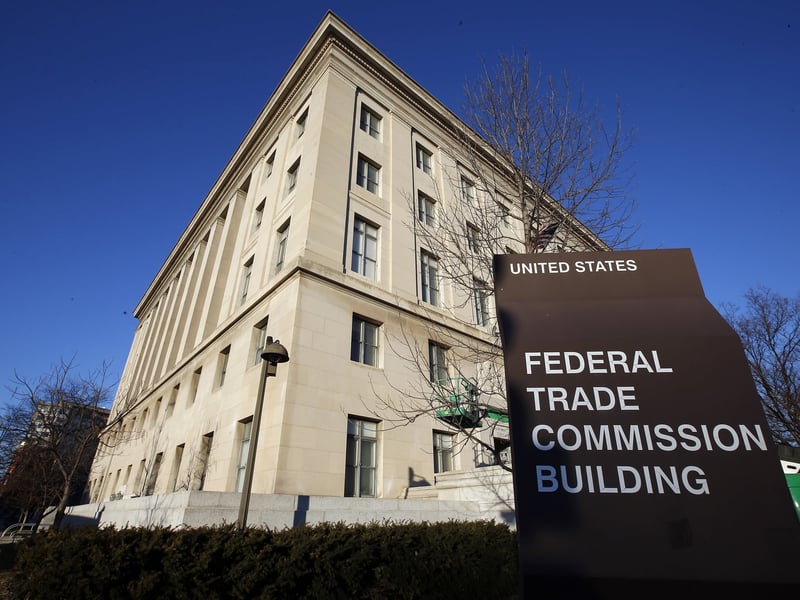
SAN DIEGO (CN) — Three men who promoted themselves as e-commerce experts will pay nearly $22 million per the terms of a stipulated order in a suit in brought by Federal Trade Commission.
Roman Cresto, John Cresto and Andrew Chapman falsely promoted themselves businessmen who could teach others how to get rich quick online, deceiving consumers into purchasing a venture capital-backed, artificial intelligence business opportunity, the Federal Trade Commission said in its complaint.
Relying on a jumbled mix of finance and technology buzzwords, the FTC says the Crestos and Chapman in 2020 set up a scheme in which they charged people anywhere from $10,000 to $125,000 for the opportunity to start a online store on Amazon or Walmart through their own companies, Empire and Onyx.
For that initial investment, according to the complaint, they promised to not only manage the stores, but find products for them and fulfill orders, while their artificial intelligence program maximized revenue. All investors had to do, they said, was kick in capital, give up 35% of their profits to Empire, and sit back and collect passive income as silent partners.
“In truth, virtually all purchasers did not earn the advertised income. Most lost their entire investment and got saddled with hefty credit card debts,” the FTC said in the complaint. “Moreover, nearly all the online stores that Empire LLC established and managed for its clients on Amazon.com and Walmart.com got suspended, and ultimately terminated, by those platforms for policy violations, leaving many clients banned from selling on those platforms.”
The trio’s business model combined two popular methods of product sourcing: online sales arbitrage, where people buy a product from another online seller and then resell it themselves for a higher price; and drop-shipping, where someone sells a product they don’t physically have but rather order the product through a third party after someone orders it from them.
Amazon allows drop-shipping, but sellers have to abide by certain policies that Empire managed stores didn’t comply with, according to the FTC. Within months, the majority of the defendants’ stores were suspended for violating drop-shipping and intellectual property rights, and by October 2022, most of the stores were gone, and with them, their “investors” money, according to the federal agency.
At the beginning of 2023, the trio started Automators LLC, and two brands, Automators AI and Ecom Skool, which offered similar schemes to investors for between $35,000 and $65,000, and $5,000 coaching services which promised to teach clients about using the AI program ChatGPT to write customer service scripts.
By paying marketers and using videos on social media to advertise their schemes, the trio “caused consumers across the country over $22 million in harm,” according to the complaint.
The stipulated order signed by U.S. District Judge Dana Sabraw, a George W. Bush appointee, required the defendants to pay nearly $22 million to an equitable monetary relief fund controlled by the FTC for consumer redress.
The order also permanently bans the defendants from advertising, marketing, distributing, promoting, selling, or assisting in any business opportunities relating to the operations of e-commerce stores or business coaching programs for e-commerce.
Maren B. Hufton, an attorney for the defendants, declined to comment on the order.
Representatives of the Federal Trade Commission did not immediately respond to requests for comment.
Subscribe to our free newsletters
Our weekly newsletter Closing Arguments offers the latest about ongoing trials, major litigation and rulings in courthouses around the U.S. and the world, while the monthly Under the Lights dishes the legal dirt from Hollywood, sports, Big Tech and the arts.