
 Search Articles


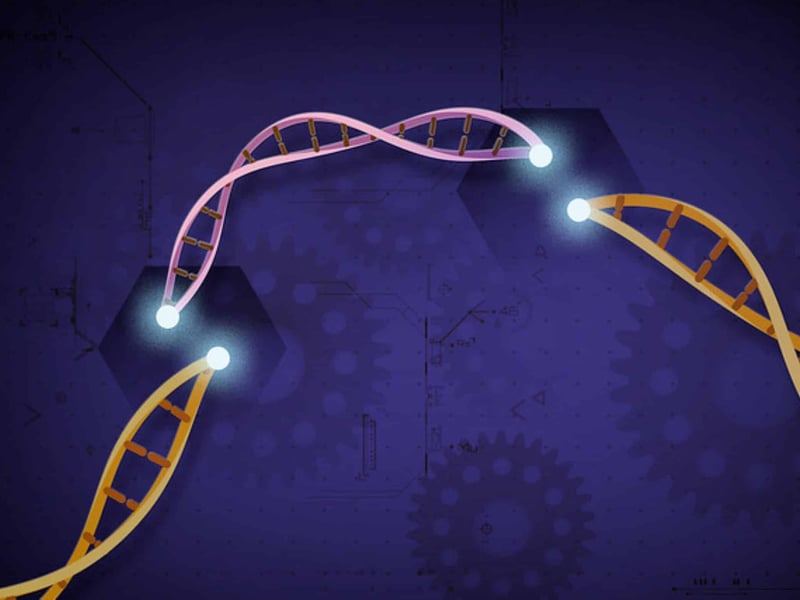
(CNS) — A new study from the journal Science Advances sheds light on how dormant pieces of DNA in the human genome activate cancers — but also how turning them off could help fight the disease.
Approximately 8% of the human genome sequence consists of DNA from ancient viruses, called endogenous retroviruses, which infected our primate ancestors tens of millions of years ago. Though the virus DNA itself can’t make people sick anymore, studies show the remnants could switch on nearby genes, often with beneficial results.
Retroviruses helped create the placenta, the temporary organ that provides nutrients for a fetus, and some of our immune responses to modern viruses like Covid. But researchers in this study delved into retroviruses’ less-explored negative effects.
Edward Chuong, a professor of molecular, cellular and developmental biology at CU’s BioFrontiers Institute, and Atma Ivancevic, a postdoctoral fellow and lead researcher on the study, led a team of seven researchers who conducted analyses of 21 types of cancer found in humans. The team examined publicly available DNA sequence datasets for groups of cancer patients.
Ivancevic and the team found that DNA linked to LTR10, a family of retroviruses that affected primates roughly 30 million years ago, was highly active in many kinds of cancer cells, including lung and colon cancer, including activity in tumors in about a third of colorectal cancer patients studied. Normal non-cancerous cells didn’t show LTR10 activity.
The researchers then used the CRISPR gene-editing tool to remove DNA strands with LTR10 present. Without the retrovirus, genes that boost cancer development and growth went quiet.
“We saw that when you silence this retrovirus in cancer cells, it turns off nearby gene expression,” said Ivancevic.
Ivancevic and Chuong found similar results in experiments on mice.
“We know that cancer cells express a lot of genes that are not supposed to be on, but no one really knows what is turning them on,” Chuong said. “It turns out many of the switches turning them on are derived from these ancient viruses.”
The scientists also examined how a key type of cancer drug functions. MAP-kinase (mitogen-activated protein kinase) inhibitors shut down cancer cell reproduction in a cellular pathway often adversely affected by cancers.
Chuong and Ivancevic said that LTR10 regulates as many as 70 genes associated with the MAP-kinase pathway, including a pair of genes partially responsible for tumor growth and therapy resistance. Removing the retrovirus meant cancer drugs worked better in mice.
“The origins of how diseases manifest themselves in the cell have always been a mystery,” Chuong said. “Endogenous retroviruses are not the whole story, but they could be a big part of it.”
Subscribe to our free newsletters
Our weekly newsletter Closing Arguments offers the latest about ongoing trials, major litigation and rulings in courthouses around the U.S. and the world, while the monthly Under the Lights dishes the legal dirt from Hollywood, sports, Big Tech and the arts.