
 Search Articles


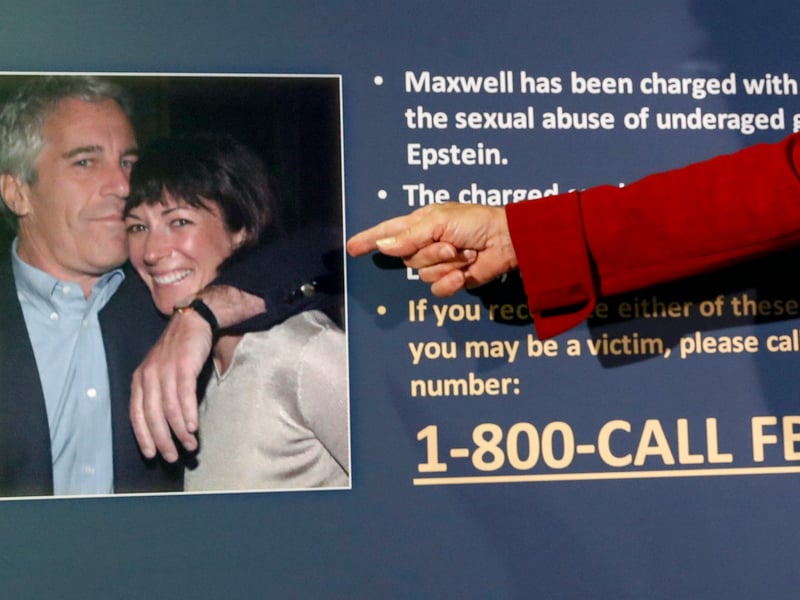
WASHINGTON (CN) — As the White House tries to tamp down fervor after reneging on a promise to reveal documents related to pedophile financier Jeffrey Epstein, his longtime associate is leaning on claims of a broken agreement to overturn her 20-year prison sentence.
Epstein’s 2007 sweetheart deal with federal prosecutors in Florida included an immunity clause for his potential coconspirators. Ghislaine Maxwell, a former socialite and loyal companion to Epstein, says her conviction violated that agreement.
“A defendant should be able to rely on a promise that the United States will not prosecute again, without being subject to a gotcha in some other jurisdiction,” Maxwell wrote in an appeal to the Supreme Court.
Maxwell appealed to the Supreme Court in April, but her petition has garnered greater attention with the Trump administration embroiled in a firestorm after walking back vows to release files exposing prominent figures connected to Epstein.
Unlike conspiracy theorists online, however, Maxwell’s appeal caught the attention of criminal defense experts who worry that dwindling trust that the government will keep its word could hamstring future plea agreements. The National Association of Criminal Defense Lawyers said this was particularly concerning when the justice system is, for the most part, a system of pleas, not trials.
“For the plea system to work in practice, defense counsel and defendants must be able to rely on the written promises made by the government and trust that courts will honor and enforce those promises down the road, even when it means that the Department must forego a meritorious prosecution,” the association wrote.
The government has overwhelming power in criminal prosecutions, David Super, a law professor at Georgetown, said, leaving the defendant extremely vulnerable.
“That great power allows the government to extract very favorable terms if it so desires (although that does not appear to have occurred in Epstein’s case),” Super wrote in an email. “If the government then is not required to adhere to the terms it does agree to, defendants are left even more vulnerable.”
Florida law enforcement called the FBI to investigate Epstein in 2006 after a 14-year-old girl reported that he paid her for a massage. Federal investigators found more victims, preparing a 60-count indictment.
Before the case could begin, however, Epstein and the United States Attorney’s Office came to a plea agreement. For pleading guilty to soliciting children to engage in prostitution, Epstein would serve 18 months in a county jail. He only ended up serving 13 months, during which he was allowed to leave the jail for 12 hours a day, six days a week as part of a work program.
Epstein’s controversial plea deal was the star of a scandal during President Donald Trump’s first administration. The federal prosecutor who approved the deal, Alexander Acosta, happened to be serving as Trump’s labor secretary before he was forced to resign.
Plea deals are more common when prosecutors want to target co-conspirators, not protect them, Super said. In the rare circumstances that these protections have been offered, Super said the agreements protect people of significance to the defendant.
“The fact that the U.S. Attorney, Mr. Acosta, agreed to open-ended protection for unnamed and unknown co-conspirators may be further evidence of the highly accommodating attitude toward Epstein,” Super said.
If Epstein abided by the plea deal, the “United States” agreed not to seek criminal charges against any potential coconspirators. The dispute at the Supreme Court is whether the United States refers to the country as a whole, preventing Maxwell’s prosecution anywhere, or just those brought in Florida.
The Trump administration urged the justices to reject Maxwell’s petition, stating that the coconspirators clause was meant to protect victims. The White House said that the United States referred to the United States Attorney’s Office.
Trump has faced harsh scrutiny from his typically steadfast base when the Justice Department announced it wouldn’t be releasing a supposed list of high-powered individuals connected to Epstein. The fervor only grew after The Wall Street Journal published a birthday card to Epstein signed with Trump’s name.
If documents from the Epstein investigation are released, it’s unlikely that they would be helpful in Maxwell’s appeal at the Supreme Court, where the justices will be solely focused on technical legal questions.
However, Maxwell could benefit from the attention on the case. On Wednesday, the Justice Department announced its intentions to meet with Maxwell to discuss her knowledge of Epstein’s actions. The House Oversight Committee also approved a subpoena for Maxwell on Monday.
“Maxwell clearly has information about Epstein’s activities and other individuals involved,” Super said. “Were she to release that information, it would serve some of the same purpose as releasing the files themselves. This could give her leverage with anyone who seeks to block the files’ release to negotiate an improvement in her situation.”
Maxwell’s attorney, David Oscar Markus, confirmed the ongoing discussions.
“I can confirm that we are in discussions with the government and that Ghislaine will always testify truthfully,” Markus wrote on X. “We are grateful to President Trump for his commitment to uncovering the truth in this case.”
 Follow @KelseyReichmann
 Follow @kelseyreichmann.bsky.social
Subscribe to our free newsletters
Our weekly newsletter Closing Arguments offers the latest about ongoing trials, major litigation and rulings in courthouses around the U.S. and the world, while the monthly Under the Lights dishes the legal dirt from Hollywood, sports, Big Tech and the arts.