
 Search Articles


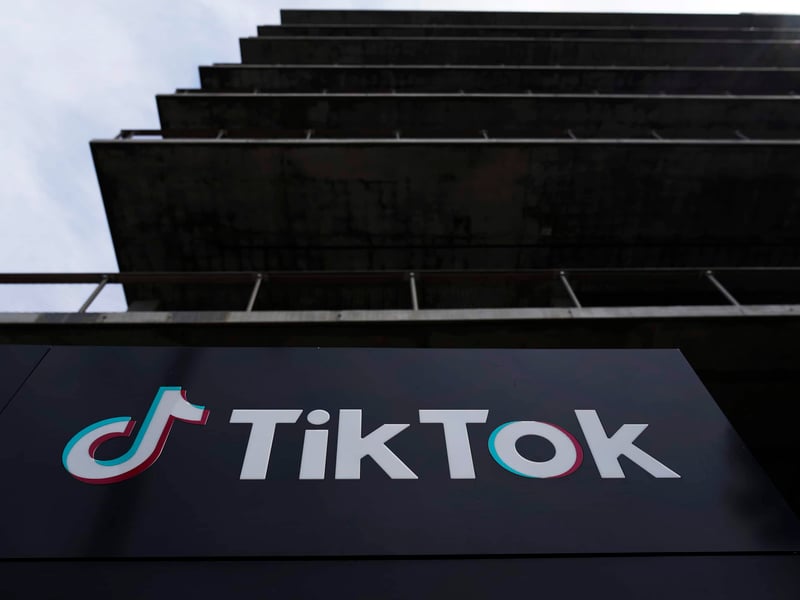
WASHINGTON (CN) — The Justice Department Wednesday urged a D.C. Circuit panel to reject social media giant TikTok’s request to temporarily freeze a looming Jan. 19 ban, suggesting that is an issue for the Supreme Court to consider.
“Petitioners are entitled to ask the Supreme Court to enjoin the law’s application pending that court’s review, and they expressly reserved the right to do so and set a schedule that would allow time for it,” the Justice Department said. “They are not entitled, however, to an injunction against an act of Congress when the only court to consider their constitutional challenge has rejected it.”
TikTok asked the D.C. Circuit to enjoin the ban earlier this week, after a three-judge panel ruled last Friday that the government’s effort to force the app’s divestiture from Chinese parent company ByteDance was constitutional.
The panel found that the government’s national security concerns regarding TikTok’s Chinese ownership, China’s purported ability to covertly manipulate content on the app and collect users’ data overrode the social media company’s First Amendment concerns.
U.S. Senior Circuit Judge Donald Ginsburg explained in the panel’s opinion that the court was required to follow Supreme Court precedent and must afford “great weight” to national security judgments, especially those made by presidents.
TikTok requested the D.C. Circuit decide by Dec. 16 on whether to grant the injunction and will respond to the government’s filing on Thursday.
In its brief, the Justice Department reiterated its position that the Jan. 19 deadline — 270 days after the bipartisan Protecting Americans from Foreign Adversary Controlled Applications Act was passed in April — was enough time for TikTok to divest itself.
“Petitioners’ arguments on the merits merely rehash the assertions this court has already rejected,” the Justice Department said. “They give short shrift to the national-security harms that all three branches of government have now credited.”
Ginsburg, a Ronald Reagan appointee, explained that determinations by President-elect Donald Trump in 2019, President Joe Biden in 2021 and by Congress that China is a foreign adversary justified the statute and supported the idea that TikTok posed a national security threat.
The Justice Department argued that TikTok’s extraordinary remedy was the sort of relief that should be used sparingly and only in the most critical circumstances where the legal rights at issue are “indisputably clear.”
Soon after initially challenging the statue, TikTok and the Justice Department requested in a joint motion that the D.C. Circuit issue its decision by Dec. 6.
“Having agreed to a schedule that specifically contemplated the need to seek relief from the Supreme Court following a Dec. 6 decision, petitioners cannot now reasonably turn around and claim that the schedule they proposed does not provide a reasonable opportunity for orderly opportunities in that court,” the Justice Department said.
Further, the request to enjoin an act of Congress touches on the “gravest and most delicate duty” of any court, the Justice Department said, adding that the Supreme Court has traditionally presumed that congressional acts should remain in effect until the justices reach a final decision.
“That practice reflects the ‘presumption of constitutionality which attaches to every act of Congress,’” the Justice Department said.
TikTok’s request would overturn that presumption and require the justices to disagree completely with the D.C. Circuit panel’s analysis of the statute.
The Justice Department rejected TikTok’s assertion that the government’s national security concerns were merely speculative, noting that the panel reviewed an extensive factual record. That record led the panel to determine that concerns regarding TikTok’s continued Chinese control were well-founded, and not speculative.
If the Supreme Court decides not to intervene, TikTok may turn to Trump, who pledged in September to save the platform after he takes office on Jan. 20 — a reversal from his efforts to force the app’s divestiture during his first term.
Trump has not commented on the D.C. Circuit’s ruling, leaving his intentions unclear. However, potential members of his cabinet, such as Secretary of State-nominee Marco Rubio and Federal Communications Commission chair-nominee Brendan Carr have supported a ban over national security concerns.
The case stems from a lawsuit filed by TikTok at the D.C. Circuit to block the ban, which it described as an obvious, extraordinary and unconstitutional restriction of speech. A group of TikTok content creators filed a similar lawsuit, arguing that the ban would deprive them of their livelihoods, and joined TikTok in its request for an injunction.
Lawmakers slipped a sweeping foreign-aid package into the act that also included around $95 billion for Ukraine, Israel and Taiwan. The act passed with a wide bipartisan margin as Congress argued the platform posed a national security threat. Biden signed it into law April 24.
 Follow @Ryan_Knappy
Subscribe to our free newsletters
Our weekly newsletter Closing Arguments offers the latest about ongoing trials, major litigation and rulings in courthouses around the U.S. and the world, while the monthly Under the Lights dishes the legal dirt from Hollywood, sports, Big Tech and the arts.