
 Search Articles


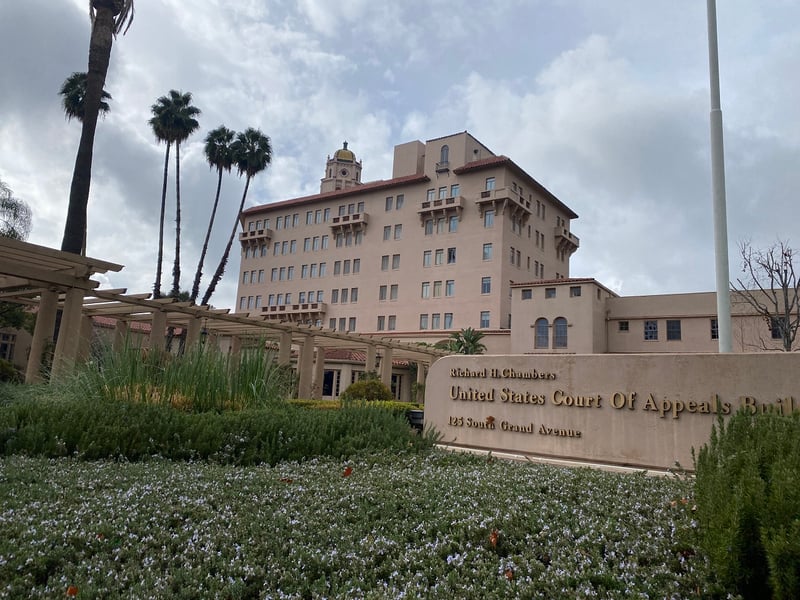
PASADENA, Calif. (CN) — The Ninth Circuit Court of Appeals on Thursday took up the challenge by doctors who claim that a California requirement that they discuss implicit bias in their continued medical education courses amounts to compelled speech in violation of their First Amendment right to freedom of speech.
A federal judge in Los Angeles last year dismissed their lawsuit against the Medical Board of California, finding that teaching implicit bias as part of the continued education courses licensed physicians are required to take by the board wasn’t private speech, which is protected by the First Amendment, but rather government speech, which isn’t.
The doctors brought the lawsuit backed by the Pacific Legal Foundation, a public interest law firm opposed to what it perceives as government overreach that encroaches on individual freedom. They argue that the notion of implicit bias, which pertains stereotypical beliefs or attitudes that individuals unconsciously possess toward others and which is believed to result in disparate medical treatment, is controversial and they don’t want to teach it.
As of Jan. 1, 2022, all continuing medical education courses in California must address examples of how implicit bias affects perceptions and treatment decisions of physicians and surgeons as well as strategies to address how unintended bias in decisionmaking may contribute to differences in medical treatment along lines of race, ethnicity, gender identity, sexual orientation, age, socioeconomic status, or other characteristics.
The hearing before the Ninth Circuit panel in Pasadena, California, focused largely on the question how much control California has over the content of the continuing medical education courses the doctors provide, insofar as it only gives credit for courses that meet its standards, and whether that turns them into unprotected government speech.
Joshua Thompson, an attorney with the Pacific Legal Foundation, maintained the state has no control over the content of the courses, other than an after-the-fact stamp of approval if the board happens to audit a course, and has no idea of what’s being said during them.
“It’s run-of-the-mill regulation,” Thompson argued. “I don’t think California will get up here and say that, when doctors talk about things that the state of California knows nothing about, that is all of sudden government speech.”
The panel wasn’t quite persuaded that California has such a minimal involvement in the content of the courses. As U.S. Circuit Judge Jacqueline Nguyen observed, the law sets out numerous components and standards that educational activities must meet.
“That is control, right?” the Barack Obama appointee said. “We look to the standards set by the state in determining whether the government has exerted control.”
Likewise, U.S. Circuit Judge Salvador Mendoza Jr., a Joe Biden appointee, wondered why the requirement that the Legislature imposed on the medical profession shouldn’t be considered government speech.
The third judge on the panel was Senior U.S. Circuit Judge A. Wallace Tashima, a Bill Clinton appointee.
Kristin Liska, a lawyer for the state of California, told the panel the private doctors who provide the courses, while not employed by the state, are still tasked to deliver the message that the medical board wants to be conveyed for licensed doctors to receive the required credit.
The board, she said, randomly audits the courses — or when there’s been complaint of some sort about them — and can take away the received credits if it finds the course didn’t meet its standards.
California doctors must take at least 50 hours of approved continuing medical education every two years.
Implicit bias training is among the efforts in more progressive parts of the U.S. to undo the enduring effects of discrimination against racial minorities, women and other groups. Such efforts have now come under assault by the Trump administration, which has specifically target so-called diversity, equity and inclusion programs.
In an amicus brief in support of the California Medical Board, the National Association for the Advancement of Colored People and other civil rights groups stressed the importance of implicit bias training for medical professionals given the well documented racial health disparities in the U.S.
“Implicit bias is real; it is not an ‘ideology,’” the NCAAP said. “Its existence has been recognized by science and medicine.”
According to the civil rights organization, it has been documented that Black and Latino children who visit emergency rooms are less likely to have their care needs classified as immediate or emergent, and they experience significantly longer wait times and overall visits as compared to white children.
Because of implicit bias, the NCAAP said Black patients end up being treated less often for pain than white patients and physicians refer white patients to a specialist almost twice as often as Black patients.
 Follow @edpettersson
Subscribe to our free newsletters
Our weekly newsletter Closing Arguments offers the latest about ongoing trials, major litigation and rulings in courthouses around the U.S. and the world, while the monthly Under the Lights dishes the legal dirt from Hollywood, sports, Big Tech and the arts.