
 Search Articles


I have the solution to California’s State Bar exam crisis: self-help.
Quick recap in case you don’t know about this: The bar association decided to save money by dumping the standard Multistate Bar Exam in favor of creating its own test. It also hired a company to administer the test and enable remote exams so the bar wouldn’t have to spend as much on room rental.
This was supposed to save up to $3.8 million a year.
That’s not what happened. The questions were weird and some of them were made up by artificial intelligence. The computers messed up. Lawsuits were filed. The bar executive director resigned. And the bar may end up spending an extra $5 million or so instead of saving anything.
Oops.
You may be thinking that the bar obviously is incapable of helping itself. What could I possibly mean?
I mean the bar applicants should help themselves.
Consider the objectives. The bar wants to save money and determine who is qualified to practice law. You can do both those things with a simple role reversal: Have the students write the exam.
You put them in a room with proctors, give them a list of very specific topics, and then instruct them to write multiple choice questions that include the correct answer and plausible wrong answers.
The result will show that they know the law — if the correct answers are correct — and are clever enough to come up with alternatives that sound right but aren’t. After all, part of practicing law means being on the wrong side but sounding convincing enough that you may win anyway.
Points should be subtracted for completely wrong answers. Extra points, however, should be awarded for really funny wrong answers.
The bar then saves a ton of money by not having to create an exam and no applicants can complain about the questions since they wrote them themselves.
Everyone wins and, just for fun, the best exam should be given to the Committee of Bar Examiners.
See how they like it.
Immunity. We have a new category for your collection of constitutionally protected communications: office relocation and seat assignments.
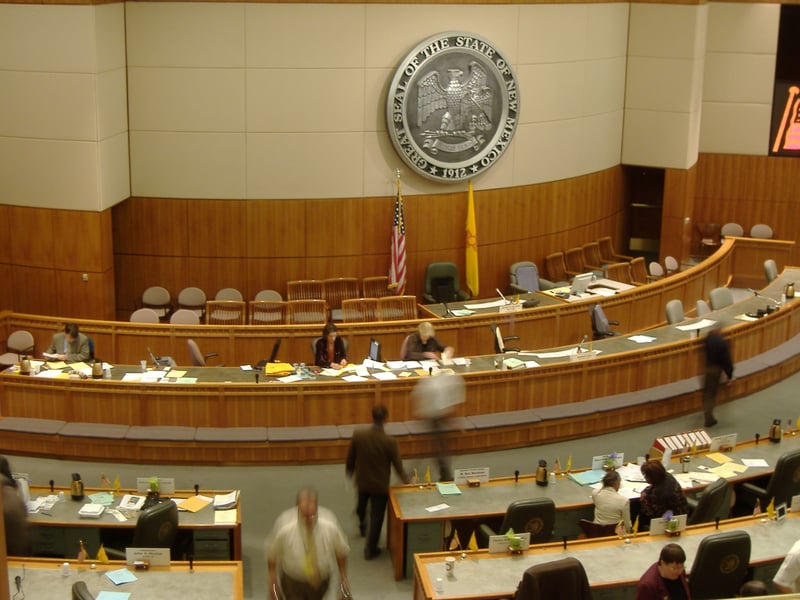
The New Mexico Supreme Court has ruled that the state’s Senate president pro tempore is immune from liability for switching another senator’s office from the ground floor with a window to the third floor without a view. She also can’t be sued for making the senator sit in the front row in class — er, I mean, in legislative session.
The other senator sued, claiming the reassignments were punishment for criticizing the Senate president. How can you expect to properly represent your constituents if you can’t gaze out the window?
And think of the pressure of being in the front row. You could get called on at any moment.
The plaintiff, noted the judges, “maintained that as a legislator, ‘where your office is, is incredibly important. And it is a highly prized and sought-after accommodation …. It matters.’”
Location, location, location.
But because it’s so important, according to the court, the seat switch “is a legitimate legislative activity for which (the defendant) is entitled to immunity.”
This is the sort of thing we elect people to do.
Subscribe to our free newsletters
Our weekly newsletter Closing Arguments offers the latest about ongoing trials, major litigation and rulings in courthouses around the U.S. and the world, while the monthly Under the Lights dishes the legal dirt from Hollywood, sports, Big Tech and the arts.