Search Articles


ANCHORAGE, Alaska (CN) — Under President Donald Trump, the federal government has largely shown it would rather pursue “Extraordinary Resource Potential,” to quote a Trump executive order, than uphold long-standing environmental protections.
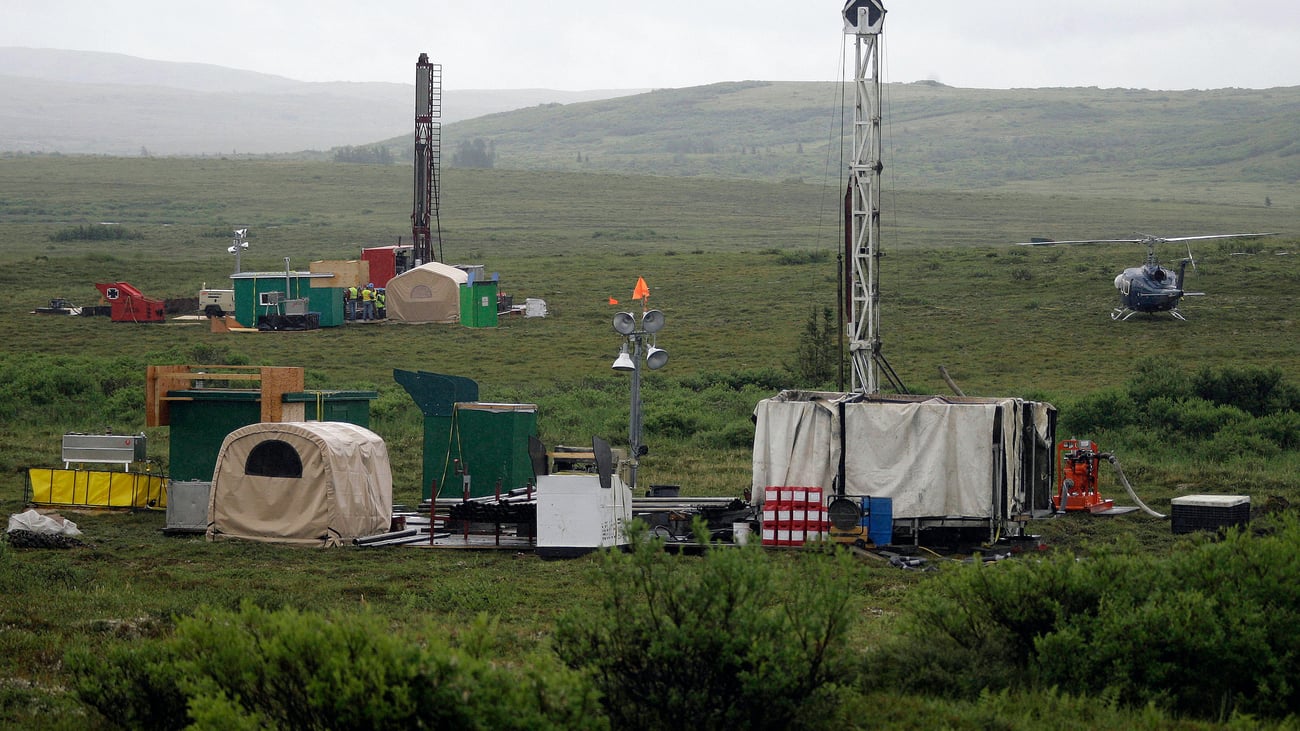
In Alaska, pending litigation, this may result in massive tracts of land falling into corporate hands. But when it comes to a Bristol Bay mining project proposed by a Canadian-owned company, the feds are putting up a fight — one that started under the Obama administration.
“This is a rare issue on which multiple Democratic and Republican administrations have been in agreement,” said Peter Van Tuyn, attorney for the Bristol Bay Native Corporation (BBNC), at a June 25 oral hearing in the U.S. District Court of Alaska.
The BBNC is one of several Alaskan Native and conservationist groups that have intervened as defendants in this case, arguing Bristol Bay’s salmon habitats would likely face permanent negative impacts from large-scale mining in the area. Native tribes including the Yup’ik and Dena’ina depend on salmon for subsistence, and Bristol Bay hosts a “multi-billion dollar” commercial fishing industry, Van Tuyn said.
The project, known as the Pebble Mine and led by Vancouver-based Northern Dynasty Minerals Ltd., would primarily extract copper, gold and molybdenum, a mineral with military and industrial applications. Northern Dynasty has hyped up the deposit as “one of the greatest stores of mineral wealth ever discovered.”
In court Thursday, Pebble attorneys argued alongside the State of Alaska, which owns the land proposed for development. Alaska’s lead counsel Michael Connelly painted the situation as a property rights issue, claiming the Environmental Protection Agency overstepped legal boundaries by blocking the mine.
Citing the Alaska and U.S. Constitutions, Connelly made his case before U.S. District Judge Sharon Gleason that Alaska’s state government should be “the primary regulator of land and water use” in the Last Frontier.
The U.S. Army Corps of Engineers, which states it reviews and issues statements on “actions that significantly affect the quality of the human environment,” had gone back and forth on the project, first greenlighting it in July 2020 before denying Pebble a discharging permit months later. In 2023, under President Joe Biden, the EPA jumped in, invoking the Clean Water Act to block the project entirely.
Connelly said the EPA should only act as a “last ditch backstop,” rather than getting involved when it did. Pebble lead counsel Keith Bradley challenged the agency’s interpretation of Section 404(c) of the Clean Water Act, which “authorizes EPA to prohibit, restrict, or deny the discharge of dredged or fill material at defined sites in water of the United States” if it determines that disposal “would have an unacceptable adverse impact” on natural resources.
“Significant is not the same as unacceptable,” Bradley said.
Attorney Luke Wake, representing two Alaskan Native corporations that support the mine project for its potential economic benefits, made a similar case to Gleason that “unacceptable” was an “empty vessel” term and compared it to the word “annoying.”
Laura Brown, a Department of Justice environmental lawyer, argued salmon spawning habitat would be destroyed by the mine’s waste discharge, called Pebble’s assessments of impact on salmon populations “absurd” and said 2100 acres of nearby wetlands would also be negatively affected.
“In order to protect adult fish, you must protect them at every stage of the life cycle,” Brown stated.
At the end of the nearly 150-minute hearing, Gleason, an Obama appointee, thanked all parties for their “thorough” remarks and said she would make a decision in the near future.
Subscribe to our free newsletters
Our weekly newsletter Closing Arguments offers the latest about ongoing trials, major litigation and rulings in courthouses around the U.S. and the world, while the monthly Under the Lights dishes the legal dirt from Hollywood, sports, Big Tech and the arts.
Additional Reads
 Four days in jail for using old $100 bills June 26, 2026