
 Search Articles


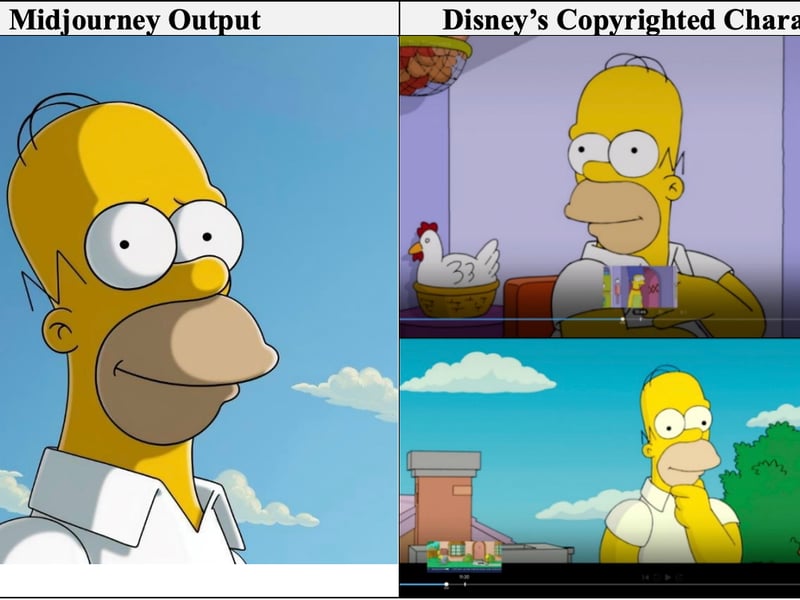
LOS ANGELES (CN) — Walt Disney Co. and NBCUniversal on Wednesday sued Midjourney over an artificial intelligence image generating service they call “a bottomless pit of plagiarism.”
Midjourney’s service, the movie studios claim in a complaint filed in Los Angeles federal court, functions as a virtual vending machine that generates endless unauthorized copies of their copyrighted works.
The two Hollywood powerhouses, whose subsidiaries include Marvel Studios, Lucasfilm and DreamWorks Animation, argue that Midjourney’s soon-to-be released AI video service will be able to generate and distribute videos with their copyrighted characters such as Darth Vader from the “Star Wars” movies, Homer Simpson, Shrek and the minions from the “Despicable Me” and “Minions” movies.
The 110-page complaint contains dozens of side-by-side comparisons of well-known Disney and Universal characters along with their AI-generated replicas.
The lawsuit is the latest confrontation between creators of original content and the developers of AI tools that scrape the internet to fabricate new creations.
The use of AI in movie production and other forms of entertainment has been a hot-button issue in Hollywood, where a 2023 strike centered around writers and actors seeking to protect their livelihoods from the encroaching use of AI. Last year, Hollywood’s video game performers also voted to go on strike after talks for a new contract with major game studios broke down over AI protections.
Wednesday’s lawsuit is the first time that major studios have sought to protect their intellectual property from AI-generated knockoffs.
“Our world-class IP is built on decades of financial investment, creativity and innovation — investments only made possible by the incentives embodied in copyright law that give creators the exclusive right to profit from their works," Disney’s chief legal and compliance officer Horacio Gutierrez said in a statement. “We are bullish on the promise of AI technology and optimistic about how it can be used responsibly as a tool to further human creativity. But piracy is piracy, and the fact that it’s done by an AI company does not make it any less infringing.”
Representatives of San Francisco-based Midjourney didn’t immediately respond to request for comment on the lawsuit.
According to the studios, Midjourney could easily stop the purported theft and exploitation of their intellectual property. The company, they argue, controls what copyrighted content it selects, copies and includes in its Image Service, and it can implement protection measures to prevent the ongoing copying, public display and distribution of the studios’ works.
In addition, Disney and Universal claim, Midjourney already has the ability to prevent distribution and public display of images and artwork that show violence or nudity.
And other AI image- and video-generating services, the studios say, have instituted copyright protection measures that recognize and protect the rights of content creators like Disney and Universal.
The studios say that they asked Midjourney to implement such simple measures to prevent the unauthorized used of their copyrighted work before they brought their lawsuit.
However, instead of stopping its infringement, they argue Midjourney has continued to release new versions of its ImageService, which according to Midjourney’s founder and CEO, have even higher quality infringing images.
The studios accuse Midjourney of direct copyright infringement and secondary copyright infringement. They seek unspecified damages and an injunction to stop the purported infringement.
Disney and Universal are represented by David Singer and other attorneys with Jenner & Block LLP in Los Angeles.
 Follow @edpettersson
Subscribe to our free newsletters
Our weekly newsletter Closing Arguments offers the latest about ongoing trials, major litigation and rulings in courthouses around the U.S. and the world, while the monthly Under the Lights dishes the legal dirt from Hollywood, sports, Big Tech and the arts.