
 Search Articles


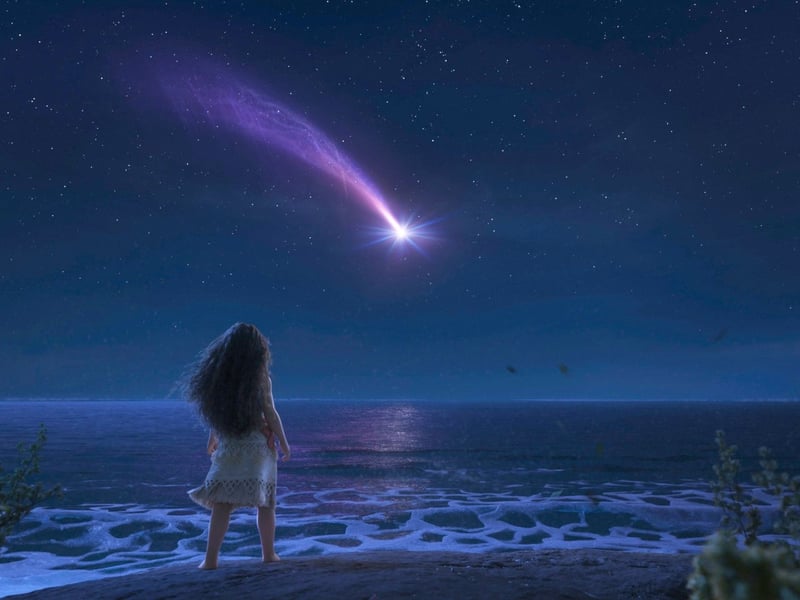
LOS ANGELES (CN) — Walt Disney Co. won the copyright infringement trial brought by an animator who claimed Disney’s 2016 “Moana” blockbuster was based on his pitch for a movie about the mythological adventures of a young surfer on Hawaii that he had shared with the stepsister of his brother’s wife years earlier.
A federal jury in Los Angeles on Monday took less than three hours to reject Buck Woodall’s claims that Walt Disney Animation Studios had access to his copyrighted “Bucky” materials. Since the jury ruled against Woodall on his access claim, there was no need for them to decide whether “Moana” was substantially similar to his “Bucky the Surfer Boy” treatment or full-length screenplay.
“We’re obviously disappointed and we’ll carefully review our options,” Woodall’s attorney Gustavo Lage said after the verdict was read.
Disney’s attorneys declined to comment on the verdict.
Woodall claimed he first shared the story outline and sketches for “Bucky” around 2004 with Jenny Marchick, the stepsister of his brother’s wife, who at the time was working as an assistant with Mandeville Films on the Disney studio lot in Burbank, California.
In late 2011, he sent Marchick a full-length screenplay for a “Bucky” movie. At that point Marchick was working for Sony Pictures. Nevertheless, Woodall maintained that somehow the materials he shared with her ended up with the makers of “Moana.”
“Bucky” tells story of a teenage boy who, like Woodall, is from New Mexico and moves to Kauai. There he learns to surf and travels back in time through a whirlpool portal where he solves a riddle that helps him save his friends’ favorite surfing beach from developers. Along the way, he interacts he with creatures from Hawaiian cosmology and mythology.
This, according to Woodall, is uncannily similar to the story of “Moana,” the daughter of a chief on a Polynesian island who sets out on a journey to find the demigod Maui in order to restore the heart of Te Fiti and save her island from the darkness that is destroying it.
“How many coincidences are too many?” Lage, of Sanchez-Medina Gonzalez Quesada Gomez and Machado in Miami, asked the jury in his closing argument Monday morning. “When does a coincidence stop being a coincidence? There’s no ‘Moana’ without ‘Bucky.’”
But whereas Woodall claims that there were countless original and unique elements in his “Bucky” material that found their way into “Moana,” Disney maintains that these themes, characters and plot twists can be found in many earlier Disney animation movies — including works by the directors of “Moana,” John Musker and Ron Clements, such as “The Little Mermaid,” “Aladdin” and “Hercules.”
Woodall waited too long to file his lawsuit in 2020, and most of his claims were barred by the statute of limitations. The only ones that survived to trial where those against Disney’s Buena Vista Home Entertainment division, which distributes “Moana” on the home video market. His potential damages award was no more than $10 million.
However, Woodall in January filed a new lawsuit, seeking $10 billion in damages over “Moana 2,” Disney’s 2024 sequel. Lage said after the verdict was returned that they’ll also be reviewing whether to proceed with that case.
Moez Kaba, Disney’s attorney, said in closing Monday morning that Woodall had failed to make it across the first hurdle — to prove that Musker and Clements had even heard of Woodall and his “Bucky” story, let alone had access to it.
Pointing to the millions of emails and other documents that are part of the “Moana” development file that Disney shared with the plaintiff, Kaba said Woodall and “Bucky” are never mentioned as Disney’s writers gobbled together the story of “Moana.”
Marchick, the stepsister of Woodall’s brother’s wife, testified that she met with Woodall as a favor to her sister and her sister’s husband and that she’s 100% confident she never passed on the “Bucky” material to anyone at Disney’s animation studio.
According to Marchick, she made a call to the studio only to find out that they don’t take outside pitches and she helped Woodall meet with an unidentified assistant at Disney TV animation who had no interest in his project.
Marchick didn’t hear again from Woodall for years until, when she was working at Sony Pictures in late 2011, he sent her a full-length screenplay for his “Bucky” movie. At this point she told him she wasn’t interested in the story, testifying she thought it was simplistic and juvenile.
Disney’s attorney also recounted in his closing argument how Woodall forged Marchick’s name on a nondisclosure agreement that had been signed by someone entirely different and put a 2003 date on it. He filed the forged document in court and only confessed to his forgery after Disney had been able to determine that it was signed by a Hawaiian teenager who had done some modeling for Woodall.
As for the substantial similarity between “Bucky” and “Moana,” Kaba told the jury that the purported original elements from Woodall’s work can be found in numerous Disney animated movies that preceded “Moana,” including previous works by Musker and Clements such as “The Little Mermaid,” “Aladdin” and “Hercules.”
Moreover, Kaba said, Woodall doesn’t have a monopoly on themes and mythological creatures, such as the volcano goddess Pele, from Hawaiian and Polynesian culture that he claims Musker and Clemens stole from him.
“‘Moana’ is inspired by the Polynesian people,” Kaba said. “It’s not Buck Woodall’s story — it’s Ron and John’s story. It’s their love letter to Polynesia.”
 Follow @edpettersson
Subscribe to our free newsletters
Our weekly newsletter Closing Arguments offers the latest about ongoing trials, major litigation and rulings in courthouses around the U.S. and the world, while the monthly Under the Lights dishes the legal dirt from Hollywood, sports, Big Tech and the arts.