
 Search Articles


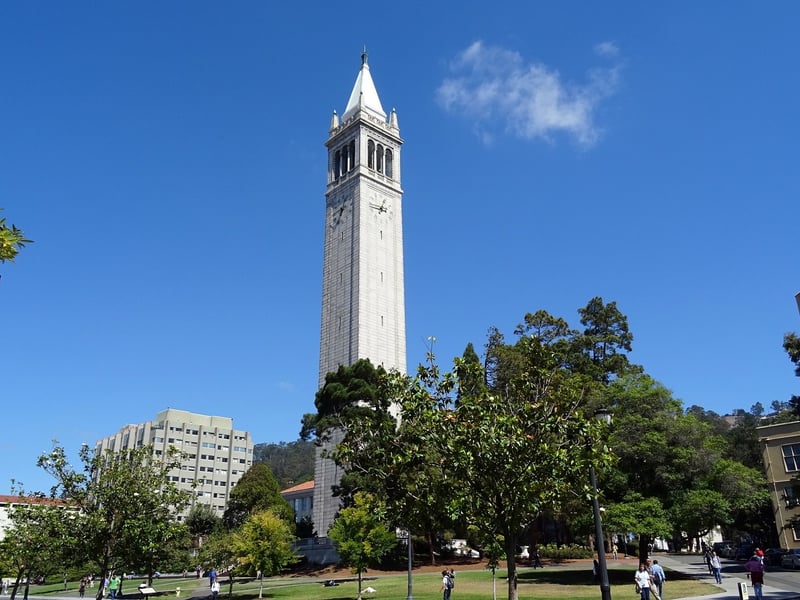
SAN FRANCISCO (CN) — A federal judge ruled Tuesday afternoon that the regents of the University of California must face claims that the University of California, Berkeley, failed to enforce its antidiscrimination policies and did not protect Jewish students in the wake of harassment after the breakout of the Israel-Hamas conflict in October 2023.
In their 2023 complaint, the Brandeis Center, a nonprofit that advocates for Jewish rights, claimed Jewish students at Berkeley were the target of violence and harassment after the Israel-Hamas conflict broke out and that the policies enacted by student organizations affiliated with the Berkeley School of Law, which require members and guest speakers to disavow “Zionism,” were an unchecked spread of antisemitism that the university did not stop.
The Brandeis Center was joined in its lawsuit by the Jewish Americans for Fairness in Education, an organization of students, alumni and educators that includes several Berkeley Law faculty members.
The plaintiffs said Berkeley was a hotbed of antisemitism and claimed that a Jewish student draped in an Israeli flag was attacked by two protesters who struck him in the head with a metal water bottle, that Jews on campus have been receiving hate emails calling for them to be gassed and murdered, and that Jewish students have been afraid to go to class because of pro-Hamas rallies.
In a five-page ruling on Tuesday afternoon, U.S. District Judge James Donato, a Barack Obama appointee, wrote that claims for equal protection and free exercise, as well as Title VI Civil Rights Act claims, will go forward at this point against the university’s regents.
“Taken as a whole, the FAC plausibly alleges disparate treatment with discriminatory intent and policy enforcement that is ‘not generally applicable.’ The FAC also plausibly alleges that Berkeley was deliberately indifferent to the on-campus harassment and hostile environment,” Donato wrote.
The plaintiffs said in their complaint that Zionism, a nationalist movement advocating for the self-determination and statehood of the Jewish people in their ancestral homeland and the establishment of a Jewish state in Palestine, is a “central tenet” of the Jewish faith and that organizations affiliated with the Berkeley School of Law could not lawfully require guest speakers to disavow Zionism. Berkeley, however, has argued that student organizations have a First Amendment right to choose their guest speakers.
Donato, however, declined to address whether Zionism was a core tenet of the Jewish faith, writing that the Establishment Clause precludes a court from determining the core tenets of any faith.
“It may be that the court may properly determine whether Zionism is a sincerely held religious belief for some individuals, as circumstances might warrant, but the court will not determine if it is a central tenet of Judaism,” Donato wrote.
Donato dismissed Section 1981 contract discrimination claims with prejudice and dismissed Americans with Disabilities Act claims against the regents with leave to amend.
“Brandeis did not identify any allegations in the FAC to the effect that Berkeley ‘discriminated against a plaintiff by reason of his disability.’ The likelihood that Brandeis can successfully amend the ADA claim seems low,” Donato wrote. “Even so, because the claim was raised for the first time in the FAC, leave to amend is granted.”
All claims were dismissed against UC Berkeley and the Berkeley Law School because they “are not legally distinct entities from the regents,” Donato wrote.
The Brandeis Center has until April 18 to file an amended complaint. Counsel for the parties in the lawsuit did not reply to requests for comment before publication.
Since the outbreak of the Israel-Hamas conflict in 2023, numerous college campuses have been roiled by students protesting Israel’s treatment of Palestinians living in Gaza. President Donald Trump has vowed to take action against protestors whom he labels “pro-Hamas,” and his administration has detained and targeted student visa holders who criticized Israel or participated in protests.
Subscribe to our free newsletters
Our weekly newsletter Closing Arguments offers the latest about ongoing trials, major litigation and rulings in courthouses around the U.S. and the world, while the monthly Under the Lights dishes the legal dirt from Hollywood, sports, Big Tech and the arts.