
 Search Articles


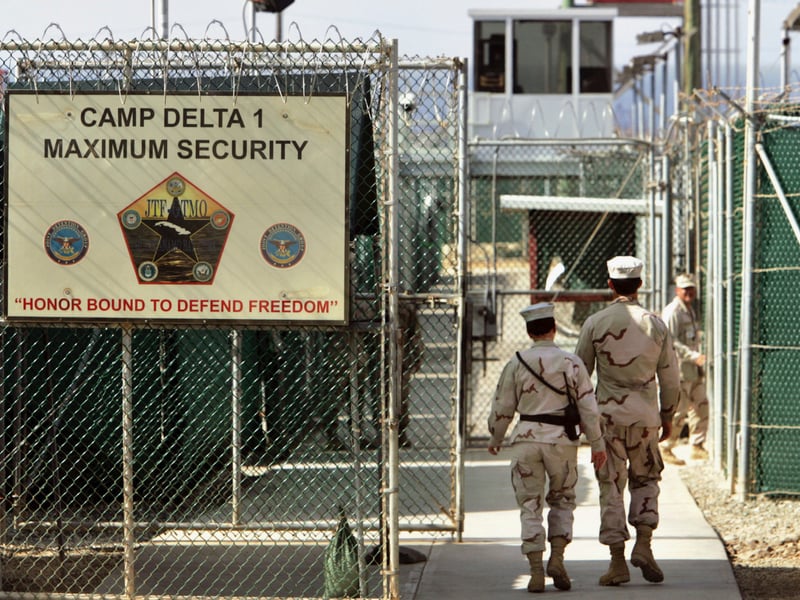
WASHINGTON (CN) — A coalition of immigrant rights organizations sued the Trump administration Wednesday for holding deported migrants at Guantánamo Bay “incommunicado,” by blocking communication with family members, attorneys and the outside world.
The advocacy groups are joined by three migrants from Venezuela who only learned their relatives had been transferred to the controversial military base via government-issued photographs and videos of the detained migrants, and have since been unable to reach them.
The American Civil Liberties Union, Center for Constitutional Rights and the International Refugee Assistance Project, among others, brought the suit in the U.S. District Court for the District of Columbia, requesting a federal judge order the government to grant the migrants their constitutional right to an attorney and lift their incommunicado detention.
Lee Gelernt, deputy director of the ACLU’s Immigrants’ Rights Project condemned the conditions in a statement.
“By hurrying immigrants off to a remote island cut off from lawyers, family and the rest of the world, the Trump administration is sending its clearest signal yet that the rule of law means nothing to it,” Gelernt said. “It will now be up to the courts to ensure that immigrants cannot be warehoused on offshore islands.”
President Donald Trump ordered the construction of a migrant detention facility at the U.S. Navy base on Jan. 29, which he suggested would hold as many as 30,000 people. The flights began on Feb. 4, and have since become a daily occurrence, bringing approximately 100 migrants as of Wednesday.
Trump said that the camp was intended for dangerous criminals and suspected gang members, but according to reporting by CBS News, several migrants deemed to be “low-risk” have been transported, including several on Wednesday’s flight alongside “high-risk” detainees.
The immigrant rights groups warned that the migrants held at the base have “effectively disappeared into a black box” and cannot access legal assistance, understand their constitutional rights or challenge their transfer, detention or conditions at Guantánamo.
Further, the administration has withheld any information on the legal basis for the transfers and confinement at Guantánamo, the likelihood of continued detention, the detainee’s immigration status, the nature of any legal proceedings against them, conditions of their confinement and the government’s plans for them, the groups said.
The Department of Homeland Security did not respond to a request for comment on this story.
Plaintiff Eucaris Carolina Gomez Lugo says in the suit that her brother, Tilso Ramon Gomez Lugo, was detained at an immigrant detention facility in Texas before being transferred to Guantánamo. Eucaris Carolina Gomez Lugo says she learned of the transport on Feb. 5, when she saw photos of the migrants and recognized her brother among them.
On Feb. 5, she retained an attorney on her brother’s behalf, who has since made multiple unsuccessful attempts to reach him.
Other plaintiffs echoed the story in the suit: Angela Carolina Sequera’s last contact with her son, Yoiker David Sequera, was on Feb. 8 while he was detained in Texas.
The next day, she received a call from another person at the detention facility that her son was told he would be transferred to Guantánamo. Sequera has been unable to reach her son following the transfer.
And according to plaintiff Yajaira Del Carmen Castillo Rivera in the suit, she last heard from her brother, Luis Alberto Castillo Rivera, on Feb. 3 when he said he believed he would be released from custody. She next saw him in photos from Guantánamo, but has since received no information about her brother’s condition or how to reach him.
Javier Hidalgo, legal director at the Refugee and Immigrant Center for Education and Legal Services, another plaintiff in the case, said in a statement that the practice flies in the face of “fundamental humanitarian protections.”
“Immigration detention at Guantánamo threatens to create a dangerous precedent where the U.S. government can systematically transfer people seeking asylum to offshore facilities, isolating them from legal service providers and placing them in a void where they cannot meaningfully assert their rights,” Hidalgo said.
Wednesday’s lawsuit is the latest challenge to the Trump administration’s slew of executive actions targeting immigration and rolling back protections for asylum seekers, among others.
Federal judges in Seattle, Maryland and New Hampshire have rejected Trump’s attempt to revoke birthright citizenship for the children of undocumented immigrants, a right enshrined in the 14th Amendment.
On Tuesday, a multi-faith coalition sued the Trump administration for reversing a long-standing Department of Homeland Security policy that prevented ICE agents from conducing raids on “sensitive locations” such as churches and synagogues. They argued the raids were a violation of their religious freedom.
The Trump administration on Tuesday moved to dismiss the lawsuit challenging the rollback of asylum rights, arguing that the immigrant rights groups did not have standing, nor did the federal court in Washington did not have authority to review the executive action.
 Follow @Ryan_Knappy
Subscribe to our free newsletters
Our weekly newsletter Closing Arguments offers the latest about ongoing trials, major litigation and rulings in courthouses around the U.S. and the world, while the monthly Under the Lights dishes the legal dirt from Hollywood, sports, Big Tech and the arts.