
 Search Articles


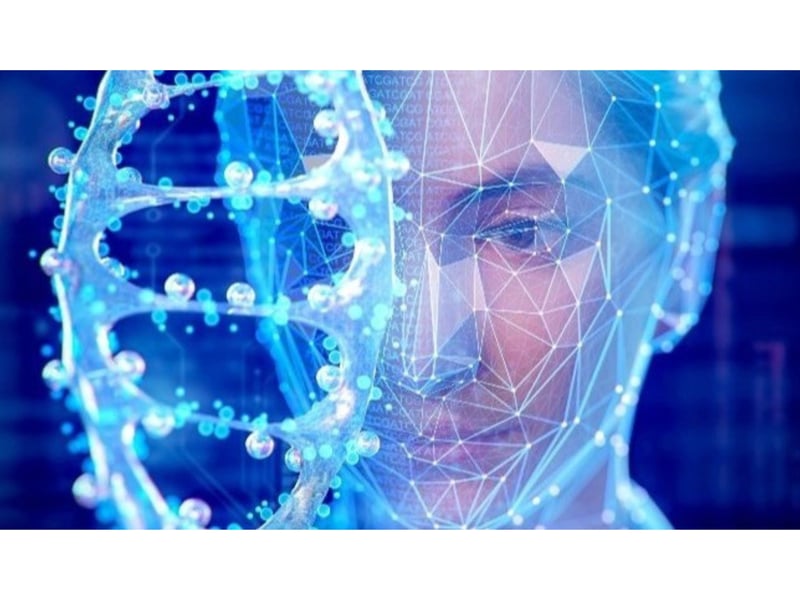
(CN) — In the pursuit of advancing forensic science, Chinese Academy of Sciences researchers created the Difface model to reconstruct 3D facial images from crime scene DNA.
Per their study published Wednesday in Advanced Science, the team designed the multi-modality model to reconstruct these images from a single nucleotide polymorphism phenotype, the most common type of genetic variation among people. To train Difface, the team used a genetic database that contained the pre-existing 3D facial images, SNP data and other relevant information of over 9,600 Han Chinese individuals. The team wanted to begin training with a genetically homogenous population like the Han, who have fewer variables with their face shapes and pigmentations compared to immigrant populations like those in the United States.
After that, the team randomly split the database into training and testing sets, with 80% of that data going to training and 20% to testing with diffusion networks, which study co-author Chunman Zuo explained via email are AI models that generate data like images and text by gradually refining a random noise.
“Difface uses a pre-trained transformer to extract DNA sequence features, combines it with spiral convolution technology to extract 3D face point cloud features, and further maps multi-modal features to a unified feature space through a comparative learning method, thus achieving accurate generation from DNA sequences to 3D face images based on the diffusion model,” said study co-author Luonan Chen via email.
The team said that one of Difface’s successes was its ability to capture subtle genetic variations that make faces distinctive from each other by aligning high-dimensional SNP data with 3D facial point clouds in a unified low-dimensional feature space. From there, Difface enhanced those images by using diffusion networks to generate phenotypic characteristics.
Despite this, the team brought up some challenges with developing Difface, such as a limited knowledge of facial genetics and technological difficulties with high-dimensional data and a small sample size. They believe that Difface’s underlying structure is flexible enough to apply it to different ethnic groups, so they hope that expanding the database to include individuals from a wide range of ethnic backgrounds can help Difface generate accurate facial images. The team said future studies will have the opportunity to explore whether Difface needs more genetic loci to identify certain facial features, which could make the model more valuable to forensic investigations and personal medicine on a global scale.
Besides ethnic groups, the team also hopes that Difface will eventually incorporate variables like age and BMI to simulate age-related changes and generate facial images at different stages of life, which could significantly help forensic science and medical diagnostics. With a better understanding of BMI, Difface could eventually account for variations in body composition and thus create accurate facial reconstructions across different body types.
Although the team wants to expand Difface’s capabilities, they worry about the ethical and legal implications of their technology. For example, someone misusing Difface’s ability to access DNA phenotyping could allow unauthorized access to personal sensitive data, health care companies discriminating against individuals based on perceived health risks or wrongful convictions.
“From the very beginning, our team has made ethics and legal compliance an integral part of the research process, and we have taken a number of positive measures," said Chen via email. “Ultimately, we believe Difface can serve as a model for how AI and genetics can evolve responsibly when accompanied by transparency, oversight and dialogue. Our vision is not just to advance science, but to help shape the societal structures that will allow such technologies to serve the public good.”
 Follow @kndrleon
Subscribe to our free newsletters
Our weekly newsletter Closing Arguments offers the latest about ongoing trials, major litigation and rulings in courthouses around the U.S. and the world, while the monthly Under the Lights dishes the legal dirt from Hollywood, sports, Big Tech and the arts.