
 Search Articles


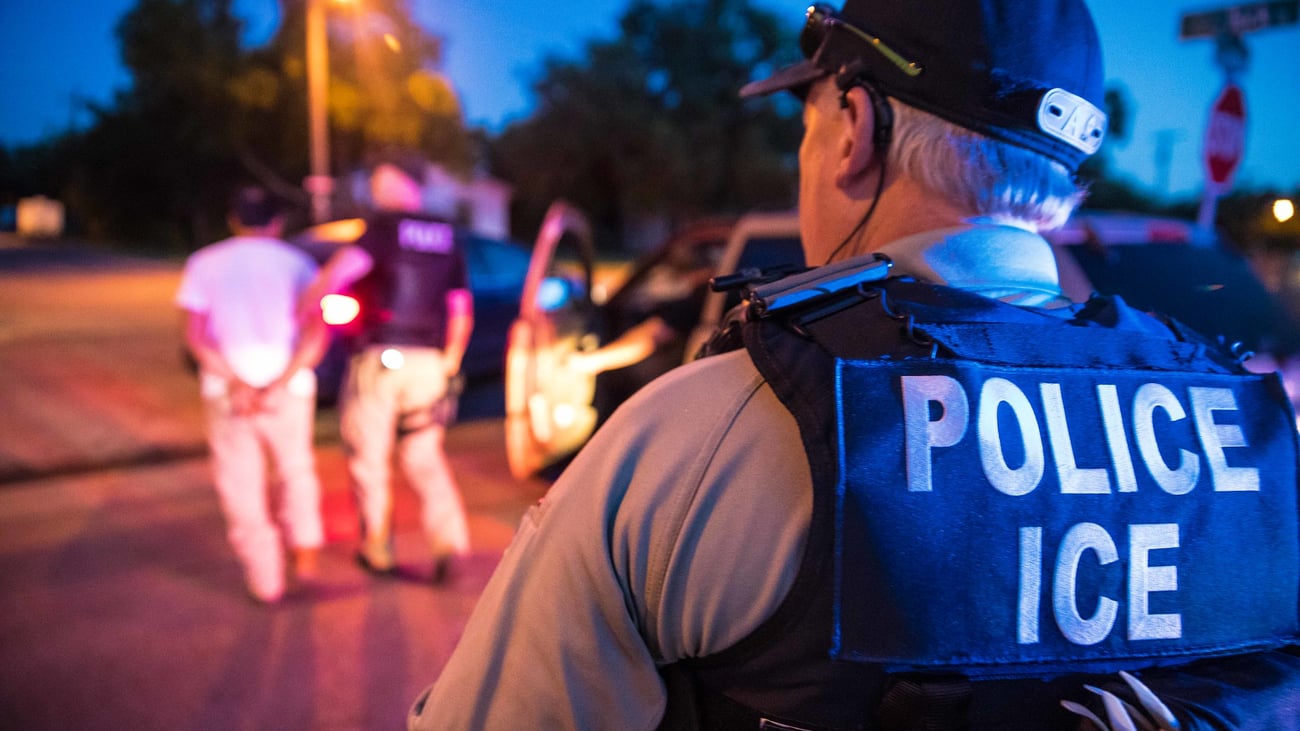
WASHINGTON (CN) — A multimillion-dollar funding request from the Homeland Security Department aimed at developing high-tech “smart glasses” for use by immigration agents landed with a thud on Capitol Hill on Tuesday, where members of Congress said they were learning about the proposal for the first time.
And while Democrats said they were worried about the civil liberties implications inherent in the new technology — which DHS said would give federal agents access to “real-time” information such as biometric identification data while working in the field — Republicans appeared markedly less concerned.
Throughout President Donald Trump’s immigration crackdown, which has seen Border Patrol and U.S. Immigration and Customs Enforcement descend on cities across the country, federal agents have repeatedly been seen wearing Meta’s AI smart glasses which can record video and take photos. DHS has also reportedly increased its use of facial recognition technology in its immigration enforcement operations.
And, according to the agency’s congressional budget request for the 2027 fiscal year, the Homeland Security Department wants to combine those technologies in-house.
Budget documents show a roughly $7.5 million line item for research and development of “critical technologies” for DHS’ detention and removal operations, which the agency says will strengthen its ability to “encounter, transport, detain and remove individuals who are in the U.S. unlawfully.”
Among the projects that cash will bankroll would be “operational prototypes of smart glasses,” which DHS said would enable “biometric identification of illegal aliens.”
The Homeland Security Department’s budget request documents were published at the end of March, amid a heated debate on Capitol Hill over funding for ICE and Border Patrol that has left the agency largely shut down for roughly two months.
Lawmakers in the dark
When asked about the proposed “smart glasses” project on Tuesday, most lawmakers said they weren’t aware DHS was seeking such funding.
Michigan Senator Gary Peters, the top Democrat on the Senate Homeland Security and Government Affairs Committee, told Courthouse News that he didn’t know about the smart glasses funding request and that he’d have to check with staff.
“There’s a lot of surveillance technology that I’m looking at that has me concerned,” Peters added.
North Carolina Senator Thom Tillis, a Republican on the homeland security panel who has previously been critical of DHS immigration enforcement tactics, also said he hadn’t heard yet about the project, but said he wasn’t immediately concerned.
“It all depends on whether they’re maintaining the proper publicly available information, law enforcement information, so I’d have to look at it,” Tillis said. “On it’s face, it doesn’t worry me — it’s all about implementation or execution.”
Florida Representative Carlos Gimenez, who sits on the House Homeland Security Committee, said he was unaware of the proposed smart glasses funding.
Pressed on whether he was concerned about federal agents recording people in the street, the Republican congressman replied: “There is no expectation of privacy when you’re in the street.”
And California Representative Ro Khanna, who has been a vocal opponent of government surveillance programs such as Section 702 of the Foreign Intelligence Surveillance Act, also said he was hearing about the proposed smart glasses funding for the first time, but added that it was a “scary thought.”
“I am against this kind of ICE, militarized force that is harassing American citizens and harassing law-abiding immigrants,” he said.
Rhode Island Representative Seth Magaziner, a Democrat on the House’s homeland security panel, told reporters that he had indeed read reports about DHS’ plan to develop smart glasses for its agents and that he was trying to find out more information.
“The key is, how are they using the data?” said Magaziner, pointing out that Democrats have supported the use of body-worn cameras by immigration enforcement. “But this is clearly meant to be something different, and this is an attempt to violate people’s privacy.”
A spokesperson for the Homeland Security Department did not return a request for comment on how it plans to implement the proposed smart glasses in its immigration enforcement operations.
Right to privacy
Cody Venzke, a senior staff attorney at the American Civil Liberties Union, told Courthouse News in an interview Tuesday that equipping federal agents with real-time biometric data “vastly expands” the surveillance capabilities of immigration enforcement.
“We’ve seen the use of biometrics go from particular locations that were confined and that people chose to avail themselves of, like airport security checkpoints or border crossings, and now we’re seeing DHS-deployed biometrics expand across the entire country,” he said. “With this proposal, they’re going to be even more surreptitious about embedding it into their eyeglasses.”
Venzke added that while technology was concerning, those worries were amplified for advocates by what he said was the general lack of transparency from DHS about their use of surveillance technology.
“Their track record is not a strong one that they’re going to be respectful of informing that public and protecting the public’s civil liberties,” he said.
Congressional Republicans this week are moving ahead with a plan to fund the Homeland Security Department, which has been shut down since late February.
The Senate Budget Committee’s GOP leadership on Tuesday unveiled their framework for a resolution that would fund immigration enforcement for three years through a process known as budget reconciliation. The procedural mechanism allows Republicans to pass a spending plan for ICE and Border Patrol without input from Democrats, who for months have demanded significant reforms to both agencies.
Lawmakers have yet to hammer out the exact provisions of the budget resolution, and they’ve only just started examining DHS’ proposal for the upcoming fiscal year. But Venzke said Tuesday that withholding funding for the agency-proposed smart glasses project would be a major opportunity for congressional oversight.
“Withholding the funding is a really key one,” he said. “But not just the funding that DHS has sought in this justification for the next fiscal year but premising the use of funds by DHS on not deploying this type of technology.”
And Venzke stressed his view that the government’s use of facial recognition and biometric identification data was particularly dangerous for civil liberties.
“You can’t change your face,” he pointed out. “You can change your social security number, you can change your address, you can get a new telephone number, but you can’t change your face. And once that information is collected, it’s a permanent identifier for you.”
 Follow @BenjaminSWeiss
Subscribe to our free newsletters
Our weekly newsletter Closing Arguments offers the latest about ongoing trials, major litigation and rulings in courthouses around the U.S. and the world, while the monthly Under the Lights dishes the legal dirt from Hollywood, sports, Big Tech and the arts.
Additional Reads
 11th Circuit says ‘Alligator Alcatraz’ to remain open April 21, 2026
 Virginia voters approve Democrats' redistricting effort April 21, 2026