
 Search Articles


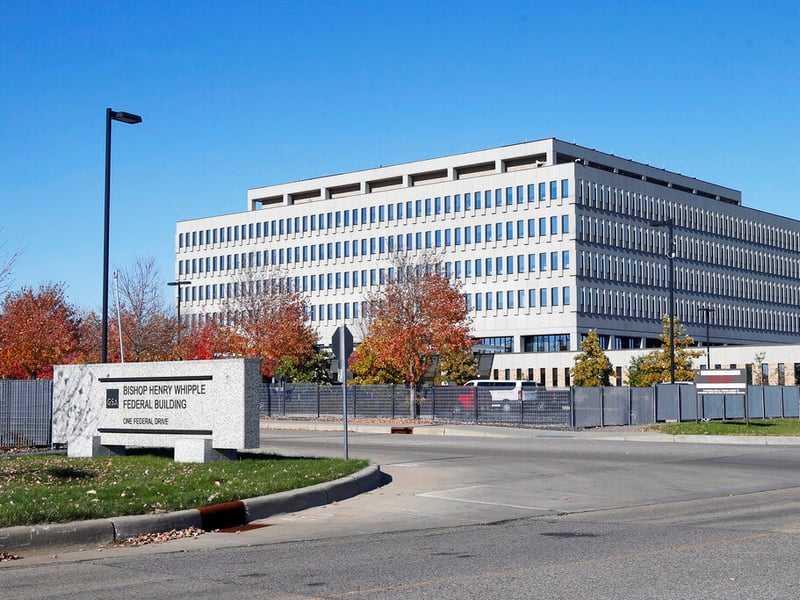
MINNEAPOLIS (CN) — Advocates told a federal court Thursday that a month of court-ordered legal access has radically transformed immigration detention in Minnesota.
Since a restraining order was issued in February, The Advocates for Human Rights claim the average length of stay for detainees at the Bishop Henry Whipple federal building is less than half what it was before — and stays of longer than one day have dropped by 80%.
Detainees are also reportedly receiving more frequent legal visits and calls, coinciding with a sharp decline in the number of out-of-state transfers.
Advocates are seeking to convert the order to a preliminary injunction, with hopes to more permanently cement detainees’ right to counsel.
“These aren’t hardened criminals or safety risks… these are just ordinary people caught up in a sweeping dragnet,” said Jeffrey Dubner, attorney for the advocates. “They needed the meaningful assistance of counsel to understand their rights and challenge their detention.”
Dubner began Thursday’s hearing by identifying the government’s many contradictions throughout the case — pointing to several instances where declarations from field officer directors opposed written or verbal record.
The attorney also noted — through use of phone and visitation logs — that the government was at least somewhat inaccurate in declaring its inability to provide such things before Feb. 12 based on its quick compliance after the temporary restraining order was issued.
Advocates seek to maintain this new norm, with one change — expanding the scope to include all persons detained in Minnesota, even if their first place of detention was not Whipple.
The Justice Department argued against the need for an injunction, pointing largely to the draw down in Operation Metro Surge, and the increased access detainees have to counsel as reasons why any further court interference is unnecessary.
“Conditions are very different than they were five weeks ago when the court entered the TRO,” Justice Department attorney Christina Parascandola said.
Thursday’s hearing stems from a class action filed by advocates and a detainee who say immigration agents in Minnesota pressure detainees to waive their rights and restrict attorney access to the Whipple building.
One individual previously detained at Whipple in January testified in court Thursday, recounting a harrowing experience of being in a “disgusting” holding room with many others stained from urine and feces.
J.J.B., the individual who was detained, said he had to lie to ICE officers that his mother was sick in order to get the chance to make outgoing calls — calls monitored closely by federal agents.
Another individual, L.H.M. — the lead named plaintiff — said she was only allowed to make three calls to attorneys across four days of detainment in three different locations.
“At some point, I thought that I wasn’t going to leave alive out of that place,” L.H.M said over Zoom at the hearing. “I want immigrants, the people, to have a right to defend themselves.”
The Feb. 12 restraining order, signed by U.S. District Judge Nancy Brasel, required the federal government to provide detainees notice of their rights, access to telephone calls, confidentiality, notifications of transfers and in-person visits with attorneys.
These requirements have largely been met, advocates say, but work remains.
“While it is clear that ICE can comply with the TRO, its track record of doing so has been spotty,” advocates said in their motion for an injunction — noting some detainees still report rights violations.
“Without the right to counsel, all other rights don’t matter, defendants turn off the phones and hide habeas orders from detainees,” Dubner said. “These are not minor errors, these are calculated efforts to keep people from exercising their rights.”
Before the order from Brasel, a Donald Trump appointee, advocates said the main obstacle was the federal government’s near-complete refusal of allowing attorneys to meet and speak with the detainees.
Multiple attorneys testified to these challenges Thursday, sharing similar encounters at the Whipple building before the court’s order where they were told they could not speak with their clients.
“She [a desk worker at Whipple] said if I was allowed to visit, there would be 30 or 40 other attorneys that also would want to visit people, and that that would be chaos,” Kira Kelley, staff attorney at the Climate Defense Project, said.
Kelley also said she has sat on the St. Paul Field Office call number for “more hours than I could count,” but has rarely been connected with anyone, much less given the opportunity to speak with her clients.
And habeas petitions are made substantially more difficult to file properly without the ability to meet with detainees, attorneys say.
“I have to cobble together the information I need from a variety of sources. It makes it significantly more stressful,” Kelley said. “When I’m filing habeas petitions, I’m often scrambling to do them at all hours of the day and night, because I know if I don’t file a habeas petition in time that person could be transported to another state or out of the country.”
Advocates say it appears counsel are having “somewhat more success” communicating with clients, but are still encountering significant obstacles such as inconsistent phone line and email availability and a delay in detainees receiving calls.
And, much like before the order, major discrepancies still exist between the accounts of the federal government, and those from advocates and detainees.
“It is impossible to know from defendants’ production if they are complying with the TRO, and impossible for defendants to say, based on this production, that the TRO is either unnecessary or infeasible,” advocates write in their motion.
Throughout the hearing, Justice Department attorneys leaned on the eventual resolution of individual cases, arguing that, because attorneys were ultimately able to speak with their clients, and detainees were eventually released, the need for further court intervention has passed.
Advocates worry poor conditions will resume once the court order is no longer in effect.
The hearing will pick back up Friday afternoon.
Subscribe to our free newsletters
Our weekly newsletter Closing Arguments offers the latest about ongoing trials, major litigation and rulings in courthouses around the U.S. and the world, while the monthly Under the Lights dishes the legal dirt from Hollywood, sports, Big Tech and the arts.