
 Search Articles


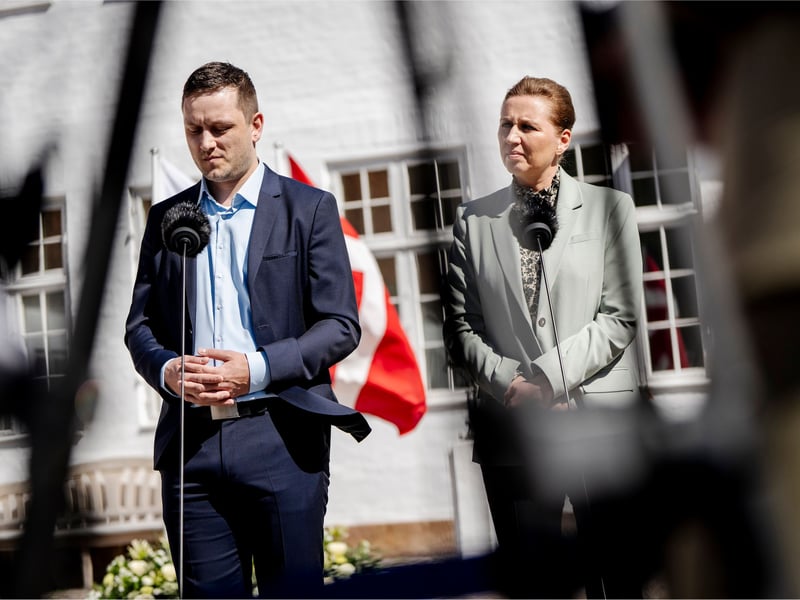
(CN) — A packed Katuaq, a cultural center in Greenland’s capital of Nuuk, hosted a historic ceremony on Wednesday as Denmark’s Prime Minister Mette Frederiksen and her Greenlandic counterpart Jens-Frederik Nielsen gave out official apologies for their respective governments’ roles in fitting contraceptives on at least 4,500 indigenous women and girls, according to Danish authorities.
That was roughly half of all fertile women in Greenland between the 1960s and mid-1970s who received IUDs or coils, devices that prevent sperm from fertilizing an egg, fitted in the uterus.
“On behalf of the government of Greenland, I apologize to the young women for whom this unacceptable practice has been continued after the health sector was taken back,” said Nielsen.
Greenland took control of its health sector from Denmark in 1992. From 1993 to 2014, at least 15 Greenlandic women involuntarily received contraceptive devices under the Arctic Island’s watch. Greenland’s government had already secured financial compensation for the victims last year.
Tears were seen among the audience as Frederiksen started her speech, which highlighted that no woman or girl such be denied autonomy of their own body. “There is only one right thing to say,” the prime minister uttered.
“Sorry. Sorry for the wrongdoing that was done to you because you were Greenlanders. Sorry for what was taken from you. And for the pain it caused. On behalf of Denmark, sorry,” Frederiksen said.
The contraception campaign was launched to limit a growing Greenlandic population that rapidly grew on the Arctic Island due to better health care and living conditions. Some of the women receiving the IUDs said they did not give consent or were not told sufficient details about the procedure.
Both Denmark and Greenland first announced an official apology on the matter in late August, and Wednesday’s ceremony cemented the gesture.
In early September, an independent report found that the Danish health authorities forcibly gave contraception to more than 350 Greenlandic women and girls in cases dating back from 1960-1991. Some of the victims were 12 years old and younger, the report stated.
Last year, a group of 143 indigenous Inuit women sued the Danish state over the involuntary practice in the 1960s and 1970s, demanding compensation of close to 43 million Danish kroner ($6.3 million) on grounds of human rights violations.
Lawyer Mads Pramming, representing the group on the trial set to start in 2027, told Danish broadcaster TV2 that Frederiksen’s apology on Wednesday is not enough.
“There is a lack of recognition that it was a violation of human rights and that my clients are therefore entitled to compensation,” he said.
In a press briefing held right before the start of Wednesday’s ceremony, Frederiksen denied making concluding remarks on the human rights violation claim.
“These are legal questions — I am a politician. I relate to the political aspects of this, and of course, I take into account, in my work, what the courts must eventually conclude,” she said.
On Monday, Frederiksen said the Danish government aims to establish a “reconciliation fund” that will economically compensate the female victims and additionally other Greenlanders who experienced systematic wrongdoings from the state, without elaborating further.
Pramming called the fund “very unspecified,” and Aaja Chemnitz, one of two Greenlandic representatives in the Danish parliament, criticized the timing of the suggested fund, as it potentially could delay compensation payouts for the forced contraception victims.
“I can only urge very clearly that the state must provide these compensations very quickly. We agree in Greenlandic politics that this has already taken far too long, and it cannot continue. This reconciliation fund should not be a preserving jar,” she told Greenlandic broadcaster KNR on Tuesday.
The forced contraception case is not the first Frederiksen has apologized for on behalf of the Danish state’s mistreatment of Greenlanders. In 2022, Frederiksen delivered an official apology to those who were subjected to the “Little Danes” experiment in the 1950s, which forced some Greenlandic children from their homes to be raised in Denmark and then returned as “societal role models.”
“Mette Frederiksen has long insisted on letting the Greenlandic people speak for themselves, and she has made a big deal of listening to the Greenlandic wishes on addressing the past, in my opinion,” writes Søren Rud, a historian at Copenhagen University, in an email to Courthouse News.
An example of this is when Frederiksen voiced Greenland decides its own future as U.S. President-elect Donald Trump eventually aired takeover plans of the world’s largest island. Greenlandic politicians had repeatedly stated they neither want to remain Danish nor become U.S. citizens.
“Trump’s and the U.S. actions mean that it has become increasingly important for Denmark to renew its relationship with Greenland and respectfully listen to its wishes. The Danish government knows that the U.S. administration will take advantage of any tension, and that the most nationalistic and independence-seeking parties in Greenland will gain strength if problematic cases dominate the agenda,” Rud writes.
Greenland, which is located about 1,500 miles from Copenhagen, close to the North American continent, was first colonized by Denmark in the 18th century and remains part of the Danish Commonwealth as a semiautonomous territory.
The majority of its 57,000 inhabitants want full independence from Denmark but disagree on when the crucial step should take place. The current Greenlandic government aims to establish a solid economic foundation before committing to a declaration of independence.
Greenland gained a step toward its ambition in September, as Denmark agreed to invest 1.6 billion Danish Kroner ($253 million) in the Arctic Island spanning from 2026 to 2029, with propositions to boost hospitals, housing and new infrastructure.
“My assessment is that the relationship between Greenland and Denmark is on a positive course. There seems to be a common wish to renew the relation, and the Danish government is willing to walk the extra mile to meet Greenlandic wishes,” Rud writes.
Courthouse News correspondent Lasse Sørensen is based in Copenhagen, Denmark.
 Follow @LasseSrensen13
Subscribe to our free newsletters
Our weekly newsletter Closing Arguments offers the latest about ongoing trials, major litigation and rulings in courthouses around the U.S. and the world, while the monthly Under the Lights dishes the legal dirt from Hollywood, sports, Big Tech and the arts.