
 Search Articles


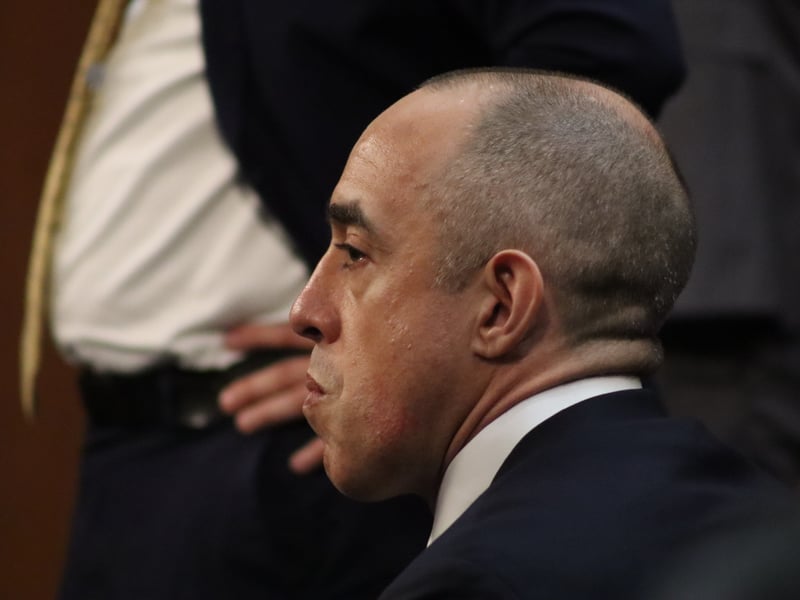
WASHINGTON (CN) — As President Donald Trump’s nominee for a key circuit court vacancy testified before the Senate Wednesday morning, heads turned in the hearing room as an unexpected visitor arrived — Attorney General Pam Bondi.
Bondi, already on Capitol Hill for meetings, joined Deputy Attorney General Todd Blanche at the Senate Judiciary Committee hearing for Emil Bove, President Trump’s nominee to the Third Circuit. She arrived midway, sat in the front row, and was greeted by Florida Senator Ashley Moody, a former colleague.
Democrats and at least one legal expert raised concerns that the presence of top Justice Department officials at a federal judicial hearing could signal more than moral support, potentially creating a conflict of interest and pressuring Republicans to back Trump’s nominee.
Bove, nominated in May to join the Third Circuit, has already drawn criticism from Senate Democrats who have painted him as a Trump loyalist.
The principal associate deputy attorney general and former lawyer for the president has been accused of signaling his willingness to defy federal court orders while serving as a Justice Department official, according to a whistleblower report published by Judiciary Committee Democrats on Tuesday.
Bove has faced scrutiny for directing the Southern District of New York to drop corruption charges against New York City Mayor Eric Adams and for his role in firing Justice Department officials tied to Jan. 6 prosecutions.
Those issues, Democrats said during Wednesday’s hearing, effectively served as something akin to Bove’s audition for a position as a federal judge.
“Mr. Bove has led the effort to weaponize the Department of Justice against the president’s enemies,” said Senate Minority Whip Dick Durbin, the top-ranking Democrat on the Judiciary Committee. “Having earned his stripes as a loyalist to this president, he’s been rewarded with a lifetime nomination.”
According to a committee questionnaire completed by the nominee, Bove was approached by the White House regarding a federal court nomination in “mid-March,” about a month after he penned a letter to federal prosecutors directing them to drop the Adams case.
Republicans on the Judiciary Committee, though, dismissed questions about Bove’s loyalties. Missouri Senator Eric Schmitt referred to Democrats’ concerns as “fake outrage.” Alabama Senator Katie Britt accused her colleagues across the aisle of levying “false claims” against the nominee.
And Iowa Senator Chuck Grassley, the panel’s chairman, admonished Democrats and the news media for undertaking what he called an “intense opposition campaign” aimed at disparaging Bove.
“Turning every nominee into a political punching bag isn’t advice and consent, it’s smear and obstruct,” said Grassley, alluding to the Senate’s longstanding role in confirming presidential appointments. “Let’s not pretend that nominees with ties to the president are somehow suspect.”
But for Democrats, the appearance of Bondi and Blanche — top administration officials — at Bove’s nomination hearing only served to validate their worries about the nominee’s independence.
“Their being here is for one reason — to whip the Republicans into shape,” said Connecticut Senator Richard Blumenthal at a news conference following the hearing. “To make sure that they tow the line. They are watching.”
Blumenthal, who has been on the Senate Judiciary Committee for more than a decade and who has debated hundreds of judicial nominees across several presidential administrations, said he had “never before” seen an attorney general or deputy attorney general attend a nomination hearing.
And Bondi and Blanche, the senator contended, weren’t there to watch Bove testify.
“They were there to watch members of this committee, the Republicans, who they expect simply to fall in line,” Blumenthal said.
Carl Tobias, chair of the University of Richmond School of Law, agreed with Democrats’ perspective that the top Justice Department officials were at the Judiciary Committee to “take names.”
“To some extent, don’t they have a conflict of interest?” he told Courthouse News in an interview. “Isn’t there pressure being brought to bear on the senators which is completely inappropriate?”
Tobias noted the Senate’s role is to vet presidential appointees and warned that the presence of top administration officials like Bondi and Blanche could “erode” lawmakers’ ability to exercise independent judgment and obtain “free-flowing information” from nominees.
“By their very presence, they call into question [the Senate’s] independent judgment,” he said of Bondi and Blanche. “I’m troubled by that — the notion that senators would come back and actually vote no, it’s just unthinkable.”
And the whole episode, Tobias said, underscored what he said was a White House effort to get partisan judicial nominees through the Senate confirmation process.
“We all know what Trump’s about — he wants loyalists,” he pointed out. “But do they have to rub the senators’ noses in it? I would think their own personal pride would keep them from being looked at as sycophants or supplicants.”
In a statement to Courthouse News, Justice Department spokesperson Gates McGavick rejected the idea that the agency officials attended Bove’s hearing to put pressure on Senate Republicans.
“The Attorney General attended part of the hearing because she wanted to offer personal support for a close friend and colleague,” said McGavick. “Casting that as a secret ‘pressure campaign’ is hilariously cynical and conspiratorial.”
Despite Bondi and Blanche’s presence at the hearing, it remains unclear exactly whether Bove will garner the Republican support necessary to clear the Judiciary Committee.
Attention is likely to focus on North Carolina Senator Thom Tillis, who previously cast the deciding vote to block Republican Ed Martin, Trump’s pick for U.S. attorney in D.C., over concerns about the nominee’s Jan. 6 comments.
After Wednesday’s hearing, New Jersey Senator Cory Booker said Democrats were in talks with Republicans about Bove’s nomination but didn’t name names.
During the two-hour hearing, Bove offered few direct answers, maintaining a subdued, noncombative tone and dismissing what he called a “wildly inaccurate caricature” of his relationship with Trump.
“I am not anybody’s henchman, and I am not an enforcer,” he said, pointing to his history serving the federal government as both a court clerk and an assistant U.S. attorney in the Southern District of New York.
“I have taken an oath to uphold the Constitution of the United States more than once and I have honored that oath,” the nominee added.
Bove sparred with Senate Democrats over allegations in Tuesday’s whistleblower report that he told Justice Department lawyers during a March meeting that the agency may have to say “fuck you” to a federal court in order to carry out the Trump administration’s deportation agenda. He told California Senator Adam Schiff that he did not recall making such comments.
“If you said or suggested during a meeting with Justice Department lawyers that they should consider telling the court ‘fuck you,’ it seems to me that would be something you’d remember, unless that’s the kind of thing you say,” Schiff replied.
The nominee also defended the Justice Department’s move to drop the prosecution of Adams, saying that the corruption charges against New York City’s mayor represented the “weaponization of that particular justice process.”
Republicans on the Judiciary Committee, meanwhile, offered Bove relatively light questioning. Tobias chalked up the GOP’s approach to the nominee as “fawning.”
“There was this undercurrent that they had already run this stuff by Trump and the White House,” he said.
 Follow @BenjaminSWeiss
Subscribe to our free newsletters
Our weekly newsletter Closing Arguments offers the latest about ongoing trials, major litigation and rulings in courthouses around the U.S. and the world, while the monthly Under the Lights dishes the legal dirt from Hollywood, sports, Big Tech and the arts.