
 Search Articles


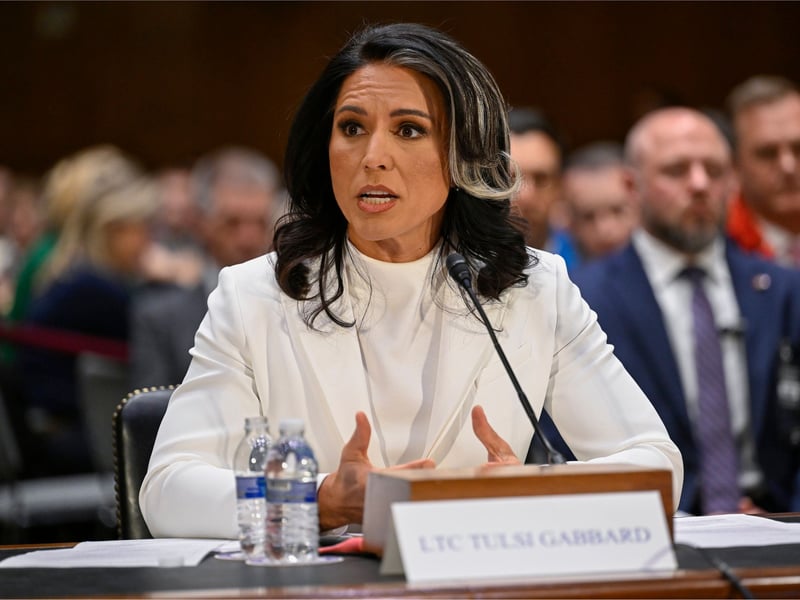
WASHINGTON (CN) — Top intelligence officials on Tuesday denied reports that members of the president’s cabinet shared classified information in a group chat thread which mistakenly included a journalist.
And the intelligence chiefs told lawmakers during a Senate hearing that their use of a commercially available messaging app was not only above board but recommended for senior White House officials.
Director of National Intelligence Tulsi Gabbard and CIA Director John Ratcliffe appeared before the Senate Intelligence Committee for a scheduled hearing that coincidentally occurred just hours after a bombshell report from The Atlantic revealed that the publication’s editor-in-chief was inadvertently included in a White House group chat in which administration officials discussed plans for U.S. military strikes on Houthi rebels in Yemen.
The White House has acknowledged that the group, hosted on encrypted messaging platform Signal, was genuine, but has contested some details in The Atlantic’s dispatch — including reports that Defense Secretary Pete Hegseth shared operational details of the strikes, which likely would have been classified information.
Testifying before the Intelligence Committee on Tuesday, both Gabbard and Ratcliffe, who were reportedly included in the White House Signal group, made similar arguments.
Gabbard, in a tense exchange with Virginia Senator Mark Warner, refused to acknowledge whether she participated in the Signal group. She argued that the details of the incident were still under review by the National Security Council.
“Because it’s all classified?” Warner replied. “If it’s not classified, share the texts now.”
The national intelligence director mostly stayed silent as the Virginia Democrat demanded she explain her involvement in the Signal group or the details of the discussion.
Ratcliffe did acknowledge that he was a member of the group chat. But he told lawmakers Signal had been installed on his computer at the CIA since he had been confirmed as the agency’s director, and that encrypted messaging apps were recommended by the federal Cybersecurity and Infrastructure Security Agency.
“To be clear … Signal is permissible for use,” he told New Mexico Senator Martin Heinrich, adding that the app has been approved by the White House for senior administration officials.
Ratcliffe further contended that the Signal chat revealed by The Atlantic was merely a first step for national security adviser Michael Waltz and other cabinet officials to share points of contact as they began preparations for military strikes against the Houthis earlier this month.
“In this case, what the national security adviser did was to request, through a Signal message, that there be coordination,” the CIA director said; officials had intended to move planning operations to the “high side,” a term which refers to the government’s classified communications system.
Both Ratcliffe and Gabbard denied that any classified information was shared in the Signal group. The CIA director also pushed back on The Atlantic’s decision not to name his agency’s point of contact for planning the Yemen strike. The publication reasoned that revealing the intelligence officer’s name would pose a national security risk.
“In the article, the implication was that somehow that was improper,” Ratcliffe told lawmakers. “That was not the case.”
The CIA officer in question was not acting undercover, he argued, and “routinely” liaised between the agency and the White House.
Oregon Senator Ron Wyden meanwhile used Tuesday’s Senate Intelligence hearing to call for Waltz and Hegseth’s resignations. “Both the mishandling of classified information and the deliberate destruction of federal records are potential crimes that ought to be investigated immediately,” he told the witnesses.
The White House has stood by its defense secretary and national security adviser. Press Secretary Karoline Leavitt told reporters on Monday that President Donald Trump still has confidence in Waltz and the rest of his national security team.
And in a post on X Tuesday morning, Leavitt went after The Atlantic and its editor-in-chief, Jeffrey Goldberg, who she said was “well-known for his sensationalist spin.” The press secretary further denied that any “war plans” were discussed in the Signal group and repeated the claim that no classified material had been sent to the thread.
“As the National Security Council stated, the White House is looking into how Goldberg’s number was inadvertently added to the thread,” Leavitt said.
According to Goldberg’s Monday report, members of the Signal group chat — which included Vice President JD Vace alongside Hegseth, Waltz, Gabbard and Ratcliffe — discussed the potential policy implications of strikes on Yemen and weighed whether to delay the operation as they whipped up public support for action against the Houthi rebels.
None of the group’s members appeared to notice that a journalist had been added to the thread, Goldberg wrote, even after he left the chat following the March 15 strikes.
 Follow @BenjaminSWeiss
Subscribe to our free newsletters
Our weekly newsletter Closing Arguments offers the latest about ongoing trials, major litigation and rulings in courthouses around the U.S. and the world, while the monthly Under the Lights dishes the legal dirt from Hollywood, sports, Big Tech and the arts.