
 Search Articles


WASHINGTON (CN) — A pair of Democrats on Wednesday reintroduced a bill they said will establish “commonsense” safeguards on legalized sports betting and prevent companies from tracking or targeting users who may be vulnerable to addiction.
“We’re here today because government, at every level, has failed to pay attention to or understand the impact of gambling-related harms,” said New York Representative Paul Tonko at a news conference on the Capitol steps.
Tonko, alongside Connecticut Senator Richard Blumenthal, reintroduced their Supporting Affordability and Fairness with Every Bet, or SAFE Bet, Act just a week before the March Madness collegiate basketball tournament. That timing was intentional, the New York Democrat said Wednesday, pointing out that, in only a few days, Americans would be “placing, and most likely losing,” bets on March Madness games.
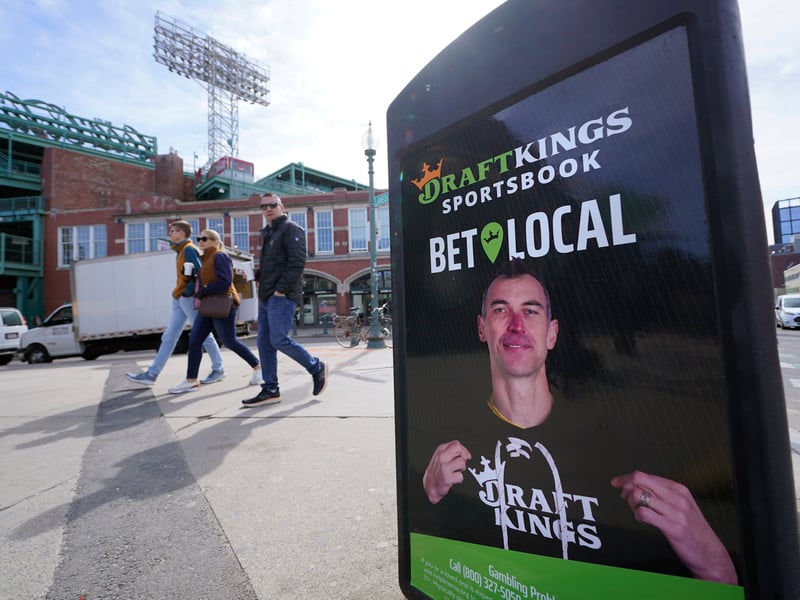
The sports betting industry has exploded in recent years, following a 2018 Supreme Court ruling that struck down a federal ban on the practice. Americans have placed billions of dollars in wagers on popular sportsbook apps such as FanDuel and DraftKings — last year alone, that figure came in at nearly $148 billion.
But that cash, which has been framed by the gambling industry as record-breaking revenue, has a human cost, Tonko explained Wednesday. Money earned by gambling services is “extracted from the pockets” of everyday Americans.
And some of that revenue is made by “abhorrently exploiting” gambling addiction, said Blumenthal.
“Sports betting has become a science for gambling entities,” said the Nutmeg State senator. “It is the science of exploitation and targeting and tracking individuals who are prone to addiction.”
Online sports betting services and apps use information about a user’s betting behavior and other details to tailor gambling offers, Scientific American reported in January. The always-on nature of a sports betting app also increases the speed at which people can place new wagers.
Those dynamics entice bettors to gamble more and more “until they are driven into ruin,” said Blumenthal.
If made law, the Democrats’ proposed legislation would take steps to crack down on how sports betting services can market their products and block them from using certain methods to track users.
The measure would ban sportsbook marketing during live sporting events and would completely bar companies from advertising “bonus bets” or odds boosts to bring in new customers. The proposed bill would also place limits on how many cash deposits sports betting services can accept at a time — bottlenecking users into no more than five deposits in a 24-hour period. The measure would further require sportsbooks to conduct checks on users before accepting wagers of $1,000 or more and would stop them from accepting bets placed using a credit card.
Artificial intelligence-powered tracking features are another target of the Democrats’ bill. The measure would prohibit the use of AI to track users’ gambling habits to offer them personalized promotions or products.
And with March Madness just days away, the SAFE Bet Act would ban prop bets on collegiate and amateur athletes.
Despite these proposed regulations aimed at clamping down on legalized sports betting, Tonko argued Wednesday that Congress was not trying to trample on the gambling industry’s skyrocketing revenue.
“We’re not here because we want to stop the gambling industry from breaking more records, nor are we here to prevent Americans from wagering on sports should they choose to,” he said. “It’s important to balance public health with competing economic interests.”
Tonko and Blumenthal last introduced the SAFE Bet Act in September during Congress’ last session. But the measure never heard debate or saw a vote.
in 2018, the Supreme Court in a 6-3 ruling overturned the Professional and Amateur Sports Protection Act, which banned states from passing laws that legalize sports betting. The justices argued at the time that Congress had no constitutional authority to mandate state regulations, with Justice Samuel Alito calling the legislation a “direct affront” to state sovereignty.
Legal experts, though, argued following the ruling that abandoning federal regulations would turn the sports gambling space into the “Wild Wild West.”
 Follow @BenjaminSWeiss
Subscribe to our free newsletters
Our weekly newsletter Closing Arguments offers the latest about ongoing trials, major litigation and rulings in courthouses around the U.S. and the world, while the monthly Under the Lights dishes the legal dirt from Hollywood, sports, Big Tech and the arts.