
 Search Articles


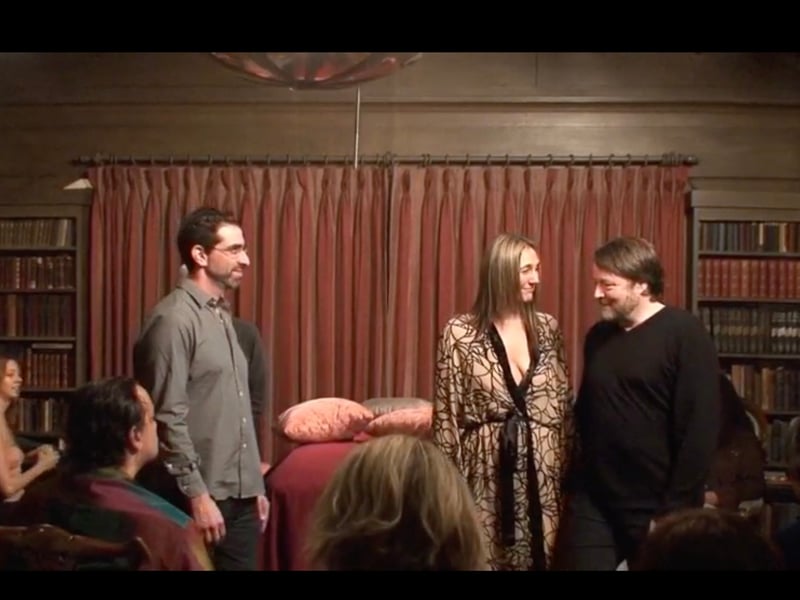
BROOKLYN (CN) — Two leaders of a Bay Area company that sold ritualized sex acts as a form of meditation say their forced labor conspiracy conviction was based on an unconstitutional prosecution, accusing the government of attacking their belief system and confusing jurors as to what kind of conduct counts as criminal.
Nicole Daedone, 57, and Rachel Cherwitz, 44, were the respective CEO and head of sales at OneTaste, which peddled a practice that involves stroking a woman’s genitals for a period of 15 minutes, branding it as “orgasmic meditation,” or “OM,” and a means to deeper universal connection.
Jurors convicted the pair on one count each after a five-week trial where former employees testified that they were expected to work long hours for little or no pay, and to “be open to OMing with anybody off the street,” with higher-ups sometimes making commissions on their sex work.
Daedone also instructed women who worked for her to sexually service her former boyfriend, Reese Jones, an investor in the company, and Cherwitz directed employees to have sex to break up tension and boost sales.
The two women, who were out on bail ahead of trial but remanded following their conviction, argue that “the entire case was a moral condemnation of defendants’ spiritual beliefs and practices.”
“While the teachings and practices may be offensive to the prosecution, it is this very idiosyncratic repulsiveness that garners First Amendment protection,” the defendants said in a 22-page motion filed late Tuesday evening.
At trial, the women’s attorneys argued that the victim witnesses simply regretted taking part in what multiple former members described as a “sex cult.” Witnesses explained that tactics of love-bombing, public shaming, manipulation and sleep deprivation — they worked late hours and slept in shared beds assigned by OneTaste leaders — made them lose their sense of self, cutting off their connection to the real world and brainwashing them with a shared vernacular that propped up the Daedone’s dogma.
For instance Daedone, who has described herself as a survivor of incest, taught women that they should learn to “find the turn-on in every stroke” and to “always be a yes.”
Through a concept called “aversion practice,” OneTaste leaders pushed employees to participate in sexual experiences they weren’t into. Saying no was a sign they’d departed from their spiritual path. And those who wanted to have sex only with people they were interested in were scorned for believing that theirs was a “golden pussy.”
But prosecutors muddied the distinction, the defendants argue, between freedom and force.
“In fact, the government specifically used the core principles of OneTaste, defendants’ beliefs, and Ms. Daedone’s teachings to argue that the alleged victims were so indoctrinated that they lost their free will. But there was no evidence that any of the government’s witnesses lost their free will. Instead, the government used this First Amendment protected activity to improperly argue that anyone who would adhere to what the government believes are abhorrent principles must be forced into doing so,” Daedone and Cherwitz said in their motion.
“Furthermore, the use of these practices in the government’s argument made it difficult for the jury to distinguish between someone who has lost agency and the ability to make her own decisions from someone who has been influenced by love, charisma, religious practices, or teachings.”
Trial witnesses testified that they experienced a mix of love and darkness at OneTaste, and repeatedly said they were never afraid of physical violence if they left; rather, they feared losing their community and spiritual gains.
Asking to set aside their conviction, the defendants argue that the government’s evidence was not sufficient to sustain the forced labor conspiracy charge, writing: “The fact that these alleged victims may look back and regret being influenced by these religious and spiritual practices does not make the activity criminal, and when the government conflated the practices with labor, it confused the issue at hand and infringed upon their First Amendment rights.”
 Follow @NinaPullano
Subscribe to our free newsletters
Our weekly newsletter Closing Arguments offers the latest about ongoing trials, major litigation and rulings in courthouses around the U.S. and the world, while the monthly Under the Lights dishes the legal dirt from Hollywood, sports, Big Tech and the arts.