
 Search Articles


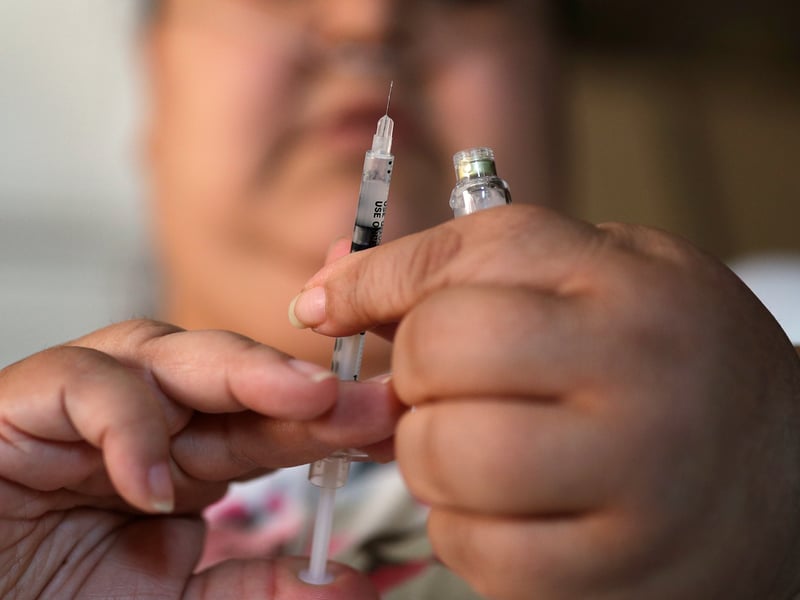
(CN) — Delaware accuses manufacturers and pharmaceutical companies of working together to drive up drug prices for Delaware diabetics and to foreclose access to lower priced diabetic treatments in order to increase their profits.
“The level of greed that would drive someone to price-gouge consumers over life-saving diabetes medicine is almost unfathomable,” Delaware Attorney General Kathleen Jennings said in a statement announcing the suit. “It is an avarice that not only hurts diabetics across the country financially, but in many cases leads to medication hoarding and preventable deaths. The thousands of Delawareans living with diabetes need to know that we will hold these companies accountable.”
The state says in its complaint filed in the court of Chancery that the price for diabetes medications has skyrocketed over time, despite no changes in how the drugs are produced.
“Over the course of the last fifteen years, and pursuant to the insulin pricing scheme, manufacturer defendants have dramatically raised the list prices of their respective diabetes drugs despite the fact that the cost to produce these drugs has decreased during that same time period,” Jennings writes in the suit.
The price for diabetes medications originally cost the manufacturers less than $2 to produce and were priced at $20 when released in the late 1990s, Jennings adds. Despite a decrease in production costs and no new research, the medications are now being priced between $300 and $700.
Calling it an “unfair and deceptive scheme” in the suit filed Tuesday, Jennings claims Delaware diabetics and payors have been overcharged millions of dollars a year for life-saving medications.
“Unable to afford the drugs they need to stay alive, many diabetics across the country ration or under-dose their diabetes medications, inject expired insulin, reuse needles, and starve themselves to control their blood sugars. This behavior is extremely dangerous and has led to serious complications or even death,” she adds.
Jennings cites a 2018 study published in BMJ Global Health that calculated that, based on production costs, a reasonable price for a year’s supply of human insulin is $48 to $71 per person and between $78 and $133 for analog insulins — which includes delivering a profit to manufacturers.
Defendants include Eli Lilly, Novo Nordisk and Sanofi, which manufacture the vast majority of insulins and other diabetic medications available in Delaware, generating billions in revenue each year. These manufactures “artificially and willingly raise their list prices” and then pay a significant, yet undisclosed, portion of that price back to the pharmacies, according to Jennings.
Dispensing pharmacies, like defendants CVS Caremark, Express Scripts, and OptumRx, make up the largest pharmacy benefits managers in the U.S. and Delaware, controlling approximately 80% of the pharmaceutical market.
Under “exclusionary formularies,” these companies are able to grant preferred status to the drugs with the largest manufacturer payments and highest list price, while excluding lower priced diabetic treatments to drive up their own profits.
“Because of their size and the roles their affiliated entities play in the pharmaceutical system, CVS Caremark, OptumRx, and Express Scripts have near complete and ubiquitous control of the pricing, dispensing, and reimbursement systems for the at-issue diabetes medications for their covered lives,” Jennings says.
She argues that these companies have mislead and deceived their clients by representing that they use their market power to drive down prices for diabetes medications and increase access to affordable drugs.
The accusations raise serious public health concerns as about 112,000 Delaware residents are living with diabetes. An additional 130,000 residents suffer from prediabetes, which is when a person’s blood sugar level is higher than it should be and signifies that the person is at greater risk for developing diabetes.
With nearly all diabetics in Delaware relying on daily insulin treatments to survive, the economic impact of diabetes is staggering, costing an estimated total of $1.1 billion per year in the state.
Delaware’s complaint asks for comprehensive injunctive relief to permanently block the defendants from engaging in the unfair and deceptive practices and to award the state civil penalties.
The defendants did not immediately respond to a request for comment.
 Follow @Megwiththenews
Subscribe to our free newsletters
Our weekly newsletter Closing Arguments offers the latest about ongoing trials, major litigation and rulings in courthouses around the U.S. and the world, while the monthly Under the Lights dishes the legal dirt from Hollywood, sports, Big Tech and the arts.