
 Search Articles


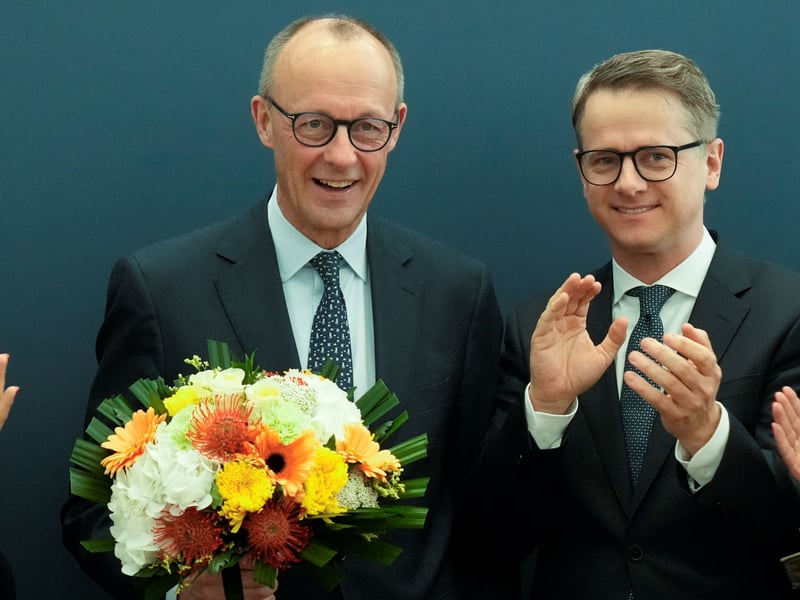
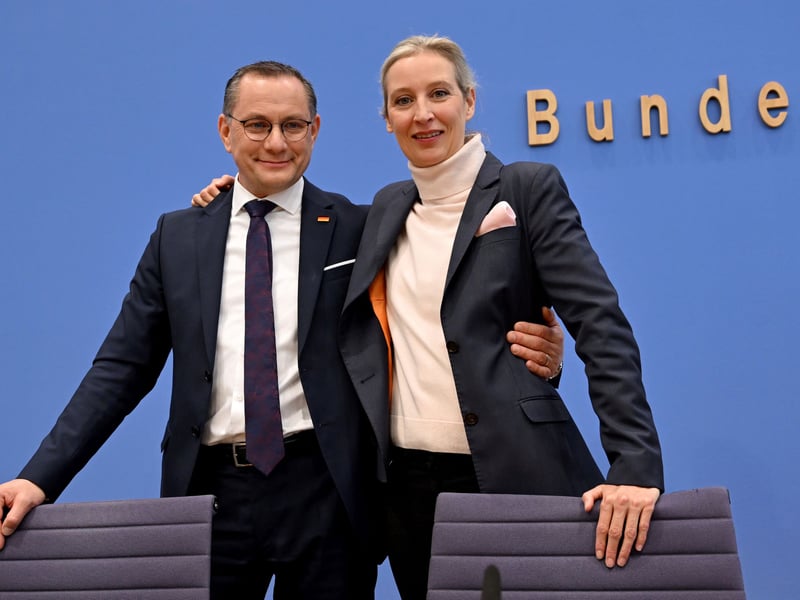
BERLIN (CN) — The conservative Christian Democrats emerged triumphant in Germany’s bracing federal elections, taking 28% of the vote to emerge atop a seven-party spread with top candidate Friedrich Merz set to take the chancellorship. The far-right Alternative for Germany achieved historic gains, coming in second with 20%.
“I’m aware of the trust you’ve put in me — but also of the scale of the task at hand, for which I have great respect. I know it won’t be easy,” Merz told assembled party members on election night Sunday.
Merz will preside over a deeply divided nation grappling with a number of crises, including the consequences of shifting ground for EU-U.S. relations under U.S. President Donald Trump and the outcome of the war in Ukraine.
“If those who really do not just make ‘America First,’ but almost ‘America Alone’ their motto prevail, then it will be difficult," he told reporters Monday in his first post-election news conference. “But I remain hopeful that we will succeed in maintaining the transatlantic relationship.”
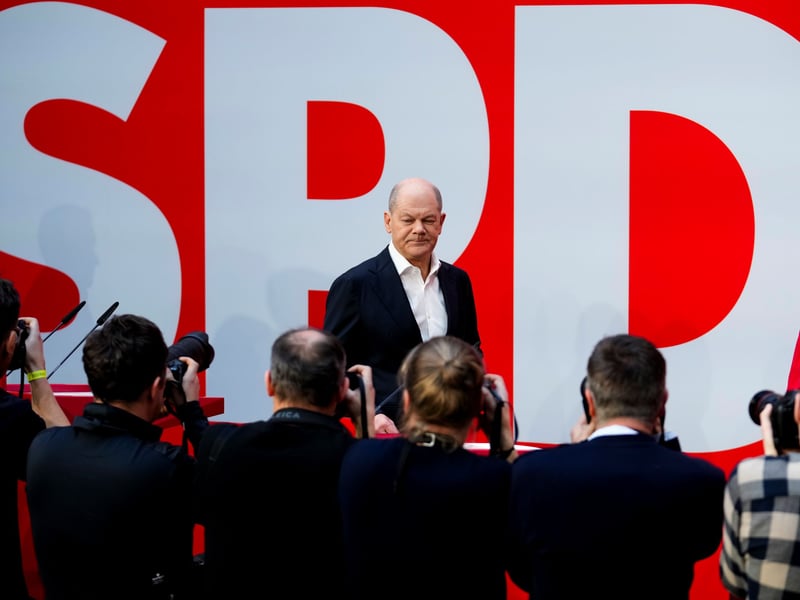
Voters rebuked outgoing Chancellor Olaf Scholz, whose Social Democrats received a worst-ever 16% — a nearly 10 point drop from 2021’s elections. He called the result a “bitter loss.” With 11% of the vote, Scholz’s ruling partner the Greens also lost ground.
Merz reiterated his refusal to govern with the far right, making the Social Democrats his most likely coalition partners to form a majority government.
Given widespread frustration with Scholz’s failed government, many Germans are hoping for a change in direction. Balancing that demand with structural needs for stability and the constraints of a potentially unwieldly centrist coalition won’t just determine Merz’s success as a chancellor, it could dictate whether or not the Alternative for Germany’s rise leads them into government the next time elections roll around.
Familiar territory, different challenges
Merz’s rocky road to the chancellorship involved a near decadelong break from politics, two failed bids at leading the Christian Democrats, and presenting a much brasher, more conservative tone than his party’s last chancellor, Angela Merkel.
Despite all that’s changed in Germany and abroad since she left office in 2021, Germany’s result in some ways means a return to the norm. Merz is likely to preside over a familiar “grand coalition” of Christian and Social Democrats, which ruled in 12 of the 16 Merkel years.
“It’s not much of a grand coalition anymore,” Maik Herold, political scientist at the Technical University of Dresden, told Courthouse News. The two parties only command a slim majority in the Bundestag, highlighting just how fractured a system long dominated by the two “people’s parties” has become.
“The Alternative for Germany got way more votes than the Social Democrats. But it’s not just about them — the big picture is one of polarization. The center has become more fractured, and the Left Party was also quite successful,” he continued.
The long-struggling Left Party rode a late wave of momentum into the Bundestag, winning nearly 9% of the vote. The liberal Free Democrats, which triggered the elections by pulling out of the three-way coalition with Scholz, and populist Sahra Wageknecht Alliance both fell just short of the 5% hurdle to enter parliament.
Merz’s conservatives won 208 seats in the 630-seat Bundestag, while AfD won 152. The other two parties in the former governing coalition also lost seats, with SDP falling to 120 and the Greens to 85. The Left party got 64 seats.
Voters were also split on their most important issues, with domestic security, social security, economic growth and immigration the most frequently listed in exit polls. 83% of voters described Germany’s economy as bad, compared to just 39% in 2021.
Merz has outlined fixing Germany’s economy as a top priority, but retooling the nation’s imploding industrial base may require more than his proposed tax cuts and trimming of paperwork. The Social Democrat’s campaign pledges of further investment mean there could be a sticking point, and may mean Germany finally takes the long-considered plunge of reforming its constitutional debt brake.Merz also made immigration central to his campaign, culminating with a controversial attempt to pass immigration reform with the help of the far right, threatening Germany’s longstanding antifascist “firewall.”
Though hardening his party’s stance on asylum and immigration failed to slow the growth of the Alternative for Germany, which doubled its vote share under the previous government, some experts argue if Merz takes a proactive approach it could take some wind out of the far right’s sails.
“The Alternative for Germany has total ownership of immigration as an issue. People who think this issue is important look to them for a solution there, whether they have one or not,” Andreas Schäfer, political scientist at Berlin’s Humboldt University, told Courthouse News. “So this is one of the first things the new coalition will have to find consensus on.”
Though Scholz blasted Merz for attempting to work with the far right, his government passed immigration reform and his party also moved to the right on the issue in an ineffective attempt to win back voters. There are signs Merz and Social Democrats are likely to find common ground on immigration.
“Merz is the firewall”
Though coalition discussions between the Christian and Social Democrats will likely be a political bout in its own right, things could have been much more difficult.
Officials tallied a record number of votes deep into election night, leaving the Wagenknecht Alliance with 4.97% — just 13,000 votes shy of the threshold, a devastating blow for party supporters. Had the party made it into the Bundestag, the Christian Democrats would have needed a third coalition partner — most likely the Greens — to avoid partnering with the Alternative for Germany.
“Germany has narrowly avoided a very bad situation. If Merz would have been forced to bring all three centrist parties together in an anti-Alternative for Germany coalition it would have been the last shot,” said Herold, appraising Merz’s potential to stave off further growth of the far right.
“All the parties would have been forced to come together and would be expected to solve all of Germany’s problems, which is, of course, impossible. And that would have set the stage for the Alternative for Germany in 2029,” he said.
Having the Greens join the Left Party in opposition could help dampen the far right’s outsider appeal. And return of one of Germany’s steadiest ruling partnerships may help chip away at the mountain of problems facing the country. But running a “grand coalition” while steeped in crises will necessarily look different than the 2010s’ rendition of keeping things running in cruise control — especially given that tack helped produce fertile ground for Germany’s far right.
“I think Friedrich Merz is actually the ‘firewall.’ He’s the last guy standing between the political center and the radicals becoming ever stronger. And if he fails, it will be a real problem,” Herold said.
 Follow @braneck
Subscribe to our free newsletters
Our weekly newsletter Closing Arguments offers the latest about ongoing trials, major litigation and rulings in courthouses around the U.S. and the world, while the monthly Under the Lights dishes the legal dirt from Hollywood, sports, Big Tech and the arts.